Speech still unseats it
Lifting or clicking that has not improved with practice is worth reporting. The dentist can look at how the borders meet the cheeks and tongue and whether the denture is well supported underneath.


Some dentures never feel secure, even in the first months. If yours has moved since the day it arrived, a visit from Puslinch can help sort out normal adaptation from a fit, bite or support issue, and what might be done about it.
A period of getting used to a denture is expected. Cheeks and tongue learn to work around it, speech adapts and chewing gradually becomes more natural. What is less expected is an appliance that still lifts, rocks or slips long after that learning curve should have levelled off.
When that happens, it helps to step back and ask what kind of instability it is. The fitting surface may not match the gums closely, perhaps because they have changed since the impression was taken. The teeth could meet unevenly. The design itself might not suit how much support your mouth can provide. Stabilization means identifying which of these is at work before choosing a remedy.
From Puslinch, you can bring the denture in with whatever you know about when it was made. The dentist examines it with your mouth, listens to how it has behaved since day one and explains which steps are worth considering, from simple refinements to more involved options, along with what each would require.
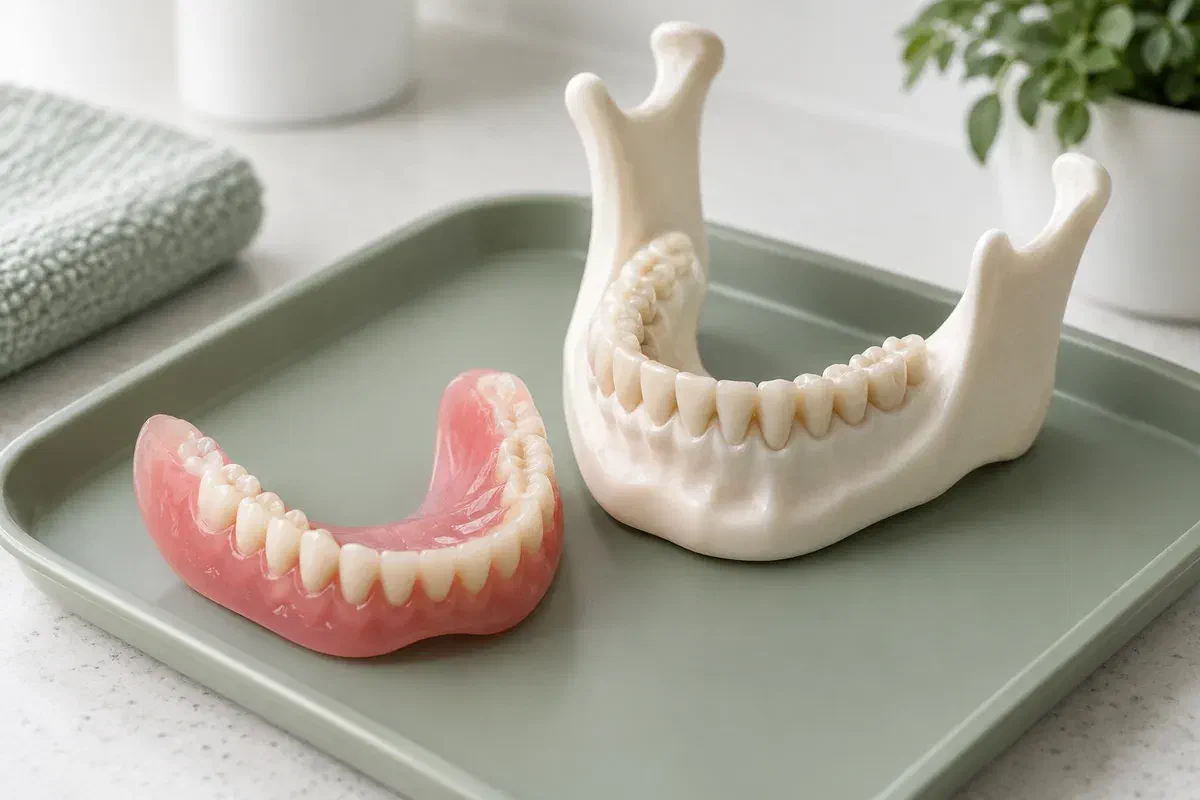
It can be hard to tell normal settling-in from a real problem. Keep a short record of when the denture feels secure and when it does not, and how that has changed since it was fitted.
Lifting or clicking that has not improved with practice is worth reporting. The dentist can look at how the borders meet the cheeks and tongue and whether the denture is well supported underneath.
A denture that has tipped with food from the beginning may have uneven contacts. Since bite and fit interact, renewing the underside alone may not address every part of the movement.
Relying on paste right from the start is useful information. Bring the product and explain your routine, so adhesive can be considered together with the appliance instead of masking a fit or bite concern.
Tell us on the phone about pain, a sore that will not heal, a break or a sudden change in fit. That lets us judge how quickly you should be seen, and whether wearing the denture until then is sensible.
An assessment helps separate a denture that needs refinement from one that may never suit your mouth without a different plan. It also clarifies limits, particularly where the ridges provide modest support and even a well-made removable appliance will move a little.
Instead of a promise that the denture will never shift, you should come away knowing what improvement is realistic, which limitations may stay and what care maintains the result. How easily you can remove and clean the appliance belongs in that discussion as well.
Patient information: Canadian Dental Association — dentures and overdentures
Support, contacts and details of the denture’s construction are reviewed. Ask which matters most, and whether more than one factor needs attention before anything is changed.
Appointments, cost, maintenance and handling differ between approaches. For a rural household planning trips, looking at those demands next to the expected benefit is part of a sensible choice.
Describe what you hoped the appliance would let you do. The dentist can explain what a proposed treatment may improve and where removable dentures generally keep some limitations.
There is no need to decide on a remake, a reline or implant support ahead of time. Those options are discussed once the examination has shown why the denture moves.
Bring the denture and any details about when and where it was fitted, adjustments since then and how it has behaved. Mention adhesive, sore areas and changes in your natural teeth.
Dr. Anjum reviews the gums, the fitting surface and the way the teeth come together. This shows whether the concern is local or general, and whether more records would be useful before recommending a direction.
You will hear what might be refined in the present appliance and what would need a remake or another form of support. Ask about the likely improvement, the stages involved, upkeep and any referral.
After the agreed work, the dentist checks fit and comfort during use. You leave with care instructions and a plan to revisit any movement or tenderness that persists.
A minor refinement and a full remake lead to quite different first weeks. Find out what to expect in the first few weeks and how to look after the appliance from then on.
Even small changes can alter how the denture seats. Let the team show you the technique and try it yourself before leaving. Mention trouble with grip, alignment or cleaning so the routine suits you.
Certain designs include components that need checking or replacing over time. Confirm what the schedule looks like and which changes should prompt you to call sooner.
Note whether it returns slowly or abruptly and during which activity. Those details make it easier to tell a fresh concern apart from a limitation that was explained beforehand.
Instability in a recent appliance raises questions about what is normal. These answers are general, and your examination will show what applies to your appliance.
Make an appointment at our Bronte Street clinic for a newer denture that still lifts, shifts or rocks. We will examine it with your mouth and explain what might help it work more predictably.
Please bring the denture, any paperwork about when it was made and examples of when it moves most.
