Your tooth is intact and in hand
Put it somewhere secure, like a pill box, instead of forcing it into place. Its underside and the empty socket can reveal whether reuse is realistic.


Your denture doesn't have to come from our office for us to assess a missing tooth. Coming from Acton, bring the appliance and whatever history you have, and we'll review whether a repair suits it.
Plenty of people wear an appliance made years ago by a practice that has since closed, moved or simply been forgotten. When a tooth comes off, that missing history can feel like a barrier. It isn't. The denture itself carries a lot of information, and an examination can fill in much of what the paperwork would have said.
Swapping out an artificial tooth is work on the appliance, not on your gums or natural teeth. The clinician studies the acrylic around the empty socket, the size and colour of the surrounding teeth, and how a new tooth would close against the opposite arch. Hold on to any piece you find and bring it with the denture.
If you're travelling in from Acton, gather whatever you can remember before the appointment: roughly when the denture was made, earlier fixes, and how it felt before the tooth let go. Dr. Anjum will use that to judge whether a focused repair is suitable and to explain honestly what can be matched, what may differ and whether other work would help.
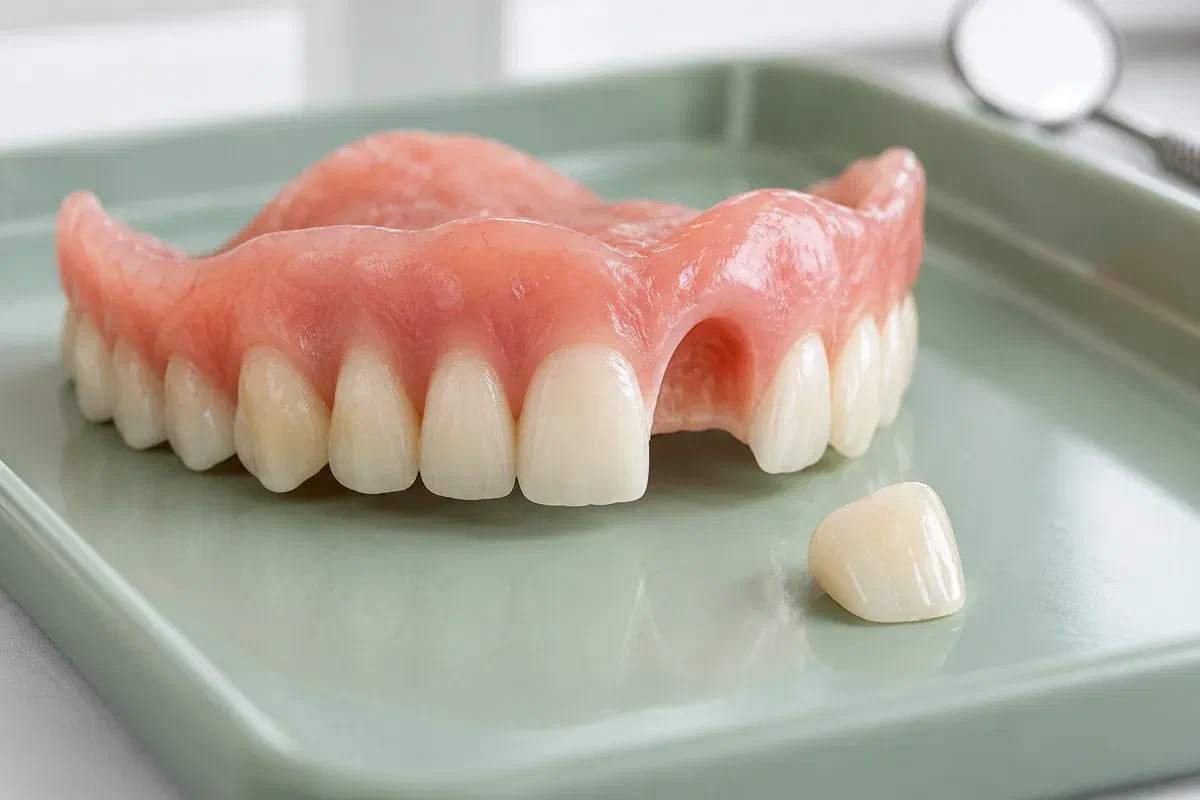
Without notes from the original maker, the appliance itself tells much of the story. Its attachment areas, the wear on neighbouring teeth and your bite pattern all help us decide whether a single replacement is reasonable.
Put it somewhere secure, like a pill box, instead of forcing it into place. Its underside and the empty socket can reveal whether reuse is realistic.
Let us know the circumstances and whether a sharp spot now bothers your tongue. Broken teeth usually need replacing, though the acrylic nearby gets checked before any decision about scope.
Old repairs sometimes show as lines or colour differences in the base. Mention anything you recall, even vaguely, so the plan looks at why the area keeps giving way.
Give us a call about a wobbly denture tooth before you keep chewing on it. Avoid tugging at it or clamping down to check its grip.
An appliance you have adapted to has real value, whoever made it. If its base and remaining teeth are still serviceable, a new tooth in the empty spot may let you keep the comfort and appearance you are used to.
Expect the repair to be narrow in scope. One tooth will not renew a worn set, tighten a denture that has drifted loose or fix a bite that never felt right. Ask what the dentist sees in the rest of the appliance and whether this repair is likely to serve for some time or is better viewed as a bridge to a new denture.
Without records, the dentist assesses the existing acrylic and teeth directly. Their condition helps show whether a replacement can be bonded in properly or whether more extensive work is wise.
Teeth from an unknown source may have aged in shade and shape. Ask how a new one is chosen and which differences could still show once it is placed.
The replacement has to work with every other contact. Tell the dentist if that region felt tall, sore or overloaded before the tooth gave way.
The length of the process varies with the type of damage, the denture material and any need for laboratory help. Ask whether you might be without the appliance so you can rearrange work or family plans.
Approximate dates, earlier fixes and the name of the original office, if you know it, all help. Bring the denture and any loose tooth, and describe what changed before the problem.
The clinician checks the damaged area, signs of previous repairs and the condition of the base overall. Your mouth and bite may be reviewed for concerns a single tooth would not settle.
Discuss whether the old tooth can return or a new one is better, how it will look, which materials suit, the fee, timing and any added base work.
Once repaired, the denture is checked for comfort, contacts and function. Let us know about later pressure or movement, since a repair that looks finished can still need adjusting.
Daily cleaning and periodic checks remain part of looking after the denture. Ask whether the repair changes any of your instructions, and keep a note of the date and work done.
Confirm when ordinary eating can resume. If the new tooth feels like it lands first or the appliance rocks in an unfamiliar way, call rather than repeatedly testing it.
Clean over a towel or some water in the basin, and store it in a case. Stick with recommended cleaners and keep pins, knives and other sharp tools away from the repair.
A hairline crack, slight play or an odd feel near the tooth should be reviewed. Note the date and whether it followed a drop or knock, and call us.
Patient information: Canadian Dental Association — denture care
When you don't have records for your appliance, practical questions arise about whether it can be repaired, what to bring and how the work is planned. These answers can help.
Call our Bronte Street practice about an artificial tooth that is loose, chipped or gone. We will look over the appliance, whoever made it, and tell you whether replacing the tooth is a reasonable way forward.
Bring the denture and any loose tooth in a container, and please leave glue out of it.
