A whole tooth turned up somewhere
Place it in a small lidded box and resist any attempt to push it back. The clinician will judge whether the tooth and the area it came from are in good enough condition to use again.


Helping a parent or partner with a broken denture? Families in Brampton can bring the appliance and the loose tooth to us so we can check the base, the bite and whether a repair suits it.
Often the first person to notice is not the wearer. An adult child spots a gap in a parent's smile at dinner, or a partner finds a small tooth on the bedside table. Helping someone through a denture repair means gathering a few details and making sure the right questions get asked.
Replacing an artificial tooth is work on the appliance itself. The dentist has to consider the acrylic that held the tooth, the shape and colour of the teeth around the gap, and how the new piece will meet the opposite jaw. Collect any tooth you can find, keep it in a closed container, and bring it along with the denture and the person who wears it.
From Brampton, planning one organised appointment can save extra trips for everyone involved. Dr. Anjum will review whether the rest of the denture is suitable for a focused repair, ask the wearer how it felt beforehand, and explain what is possible, including how closely a new tooth can match and whether other work on fit or comfort is worth discussing.
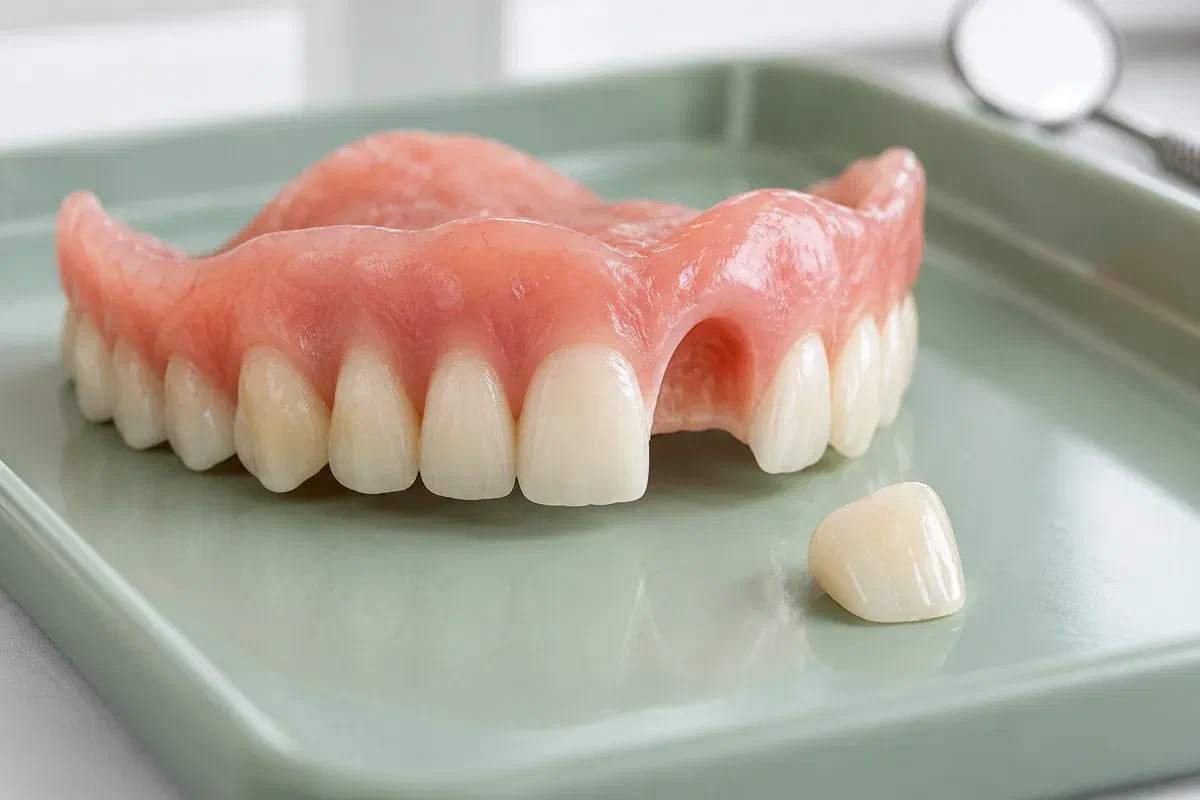
The missing tooth is the obvious sign, but changes around it matter just as much. The socket it left, the neighbouring teeth and how the wearer bites together help determine whether replacement makes sense.
Place it in a small lidded box and resist any attempt to push it back. The clinician will judge whether the tooth and the area it came from are in good enough condition to use again.
Ask the wearer what happened and whether anything feels sharp against the tongue or cheek. A broken tooth usually needs replacing, and the base around it is checked before deciding how much work is involved.
If the same area has failed more than once, the bite, the material or how the denture is handled may be involved. Share what you know about earlier repairs so the plan addresses the pattern.
Encourage a call to the clinic when a denture tooth feels loose, before it is used for regular meals. Please don't pull at it or test it with firm biting.
For many wearers, especially those who took time to adjust, a familiar denture is worth keeping. If the rest of the appliance is in reasonable condition, replacing the damaged tooth can preserve its look and arrangement while dealing with the single problem area.
It is worth knowing the limits before the visit. A new tooth will not renew the others, firm up a loose fit or correct a bite that already felt wrong. Ask the dentist how the remaining denture looks and whether the repair is likely to last or is better treated as a short-term fix while other options are considered.
The acrylic around the gap must be sound enough to take a tooth securely. Its condition helps explain whether the repair is simple or whether further damage affects the plan.
Teeth on an older denture often darken or wear down. Ask how the replacement is chosen so the wearer knows what small differences might show.
The replacement has to work with the rest of the bite. Mention it if the wearer complained of soreness or a high spot in that area before the tooth came off.
Timing depends on the damage, the materials and whether a laboratory is involved. Ask whether the wearer may be without the denture for any period, so you can plan around work, care routines and family commitments.
Note when the problem was noticed and anything unusual beforehand. Bring details about earlier repairs, the office that made the denture and a list of the wearer's medications if relevant to their care.
The dentist examines the damaged spot and the condition of the denture overall. The wearer's mouth and bite may also be reviewed for concerns a new tooth would not fix.
The wearer and helper can discuss reusing or replacing the tooth, appearance, materials, fees, timing and any additional base work with the dentist before agreeing on a plan.
The repaired denture is reviewed for fit, contacts and function. Encourage the wearer to report any pressure or movement afterwards, since a complete-looking denture can still need adjustment.
The repaired tooth becomes part of a denture that still needs daily cleaning and regular checks. Ask whether the repair or the reason for the original damage changes any care instructions.
Find out when the wearer can return to their usual diet. If they say the new tooth hits first or the denture rocks, call us rather than letting them test it repeatedly.
A towel in the sink or a basin of water lessens the risk of a drop. Use a case for travel, choose recommended products and keep household tools away from the repair.
A crack, looseness or unfamiliar feel near the replacement should be checked. Let us know when it started and whether the denture was dropped or knocked.
Patient information: Canadian Dental Association — denture care
When you are supporting a parent, partner or relative, practical questions often come up about booking, information and what happens next. These answers can help you both prepare.
Call our Bronte Street practice about a loved one's chipped, loose or missing denture tooth. We will assess the appliance and explain clearly whether replacing that tooth is a suitable way to restore it.
Have the wearer bring the appliance and any pieces you found, and please don't try gluing them together beforehand.
