The tooth survived the drop
Put it in a container with a lid rather than forcing it into the gap. Whether it can be used again depends on its underside and on the socket in the denture, which the clinician will inspect.


A denture that slips during cleaning can lose a tooth in a second. If you are coming from Burlington, we can check for hidden damage and explain whether one replacement tooth will do.
Wet hands, a smooth appliance and a hard sink are a common combination. Many denture teeth come loose not while eating but during cleaning, when the denture slips and lands on porcelain or tile. The tooth may skitter away while the rest of the appliance looks fine at first glance.
Replacing that tooth means repairing the denture, so the dentist looks beyond the obvious gap. A fall can leave fine cracks in the acrylic or loosen teeth nearby, and the new tooth must still close properly against your opposing teeth. Search the area carefully, keep any piece you find in a small case, and bring it in with the appliance.
For people travelling from Burlington, a phone call first lets us know about the drop and plan the assessment. Dr. Anjum will check whether the denture is still sound enough for a focused repair, ask how it fit before the accident, and explain what replacing the tooth can and cannot achieve, including matching an older set.
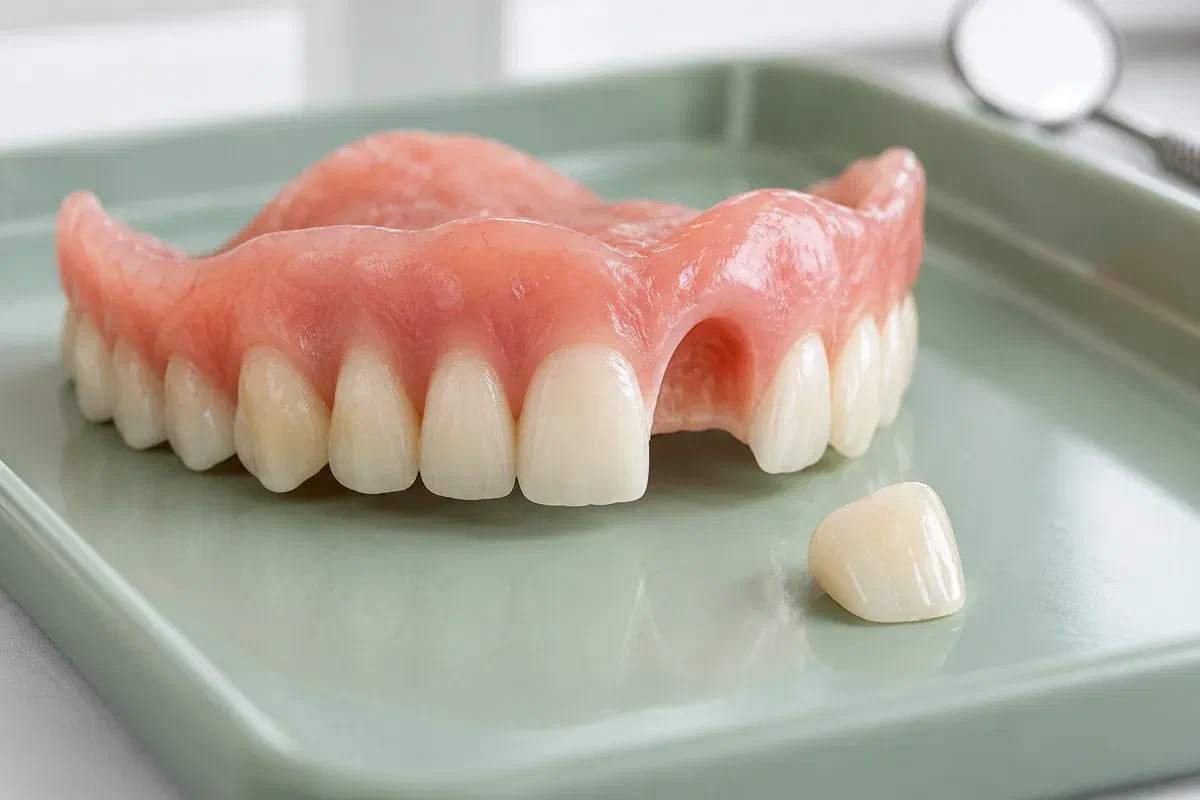
The missing tooth is the clear sign, but a knock can affect other areas. We check the spot the tooth came from, the teeth beside it and how your bite meets before suggesting a replacement.
Put it in a container with a lid rather than forcing it into the gap. Whether it can be used again depends on its underside and on the socket in the denture, which the clinician will inspect.
Describe the fall and mention any rough or sharp area you can feel. A chipped tooth often needs replacing, and the base around it is examined in case the crack extends further.
Several drops or repeated repairs may have weakened the appliance. Let us know the history so the advice reflects the denture's overall condition and not only this incident.
Contact us before going back to normal use if a tooth feels loose after a drop. Avoid pulling on it or biting hard to test it.
If a fall damaged only one tooth and the rest of the appliance is in decent shape, replacing that tooth may keep the fit, look and tooth arrangement you are used to. It addresses the damage without discarding parts that still serve you well.
The repair does have boundaries. It will not renew worn teeth elsewhere, improve a denture that was already loose or correct a bite that has felt off for some time. Ask the dentist how the rest of the appliance looks after the fall, and whether the repair is expected to last or is a temporary measure.
A drop can stress the acrylic in places you cannot see easily. Checking the base helps show whether a new tooth can be secured well or whether more extensive repair is needed.
Older denture teeth can wear and darken. Ask how a replacement is selected and how noticeable any difference in colour or shape is likely to be.
The new tooth needs to meet the opposite teeth evenly. Mention any spot that felt high or sore before the accident, as that may be relevant.
Timing depends on the damage, the materials and whether laboratory work is needed. Ask whether you will be without the denture at any point before you commit to work shifts or family plans.
Tell us where it fell, what it hit and what you noticed afterwards. Bring the denture, any recovered tooth and details about earlier repairs or the office that made it.
The dentist checks the area around the lost tooth and the condition of the whole appliance. Your mouth and bite may also be reviewed for concerns that a single replacement would not address.
You will talk through reusing or replacing the tooth, appearance, compatible materials, cost, timing and whether the fall calls for additional base repair.
Comfort, contacts and function are reviewed with the denture in place. If you later notice pressure, rubbing or rocking, let us know rather than assuming a complete-looking denture is fitting properly.
The repaired denture still needs cleaning every day and checks over time. Ask whether the repair material or the circumstances of the fall change how you should care for it.
Ask when to return to your regular foods. If the new tooth feels like it touches first, or the denture shifts in a way it did not before, call the team rather than testing it repeatedly.
Fill the sink with a little water or lay a towel beneath you before handling the denture. Use a case for transport, clean with recommended products and keep sharp tools away from the repair.
A new line, a wobble or a different feel near the replaced tooth should be looked at. Let us know when you noticed it and whether there was another drop or knock.
Patient information: Canadian Dental Association — denture care
An accidental drop raises immediate questions about damage, cleaning and whether to keep wearing the appliance. These answers help you take sensible steps before your assessment.
Contact our Bronte Street practice if a fall has knocked a tooth off your denture or left it chipped. We will check the appliance for further damage and explain whether replacing the tooth is the right way to restore it.
Bring the appliance and any pieces you found in a case, and please avoid gluing them first.
