You found it after all
Rinse it, seal it in a small container and bring it in. Please avoid pressing it back yourself. The clinician can decide whether it is still usable once both the tooth and the socket are checked.


Your denture tooth has vanished and you have no idea where. For households around Campbellville, one planned visit can cover the gap, the denture base and whether a new artificial tooth is suitable.
On a busy day of chores, errands and outdoor work, a denture tooth can come away without anyone noticing. By evening there is a gap, and retracing your steps leads nowhere. That's frustrating, but a missing piece is rarely the end of the road for the appliance.
Fitting a new artificial tooth is a repair to the denture itself. The clinician considers the socket left behind, the condition of the acrylic around it, the shade and shape of the neighbouring teeth, and how the replacement will meet the opposite arch. If the original tooth does turn up later, keep it in a closed container and bring it along.
For a rural household, it often makes sense to group errands and appointments. When you call from Campbellville, mention what happened and whether anyone else at home needs a visit too. Dr. Anjum will check whether the rest of the denture can take a focused repair, ask about its history and explain what a new tooth can realistically achieve.
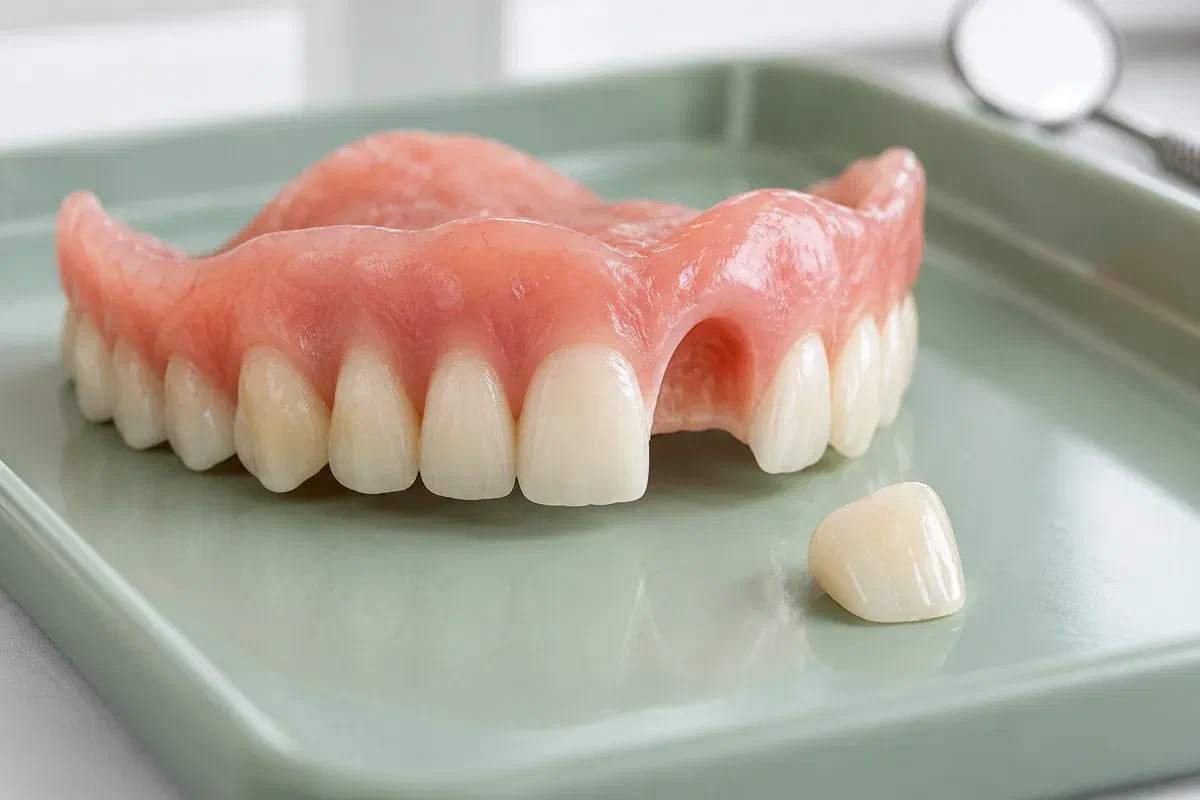
With no tooth to examine, the empty socket and its surroundings carry more weight. The neighbouring teeth, the base and the way your bite closes on that side help us judge whether replacement is sensible.
Rinse it, seal it in a small container and bring it in. Please avoid pressing it back yourself. The clinician can decide whether it is still usable once both the tooth and the socket are checked.
If part of the tooth is still attached, note any sharpness and when you noticed the break. A partial tooth usually needs replacement, and the base nearby is examined before agreeing on the work.
A history of lost or detached teeth may relate to the bite, the material or the age of the appliance. Mention previous episodes so the recommendation addresses the trend.
If another denture tooth now feels loose, call before using it for ordinary meals. Please don't wiggle it or press hard to see if it holds.
If your denture is otherwise comfortable and in good condition, a replacement tooth may close the gap while keeping the arrangement and appearance you are used to. You avoid starting over with a new appliance because of one missing part.
There are boundaries to what this repair covers. It won't refresh other worn teeth, cure a denture that has grown loose or reshape a bite that has changed. Ask the dentist how the remaining appliance looks and whether the repair should serve you for some time or is a temporary step toward broader treatment.
The acrylic around the socket must be sound enough to anchor a new tooth. Its condition helps show whether the job is simple or whether further damage alters the advice.
Without the lost tooth to compare, the shade and shape are chosen from the teeth around it. Ask how close a match is realistic on an older denture.
The replacement must fit into the way your denture already works. Mention if that area felt high, sore or under pressure before the tooth disappeared.
How long the repair takes depends on the damage, the material and whether laboratory work is needed. Ask ahead whether you may be without your denture so you can plan farm, work or family commitments.
Describe when you noticed the gap and anything unusual you felt before. Mention past repairs and, if the denture came from another office, bring whatever details you have.
The dentist checks the empty socket, the neighbouring teeth and the appliance overall. Your bite and mouth may also be reviewed for concerns a new tooth would not resolve.
Discuss the tooth to be selected, appearance, compatible materials, fees, timing and any base work needed. Ask how many visits to expect so you can arrange travel.
The repaired denture is checked for fit, contacts and function. Report any later pressure, rubbing or movement rather than assuming a whole-looking denture must be right.
The repaired appliance still needs daily cleaning and regular checks. Ask whether the repair or the reason the tooth was lost should change your routine.
Ask when to go back to your regular foods. If the new tooth touches first or the denture tips differently, phone us instead of testing it again and again.
If you take the denture out during the day, keep it in a proper case rather than a pocket or napkin. Clean it over water or a towel with recommended products.
If you notice a new crack, looseness or a changed feel near the tooth, phone first. We can advise whether it needs prompt review or can wait for a planned visit.
Patient information: Canadian Dental Association — denture care
A lost tooth brings up questions about safety, matching and whether the appliance is still usable. These answers can help you decide what to do next.
Contact our Bronte Street clinic about a lost, chipped or loose artificial tooth. We will review the appliance and let you know whether a new tooth is a sensible way to get it working well again.
If the tooth turns up, bring it in a closed case, and please don't glue it back yourself.
