You have the tooth and it looks whole
Mention this on the phone and pack it in a sealed container for the journey. Don't try to wedge it back in. The clinician will check whether it and its socket are suitable for reuse.

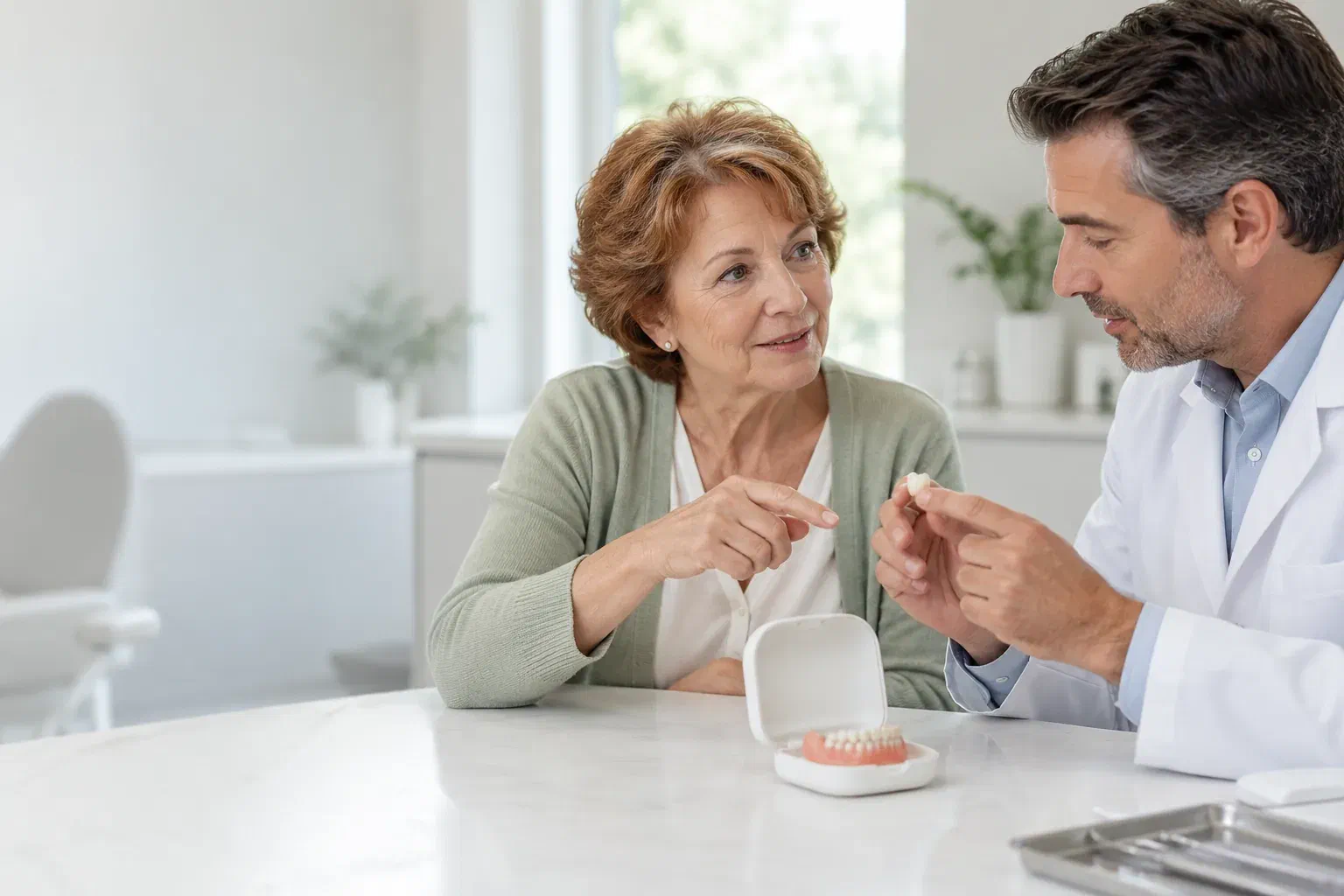
Travelling from Etobicoke for a denture repair works best with some planning. Call ahead, bring the right items, and we will assess the base, bite and whether one new tooth is a sound fix.
When the appointment involves a longer journey, preparation matters. A short phone call describing the damage, along with the denture, the loose tooth and any repair history, helps the team use your time well and reduces the chance of an extra trip for something that could have been sorted the first time.
Replacing an artificial tooth repairs the appliance rather than your mouth. The dentist weighs the condition of the acrylic around the gap, the shade and wear of the teeth nearby, and how the new tooth will meet the opposing ones. If you found the tooth, store it in a closed case so it survives the drive intact.
Once you are here, Dr. Anjum will check whether the remaining denture can support a focused repair, ask how it felt before the tooth came off, and outline the plan. That includes what can be matched, whether laboratory time is likely, and what other work might be advisable for comfort or fit.
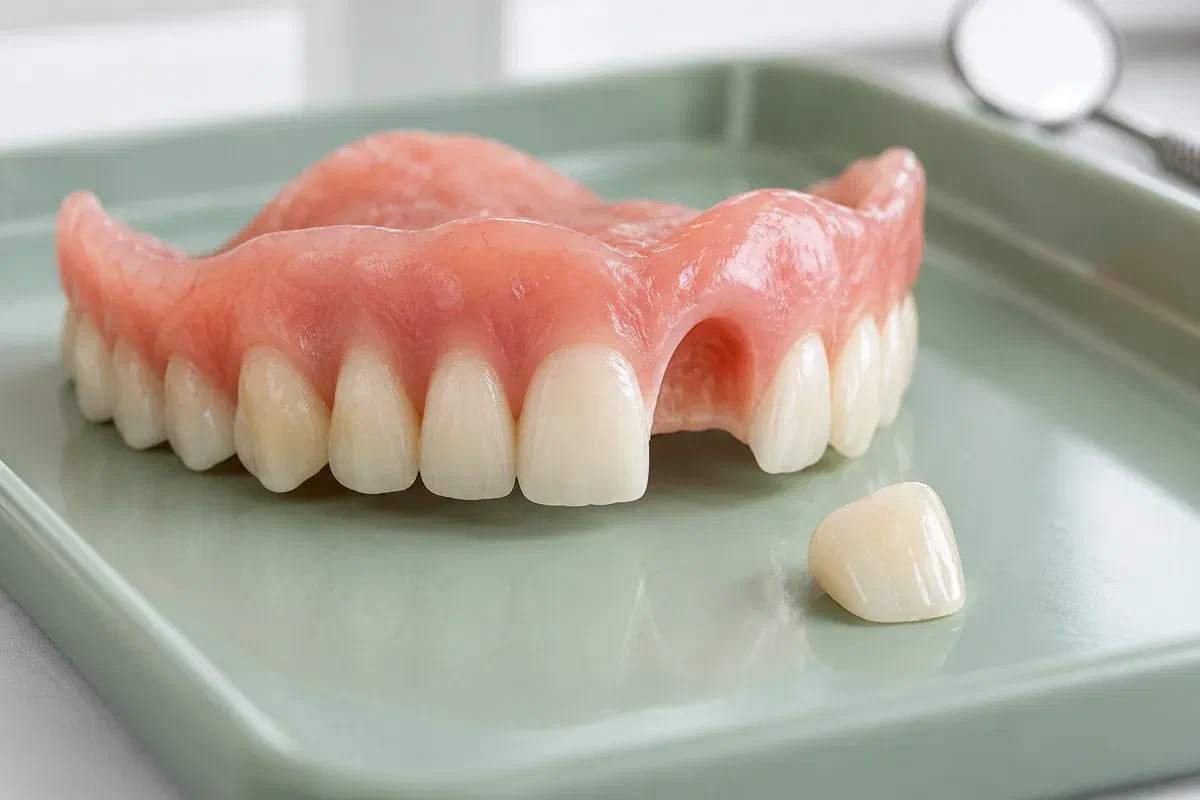
A missing piece is only one part of the assessment. Knowing about the attachment area, the neighbouring teeth and any change in your bite helps us gauge whether a replacement is reasonable and how long the visit may take.
Mention this on the phone and pack it in a sealed container for the journey. Don't try to wedge it back in. The clinician will check whether it and its socket are suitable for reuse.
Explain how it broke and whether an edge is irritating your mouth. A cracked tooth often needs replacement, and the base is examined before the repair is planned.
Share the history, including where the denture was made and when it was last fixed. Repeated failures may involve the bite or material, and the plan should take that into account.
Phone us about a loose denture tooth before relying on it for regular meals. Please avoid pulling at it or clenching to see if it holds.
If the rest of the appliance still works for you, replacing the one damaged tooth can keep the arrangement, appearance and comfort you are used to. For someone travelling a distance, avoiding an unnecessary remake can also mean fewer appointments overall.
The repair does not do everything, however. It will not refresh other worn teeth, correct a fit that has loosened or change a bite that has drifted. Ask about the condition of the rest of the denture and whether the repair is expected to serve long term or is a temporary measure while you consider other options.
The acrylic around the gap must be able to hold a tooth securely. Its state helps explain whether the repair is simple or whether further damage changes the advice.
Older denture teeth may have worn or changed colour. Ask how the new tooth will be selected and what differences might remain visible.
A replacement must fit how your denture already works when you chew. Mention any spot that felt high or sore before the tooth came off.
Timing depends on the damage, the materials and whether a laboratory is needed. Ask in advance whether you may be without the denture and whether a second visit is likely, so you can plan work and family commitments.
Tell us what broke, when it happened and how the denture has felt. Ask what to bring, and mention if the appliance was made at another office.
Bring the denture, the recovered tooth in a case and any records of past repairs. The dentist then examines the gap, the appliance and your bite to find any issues a new tooth alone would miss.
Discuss whether to reuse or replace the tooth, appearance, materials, fees, timing and any base work. Ask how many appointments are expected so you can arrange the trips.
The repaired denture is checked for contacts, comfort and function. Report any pressure or movement afterwards by phone, and ask whether it needs another look in person.
Daily care and regular checks still apply after the repair. Ask whether the repair or the cause of the original damage changes your routine, and what warrants a call before travelling back.
Confirm when to resume your usual foods. If the new tooth seems to touch first or the denture rocks, call us to describe it instead of testing it over and over.
Clean it over water or a towel and keep a case handy for travel. Use the recommended products and keep sharp objects away from the repaired spot.
If you notice a crack, looseness or a new feel near the tooth, call first. We can advise whether it needs prompt review. For mouth injuries, swelling or breathing concerns, seek closer urgent care.
Patient information: Canadian Dental Association — denture care
When you are coming from farther away, questions about timing, preparation and follow-up become more important. These answers help you plan an efficient visit.
Contact our Bronte Street clinic about a loose, chipped or missing artificial tooth. We will help you plan the visit, assess the appliance and explain whether replacing the tooth is a suitable way to restore it.
Pack the denture and any recovered tooth in a secure case, and please avoid gluing anything before the trip.
