You still have the tooth, whole
Wrap it or place it in a small closed container and resist pushing it back into the socket of the denture. Whether it can be used again depends on its condition and on the base it came out of.


When an artificial tooth pops off your denture, the rest of the appliance may still have plenty of use left. Our Milton team checks the base, the bite and the gap before suggesting a repair.
It often happens mid-bite. Something feels wrong, your tongue finds an empty space, and a small acrylic tooth is sitting on the plate. Replacing that tooth is a repair to the appliance, not to your mouth, so the plan has to consider the denture material, the pink base that held the tooth, and the way the new piece will close against the teeth opposite.
Not every loss is that obvious. Some people notice a wobble for days before the tooth lets go, others find the space after a fall onto a hard floor, and a few never discover where the piece went. Whichever way it happened, put any tooth you recover somewhere safe and bring it along with the appliance. Even when it cannot be reused, it tells the dentist something about the break.
Because you are already in Milton, getting the denture assessed soon is usually simple. Dr. Anjum will look at whether the rest of the appliance can support a focused repair, ask how it felt before the tooth came off, and explain what can be matched, what cannot, and whether any other work on fit or function should be considered.
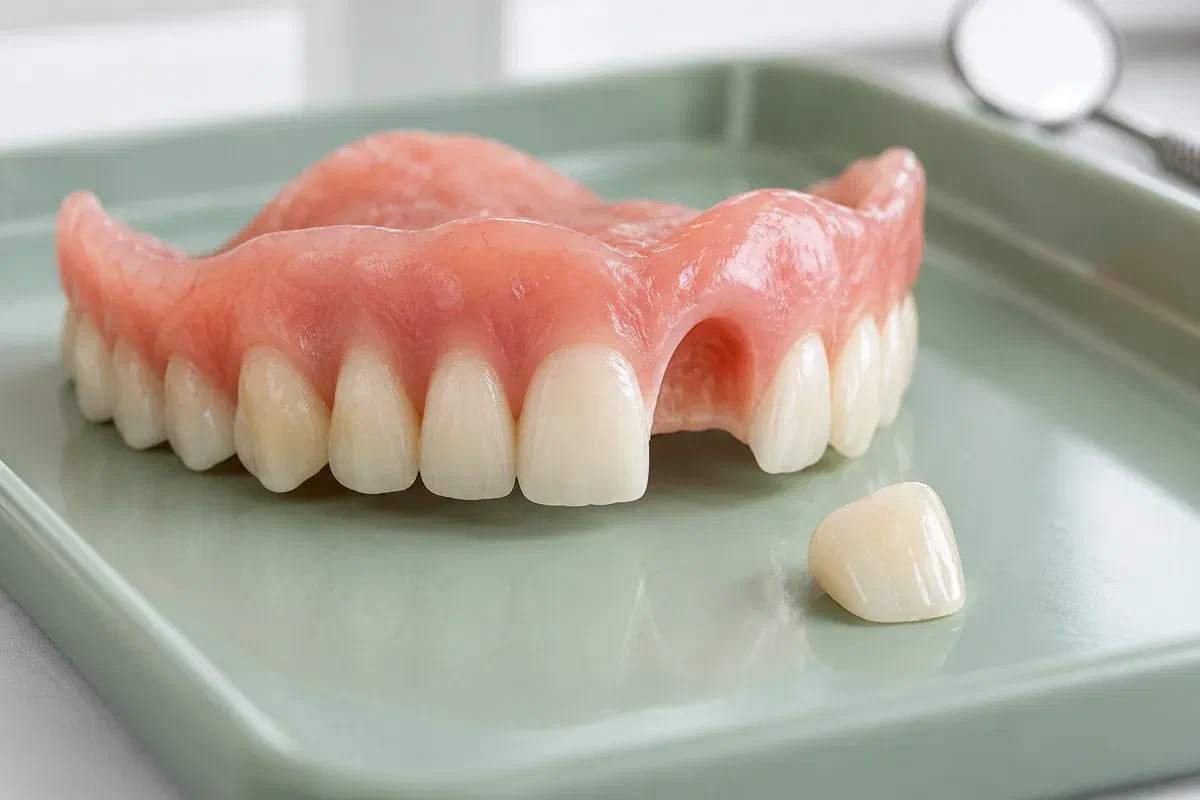
The tooth itself is one clue among several. The area where it was attached, the teeth on either side and the way your jaws meet all help show whether replacing a single tooth is a reasonable step.
Wrap it or place it in a small closed container and resist pushing it back into the socket of the denture. Whether it can be used again depends on its condition and on the base it came out of.
Let us know what you were doing when it broke and whether an edge now catches your tongue or cheek. A fractured tooth often needs replacing, yet the material around it deserves a check before the work is scoped.
A tooth that detaches again and again usually points to something underneath, such as the bite, the base or how the appliance is handled. Mention every earlier repair so the plan responds to the pattern.
Call before carrying on with normal meals if a denture tooth feels loose. Please don't wiggle it or bite down hard to see whether it holds.
Plenty of people grow comfortable with a particular denture. The teeth sit where they expect, the smile looks familiar, and speaking feels natural. When the remainder of the appliance is still in reasonable shape, swapping out the one damaged tooth can keep those qualities while dealing with the spot that failed.
That said, the scope of this repair is narrow. It will not refresh every tooth, correct a denture that has grown loose, or fix a bite that was never right. Ask how the rest of the appliance looks to the dentist and whether the repair is expected to last a good while or simply bridge the gap until something else is planned.
The acrylic that held the tooth needs to be sound enough to take a new one. Its condition helps explain whether the repair is straightforward or whether hidden cracks change the advice.
Denture teeth that have been worn for years can shift in shade and lose shape. Ask how a new tooth is chosen and how close a match you can reasonably expect.
The replacement has to work with every other tooth when you bite. If that area felt high or sore before the tooth came off, say so, because it may explain the failure.
Timing depends on the type of damage, the material and whether a dental laboratory is involved. Before you plan your week around work or family, ask whether you will need to be without the denture for any stretch.
Tell us when the tooth came off and anything you felt beforehand. Mention past repairs, and if the denture came from another office, bring any paperwork or details you still have.
The dentist looks at the affected area and the general state of the appliance. Your mouth and bite may also be checked, since some issues would remain even after a new tooth is added.
You will discuss reusing the old tooth or choosing a new one, along with appearance, compatible materials, fees, timing and any extra base work that is advised.
The repaired denture is checked for how it sits, where teeth touch and how it functions. Report unusual pressure or movement afterwards; a denture that looks complete still has to fit well.
The new tooth becomes one more part of an appliance that still needs daily cleaning and periodic checks. Ask whether the repair or the original cause of the break changes your usual routine.
Ask when you can return to your usual foods. If the new tooth seems to hit first or the denture tips in a way it did not before, get in touch instead of testing it again and again.
A folded towel or a basin of water below you can soften an accidental drop. Keep a case for carrying the denture, use the products recommended to you and never pick at the repair with sharp household items.
A fine line, a little play or a different feel beside the new tooth deserves a look. Let us know when it started and whether the appliance was dropped or knocked.
Patient information: Canadian Dental Association — denture care
A small piece missing from a denture can bring up practical worries about how you look, how long it takes and whether you can keep wearing it. These answers help you prepare for your visit.
Reach out to our Bronte Street practice if an artificial tooth has come loose, chipped or gone missing. We will check the appliance and tell you plainly whether replacing that tooth is the right way to get it working again.
Please carry the appliance and any pieces you found, and avoid gluing anything back together.
