It came off whole, again
Keep it in a closed container and resist the urge to snap it back in yourself. The clinician will check whether it can be reused and whether the socket has changed since the last repair.


When the same denture tooth keeps coming loose, another quick fix may not be enough. From Mississauga, you can have the pattern assessed along with the base, the bite and the repair options.
A tooth that comes off a denture once can be bad luck. The same tooth letting go a second or third time usually means something is putting it under strain. It might be how your jaws close, the condition of the acrylic around it, the way earlier repairs were done, or simply an appliance that has reached the end of its useful life.
Replacing an artificial tooth repairs the denture, not a natural tooth, and that is especially important to remember when failures repeat. The dentist considers the base material, the neighbouring teeth and the contact the tooth makes when you bite. Bring the tooth if you have it, plus whatever you remember about each previous repair.
For anyone coming from Mississauga, one well-prepared appointment can cover a lot of ground. Dr. Anjum will look for the reason behind the repeated detachment, ask how the denture felt before each break, and explain whether another focused repair is reasonable, what its limits are, and what other work might change the outcome.
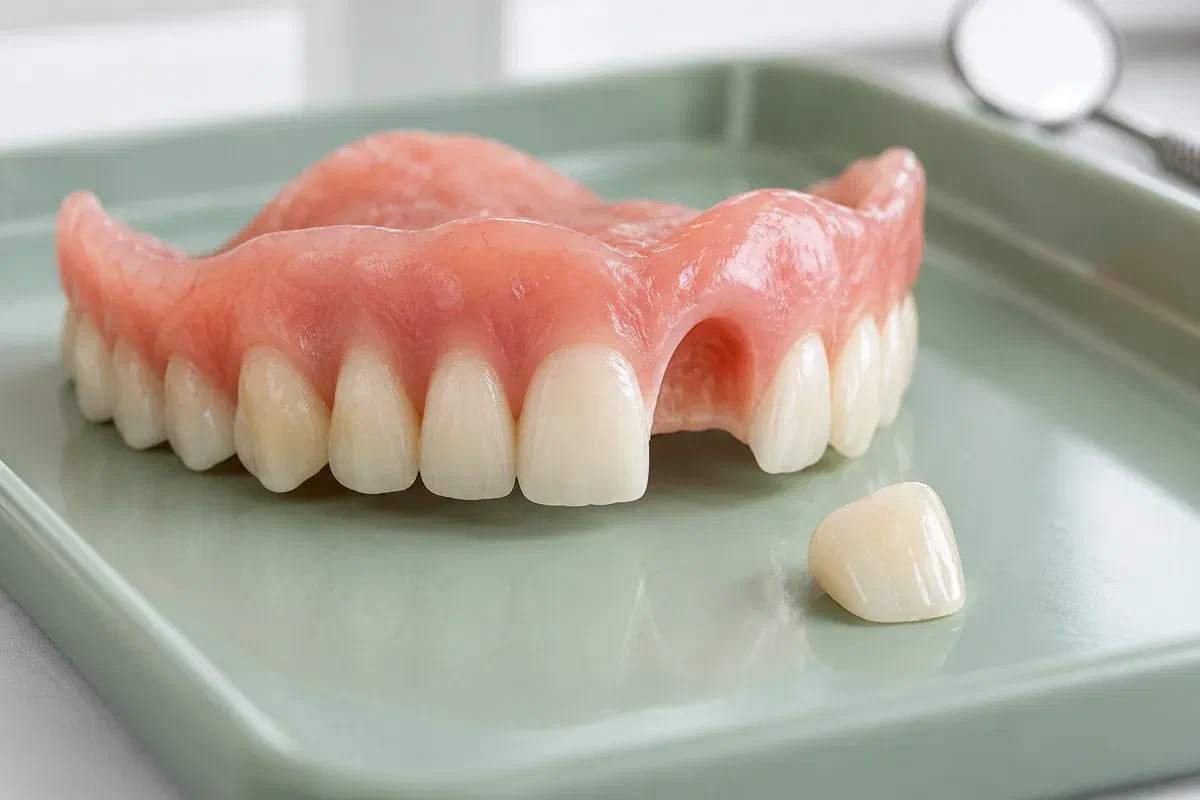
A repeated break is a clue to look past the tooth itself. We check the attachment area, the teeth around it and how your bite meets that part of the denture before suggesting the next step.
Keep it in a closed container and resist the urge to snap it back in yourself. The clinician will check whether it can be reused and whether the socket has changed since the last repair.
Let us know whether the tooth cracked during a meal, after a knock or without warning, and whether there is a sharp edge. A broken tooth usually needs replacing, and the base is checked before the work is scoped.
Frequent detachment calls for a look at the bite, the material and how the appliance is used. Telling us about each past repair helps the advice target the underlying cause.
Call the clinic when a denture tooth starts to loosen instead of waiting for it to fall out. Don't test it by pulling or biting down hard.
When the denture is otherwise sound, replacing the weak tooth can keep the arrangement and appearance you know. The aim is to deal with that area thoughtfully, so the repair is not simply a repeat of the last one.
Even so, a single replacement has limits. It cannot renew every worn tooth, correct a denture that no longer fits, or reshape a bite that is overloading one spot. Ask the dentist what condition the rest of the appliance is in and whether this repair is expected to hold or is better seen as an interim solution.
Repeated repairs can change the area that holds the tooth. Understanding its condition helps explain whether a new tooth can be secured reliably or whether more extensive base work is needed.
On an older appliance, neighbouring teeth may have worn or changed shade. Ask how a replacement will be chosen and what differences may still be visible.
A tooth carrying more than its share of pressure, it may keep failing. Mention whether that side felt high, sore or heavily used before each break.
Steps vary with the damage, the material and whether a laboratory is involved. Ask about timing and any time without the denture before arranging work, travel or family commitments around it.
Bring the denture, any recovered tooth and the dates or details of previous repairs if you have them. Mention where the denture was made, especially if it was another office.
The dentist checks the affected area, the overall denture and how your teeth meet. That helps identify issues that a replacement tooth alone would leave unresolved.
Discuss reusing or replacing the tooth, appearance, material compatibility, cost, timing and any work recommended on the base or bite to reduce the risk of another failure.
The repaired denture is checked for comfort, contacts and function. If pressure, rubbing or movement appears later, contact us instead of assuming a finished-looking repair is working as it should.
The repaired area still sits within an appliance that needs regular cleaning and review. Ask whether the repair method or the reasons behind the repeated failures should change your routine.
Ask when to return to your usual eating. If the new tooth feels like the first contact or the denture tips differently, call the team rather than repeatedly checking it with hard bites.
Clean over water or a soft towel and keep the denture in a case when it is out of your mouth. Use the products advised and avoid scraping the repaired area with anything sharp.
A thin line, slight movement or a new feel around the replacement deserves prompt attention. Tell us when it started and whether there was any drop or unusual force.
Patient information: Canadian Dental Association — denture care
Repeated detachment raises practical questions about cause, durability and whether the denture is still worth repairing. These answers help you prepare.
Reach our Bronte Street clinic about an artificial tooth that has come off again, chipped or gone missing. We will assess the denture and explain whether replacing that tooth is a sensible fix or whether more is needed.
Pack the appliance, any recovered tooth and notes on past repairs, and please don't glue anything first.
