The tooth popped out without breaking
Rinse it gently, place it in a small sealed case and leave it there. Pressing it back in or bonding it at home can make it harder for the clinician to judge whether it can be reused.


Before reaching for a home repair kit, let a dentist look at the denture. From Oakville, you can bring the loose or broken tooth to us and learn whether a focused professional repair fits.
The tooth is in your hand, it looks undamaged, and the space it left seems to have exactly its shape. A tube of glue or a pharmacy repair kit can look like the quickest answer. Unfortunately, household adhesives are not made for the mouth, and a tooth fixed slightly out of position can change how the whole denture bites and make the proper repair harder.
A professional replacement treats the artificial tooth as one component of the appliance. The dentist considers the acrylic it was set into, the shape and shade of the teeth beside it, and the way it will meet your opposing teeth. Keeping the recovered tooth clean and safe gives the assessment useful information, even when a different tooth ends up being chosen.
Coming from Oakville, it helps to call first and describe what happened so the visit can be planned well. Dr. Anjum will check whether the rest of the denture can support a focused repair, ask how it felt before the break, and explain the likely result, including any limits in matching an older appliance.
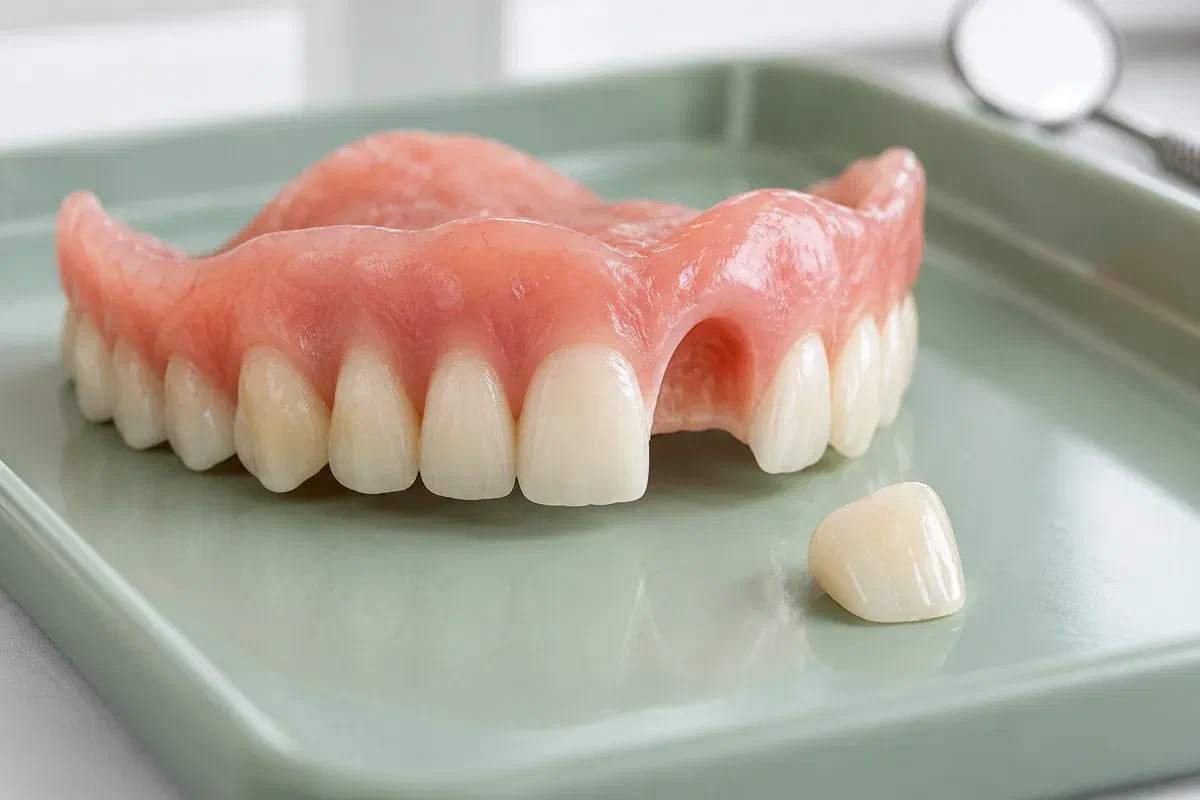
A missing tooth draws the eye, but the decision rests on more than that. The socket it left, the condition of the adjacent teeth and the way your bite lands all guide whether a replacement is a sensible choice.
Rinse it gently, place it in a small sealed case and leave it there. Pressing it back in or bonding it at home can make it harder for the clinician to judge whether it can be reused.
Note how it happened and whether a rough edge now rubs your tongue. A cracked tooth usually needs replacing, though the base around it is examined before the scope of the repair is set.
When a tooth keeps letting go, the cause may sit in the bite, the material or previous repair work. Tell us what was done before so the plan can tackle why it recurs.
Phone us if a denture tooth starts to feel loose rather than carrying on as usual. Try not to pull at it or bite down firmly to see if it moves.
A denture that still fits comfortably and looks right has value. Replacing the single damaged tooth may let you keep that familiar arrangement and appearance, so you are not starting over because of one small piece.
There are limits to keep in mind. Swapping one tooth does not renew the others, cure a loose fit or correct a bite that has never felt right. Ask the dentist about the state of the remaining appliance and whether the repair is meant to serve for some time or to hold things together while a longer-term plan is made.
The acrylic around the gap has to be in good enough shape to hold a tooth securely. Its condition helps explain whether the job is simple or whether extra damage affects the recommendation.
Teeth on an older denture may have changed colour or worn down. Ask how the replacement will be chosen and what differences you may still notice once it is in.
The new tooth needs to take its share of chewing without standing out. Tell the dentist if that spot felt high, sore or under strain before it came off.
The plan varies with the damage, the material and whether laboratory work is needed. Ask about timing and whether you may need to go without the denture before you arrange your work or family schedule.
That means the denture, the tooth if you found it and any details about who made the appliance. Describe when the tooth came off, what you noticed beforehand and whether it has been repaired in the past.
The dentist checks the damaged area and how the rest of the denture is holding up. Your mouth and bite may be examined too, because a new tooth alone may not settle every concern.
You and the dentist discuss reusing or replacing the tooth, appearance, material suitability, cost, timing and whether the surrounding base needs added work.
Before you leave, the repaired denture is checked for comfort and contact. Report unusual pressure, rubbing or movement later on, since an appliance that looks finished can still need adjustment.
After the repair, the denture still needs daily cleaning and regular review. Ask whether the material used or the original cause of damage means your care routine should change.
Confirm when to resume your usual foods. If the replacement feels like the first tooth to touch or the denture tips in a new way, call the team rather than testing it over and over.
Work over a towel or a basin of water, and use a case whenever the denture leaves your mouth. Stick to recommended cleaning products and keep sharp tools away from the repaired area.
A fine crack, slight looseness or different feel near the new tooth should be checked soon. Tell us when you first noticed it and whether the denture took a fall or a knock.
Patient information: Canadian Dental Association — denture care
When a piece of your denture comes off, it is natural to wonder about quick fixes, timing and appearance. These answers can help you arrive prepared and avoid steps that make the repair harder.
Get in touch with our Bronte Street clinic about an artificial tooth that has come off, chipped or gone missing. We will look over the denture and tell you whether a professional replacement is the sound way to restore it.
Bring the denture and any loose tooth in a closed case, without trying to glue it first.
