The tooth released in one piece
Keep it in a little box with a lid. Don't seat it back by biting down on it. The clinician can then judge both the tooth and the socket for possible reuse.


A denture tooth has to do more than fill a space; it has to meet the teeth opposite. From Puslinch, plan a visit where the bite, the base and the replacement are all checked together.
Most people judge a denture repair by whether the gap is gone. Your jaw judges it differently. Each artificial tooth shares the work of chewing, and a replacement that sits a fraction too high or low can make the whole appliance tip, rub or feel unsteady. That is why the bite gets as much attention as the look.
Putting a new tooth into a denture is a repair to the appliance, not to a natural tooth. The clinician weighs the condition of the acrylic around the socket, the wear on neighbouring teeth and, importantly, the way the replacement will contact the opposing arch. Any tooth you recover is worth bringing, in a sealed container, along with the denture.
Rural households in Puslinch often combine trips, so a single, well-prepared appointment helps. Dr. Anjum will check whether the rest of the denture is a good base for a focused repair, ask whether that area felt high or sore before the tooth came off, and talk through realistic expectations for fit, function and appearance.
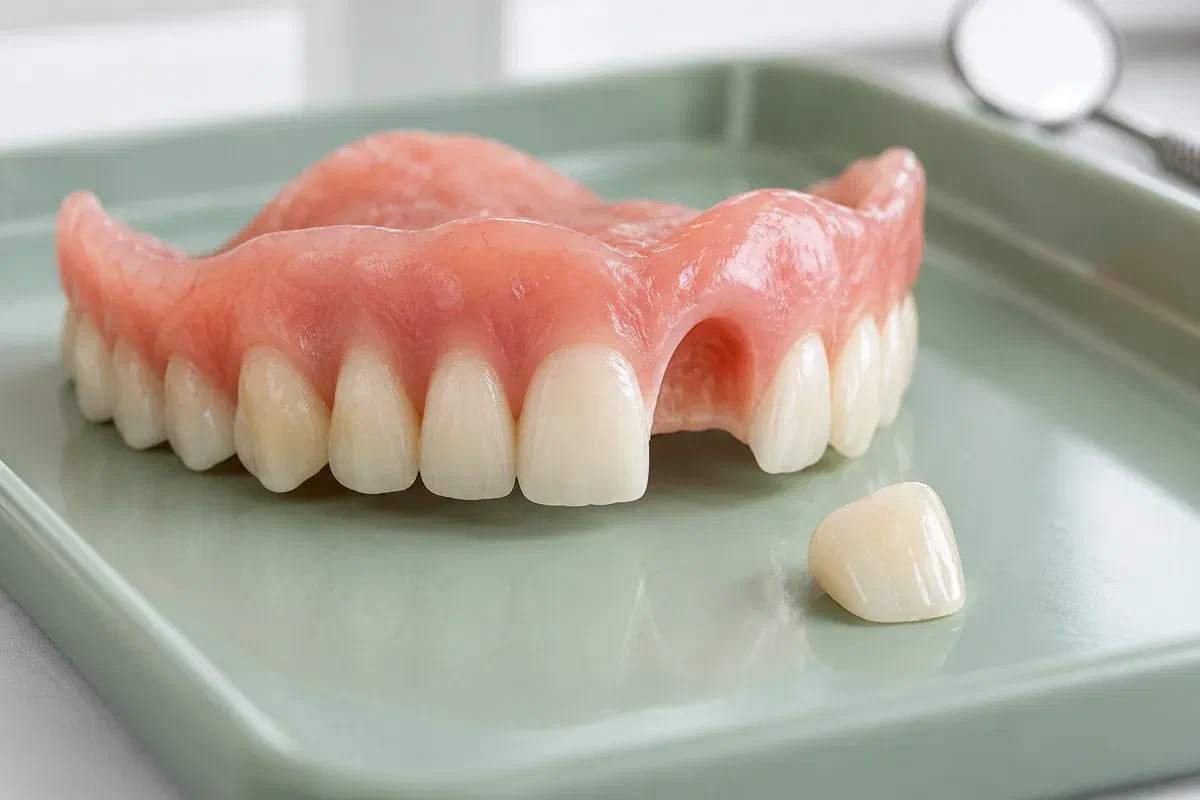
The way the tooth failed can hint at bite problems. The attachment site, adjacent teeth and how your jaws come together all inform whether a replacement on its own will be enough.
Keep it in a little box with a lid. Don't seat it back by biting down on it. The clinician can then judge both the tooth and the socket for possible reuse.
Note what you were chewing and whether the edge is now rough. A cracked tooth typically needs replacing, and the base is checked to see whether the force damaged anything else.
Teeth that fail repeatedly in one zone may be overloaded. Tell us about earlier repairs and any habit of chewing on one side, so the plan looks at the cause.
Before carrying on with meals, call us about any denture tooth that feels loose. Please avoid pulling on it or grinding against it to see if it gives.
When your denture is otherwise sound, replacing a single tooth can preserve an arrangement your mouth is used to. It keeps a familiar appearance and, ideally, a familiar chewing pattern, while solving the problem at one site.
A focused repair has edges, though. It won't renew all the teeth, correct a denture that has loosened over time or rebalance a bite that has gradually shifted. Ask what the dentist sees in the rest of the appliance and whether the repair is meant to last or to tide you over while another plan is considered.
The acrylic holding the tooth must be sturdy enough for chewing forces. Its condition helps explain whether the repair is simple or whether other damage changes the advice.
Older teeth may be worn flat or slightly discoloured. Ask how the new tooth is chosen and whether any difference in shade or form may show.
The replacement has to touch the opposing teeth evenly with the rest of the set. Mention any high or tender spot you felt there before the tooth came loose.
Steps and timing hinge on the damage, the denture material and whether a laboratory is needed. Ask early about any time without the appliance so you can arrange work, travel and home life.
Tell us when the tooth came off and whether that area felt different beforehand. Bring the denture, any loose piece and information about earlier repairs or the office that made it.
The dentist checks the damaged area, the overall denture and how your jaws meet. That helps identify problems a single replacement might leave in place.
Talk about reusing or replacing the tooth, how it will look, suitable materials, fees, timing and whether the base or bite needs further attention.
With the repair complete, the dentist checks comfort, function and where teeth meet. Report any pressure or rocking that appears later instead of assuming the repair is fine because it looks whole.
Ongoing cleaning and occasional reviews remain part of denture care after a repair. Ask whether the material or the reason for the original break affects how you should look after it.
Confirm when to return to your usual diet. If the new tooth seems to strike first or the denture lifts on the other side, call the team rather than repeatedly testing it.
Hold the denture over water or a folded towel, and keep it in a case when it's out. Use advised products and keep sharp objects away from the repair.
Soreness under the denture, a crack line or slight looseness near the tooth should be checked. Tell us when it started and whether the appliance had a knock.
Patient information: Canadian Dental Association — denture care
Most questions after a denture tooth breaks come back to one theme: will it feel right when you eat? These answers help you understand what the dentist looks for.
Call our Bronte Street office about a loose, chipped or missing artificial tooth. We will examine the denture, review your bite and give you a clear answer on whether a replacement tooth is the right approach.
Bring the appliance and any recovered tooth in a container, and please don't glue or bite it back in.
