
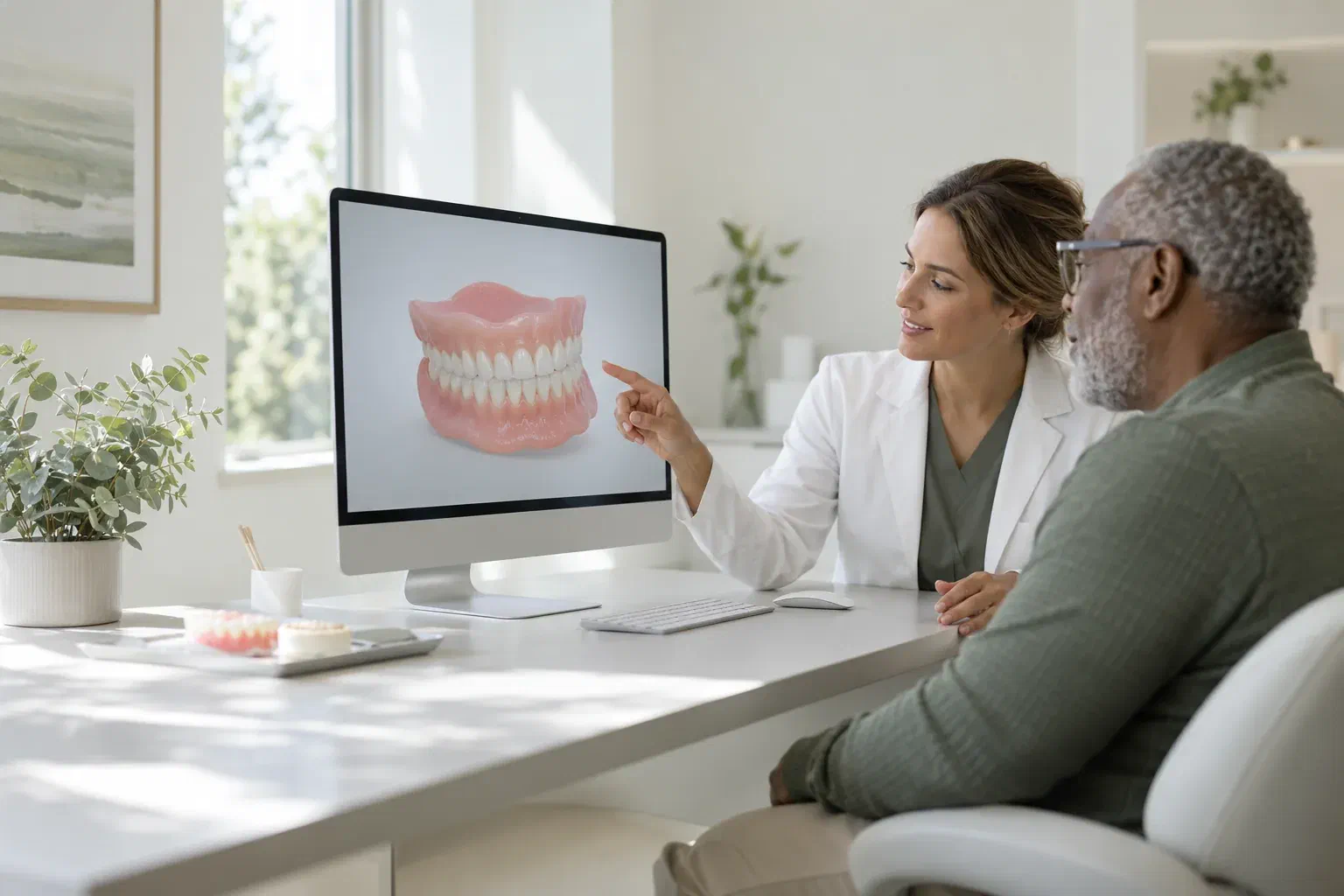
Illustrative patient and dentist reviewing a digital denture design
Restorative Dentistry

Digital Dentures in Campbellville

A denture has to cope with ordinary days: early breakfasts, long work hours, meals on the go. For Campbellville households, here is how digital design can support a practical, well-fitting appliance and what still happens at the chair.

Practical planning for Campbellville

A denture that keeps up with the day.

For many people, the test of a denture is not how it looks on a screen but whether it stays put through a sandwich at lunch, a long conversation and a day outdoors. Digital design is one of the tools that can help plan an appliance for that kind of everyday use, though it is never the whole story.

Calling a denture digital simply means computers are involved in designing or making it, in part or throughout. Underneath the technology, the requirements stay practical: secure support from the gums and ridges, teeth that meet evenly, an appearance you are comfortable with, and a design you can remove, clean and replace without fuss.

From Campbellville, a consultation is a good time to describe your routine, from the foods you rely on to how much time you have for appointments. We can then explain which steps might be digital, what material is proposed and how we would confirm the denture works in real use, not only in the chair.

Discuss an everyday-ready denture
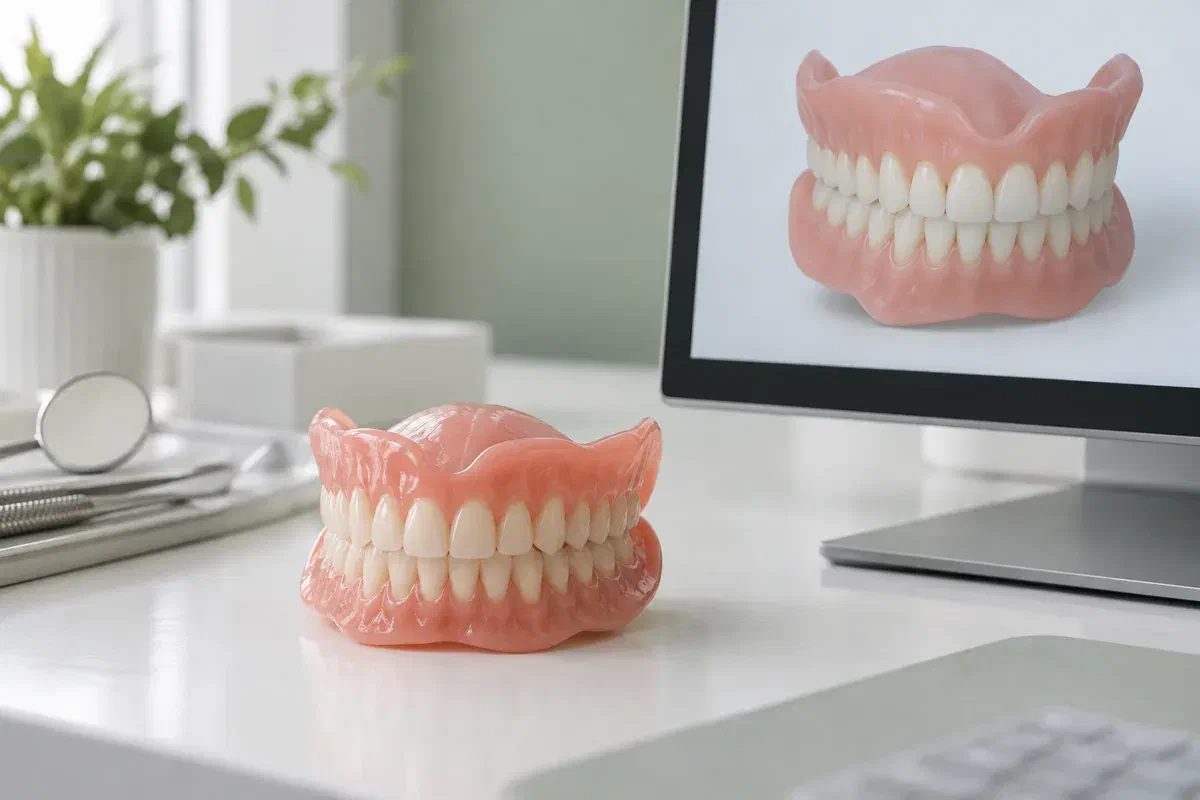
Removable denture beside an illustrative computer-based denture model
Everyday reasons to look again

Start with how the denture has to work.

Most conversations begin with daily function, whether that is a worn set that has stopped keeping up, a schedule that leaves little room for visits, or questions about how a newer material would hold up.

Your current denture struggles with certain foods

Tell the dentist which foods or situations cause trouble. The present set may hold useful clues about what to keep or change, but its design should not be copied until the fit and bite have been checked.

Your schedule has little room for extra trips

Ask how many visits the plan involves and whether any can be grouped with other errands. No digital method sets a fixed number, and the denture still needs clinical checks in person.

You want an appliance that is simple to maintain

Materials vary with manufacturing methods, and so do repair and relining options. Ask about the specific denture proposed, so you know what upkeep would involve before you commit.

Screen designs are useful planning tools, but a denture proves itself in daily use. Examination and fitting visits remain the way to check comfort and function.

Practical strengths of digital planning

Organized design, tested in real life.

Software can plan teeth, base and bite as one coordinated design and send it accurately for milling, printing or other production. In some systems, that design is saved for possible future use.

Those strengths are worthwhile when they lead to a denture that works for your routine. They do not make a digital appliance better than a well-made conventional one. Ask how the plan handles your fit, your appearance and the foods and activities you care about, and how its performance will be reviewed.

Patient information: American College of Prosthodontists — clinical outcomes of digital dentures

Tooth layout you can comment on

A proposed arrangement gives you a chance to talk about how the teeth look and meet. You can ask at which appointment it is presented, and whether a request you make there can be tried out before production.

One record, one design, one production path

The information gathered at the clinic feeds directly into manufacturing. Knowing that path makes it easier to understand which decisions were clinical and which were technical.

A file that may help with future work

Find out whether the design is kept and how it could assist a repair or remake. Fresh records may still be needed if your mouth or needs change in the meantime.

The plan, visit by visit

Four stages, planned around real use.

Each workflow is slightly different. Ask which stages apply, including any traditional impressions, trial dentures, lab work and reviews after delivery, so you can plan around them.

  1. Talking through your routine

    The dentist examines the supporting tissues, any remaining teeth and your current denture, and asks about meals, work and daily habits. These details define what the new appliance must handle.

  2. Recording the mouth and bite

    Depending on the plan, records might come from impressions, a scanner, bite registrations or photos. Ask what each provides and whether your current denture can be recorded too.

  3. Checking the proposed design

    You review tooth arrangement and appearance, and a trial version may be used. This is also when you hear whether it will be milled, printed or processed traditionally, and what that material asks of you in upkeep.

  4. Delivery and a real-world review

    The denture is fitted, with instructions for wear and cleaning. A follow-up after you have used it at home allows the dentist to adjust pressure points or contacts.

Daily upkeep

Simple routines, matched to the material.

Digital design does not change the need for daily cleaning and regular examination. Ask for instructions suited to your new denture’s material, especially if your old routine was built around something different.

Set up a cleaning routine that fits your day

Ask which brush, cleanser and soaking method suit this material, and how it should be stored overnight. A product that worked on your last denture may not be right for the new one.

Mention discomfort sooner rather than later

Pressure, movement or an uneven bite are worth reporting. Adjustments may be needed after a denture meets the demands of everyday meals and work, regardless of how it was made.

Keep a note of what you have

Ask which material and design details to keep. If you ever see another dentist, that information helps them understand the appliance and how it can be repaired.

Construction choices

Choose the route that fits your mouth and your schedule.

Digital and traditional methods can be combined in several ways. Compare them by clinical suitability, materials, review opportunities, maintenance and how many appointments each route requires.

A well-established method

Conventional fabrication

Traditional methods can still produce a well-planned, carefully fitted denture. Ask how the mouth and bite are recorded, when you review appearance, and how fitting and follow-up are handled.

Different methods at different stages

Conventional and digital steps together

Some plans use traditional records or try-ins alongside digital design and production. Find out which stages of your plan are digital and why that mix was chosen.

Milled or printed when suitable

Digital design and machine production

Dentures can be milled from a block or printed layer by layer. The two processes do not use identical materials, so it is worth checking which one your plan uses and how relines, repairs and maintenance would be managed.

Questions from Campbellville

Everyday function, honestly answered.

These answers cover eating, stability, appointments and care, the practical topics that matter most when a denture needs to fit into a busy routine.

(905) 876-4488
Will I be able to eat my usual foods with a digital denture?
Many people return to a wide range of foods, but chewing with any denture takes practice and some foods remain harder than others. Start with softer textures, cut food into smaller pieces and mention persistent difficulties at your review.
Can a new digital denture help if my lower denture keeps lifting?
A new design may help if fit or bite is the cause, but lower dentures can be challenging for many reasons. The dentist will examine your mouth and explain the options, which may include approaches beyond a new denture.
Can visits be grouped to reduce trips?
Sometimes certain steps can be combined, depending on your case and the method. Ask at the consultation which appointments could be grouped and which need separate visits so each stage is done properly.
Does the computer decide how my denture looks?
No. The software is a tool. You and the dentist discuss tooth shape, shade and arrangement, and the dentist makes the clinical decisions about what will work. Ask when you will review the design and what can still be changed.
Should I use denture adhesive with a digitally made denture?
Ask the dentist first. A well-fitting denture may not need adhesive, and relying on it can mask fit problems. If you do use one, the dentist can recommend a suitable product and explain how to remove it during cleaning.
If the denture fits well at delivery, do I still need a review?
Yes. Some pressure points and bite issues show up only after days of normal use. A review lets the dentist check the tissues and make adjustments before small concerns turn into sore spots.
Planning from Campbellville

Tell us how your day works.

When you book at our Bronte Street practice, mention any scheduling limits so we can plan sensibly. We will examine your mouth and current denture, then go through the proposed steps, the material and how fit and function will be checked.

Bring your current denture and a short list of the foods or moments when it gives you trouble.

Visit Milton Dental Clinic
Unit 1, 342 Bronte St. S, Milton, ON L9T 5B7
Get directions Clinic hours
Monday–Thursday
11am–7pm
Friday–Sunday
By appointment only

Areas we serve

  • Milton
  • Oakville
  • Mississauga
  • Georgetown
  • Halton Hills
  • Acton
  • Campbellville
  • Brampton
  • Burlington
  • Puslinch
  • Rockwood
  • Erin
  • Caledon
  • Etobicoke
  • Old Milton
  • Bronte Meadows
  • Timberlea
  • Dorset Park
  • Dempsey
  • Clarke
  • Beaty
  • Coates
  • Harrison
  • Scott
  • Willmott
  • Ford
  • Bowes
  • Cobden
  • Walker
  • Mountain View
  • Milton Heights
  • Hawthorne Village
  • Valley View
  • Fallingbrook
  • Nassagaweya
  • Trafalgar
  • Esquesing
  • Nelson
  • Brookville
  • Moffat
  • Glen Williams
  • Norval
  • Limehouse
  • Stewarttown
  • Ashgrove
  • Hornby
  • Silver Creek
  • Speyside
  • Scotch Block
  • North Oakville
  • River Oaks
  • Glen Abbey
  • West Oak Trails
  • Palermo
  • Bronte Creek
  • College Park
  • Joshua Creek
  • Uptown Core
  • Preserve
  • Iroquois Ridge
  • Lisgar
  • Meadowvale
  • Meadowvale Village
  • Churchill Meadows
  • Erin Mills
  • Central Erin Mills
  • Streetsville
  • East Credit
  • Creditview
  • Heartland
  • Sheridan
  • Mount Pleasant
  • Credit Valley
  • Huttonville
  • Churchville
  • Springbrook
  • Northwest Brampton
  • Bram West
  • Fletcher's Meadow
  • Fletcher's Creek South
  • Alton Village
  • Orchard
  • Millcroft
  • Headon Forest
  • Tansley
  • Brant Hills
  • Tyandaga
  • Kilbride
  • Lowville
  • Aberfoyle
  • Morriston
  • Arkell
  • Hillsburgh
  • Freelton
  • Carlisle
  • Waterdown
  • Flamborough
  • Mountsberg

How can we help?

Milton Dental Clinic

Have a question about your smile? Choose the option that works best for you.

For urgent dental concerns, please call.
Messages are reviewed during clinic hours.