You already know what your old denture gets wrong
Explain where it rubs, slips or feels awkward. Those details guide the new design, but the dentist will check whether your gums and bite have changed before reusing any features of the old appliance.

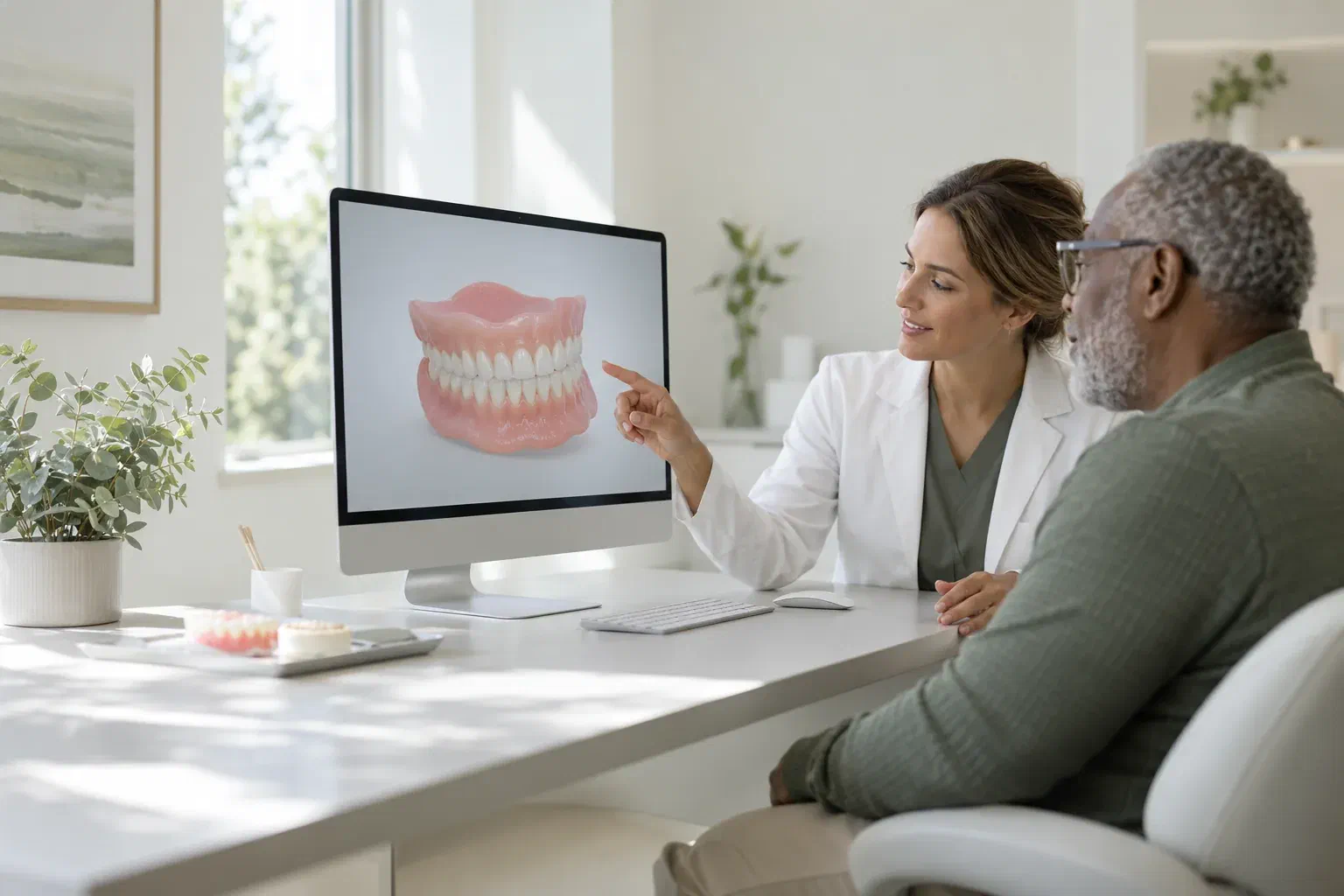
The fitting appointment is not the finish line. For anyone in Erin or Hillsburgh considering a digital denture, this page explains how design and records lead to a first fit, and why the weeks of wear afterwards matter just as much.
A new denture can feel excellent in the chair and different by Thursday’s supper. That is not a sign that something has failed. Real meals, long conversations and a full day of wear reveal things no examination room can, which is why follow-up matters whether a denture is made digitally or by conventional methods.
With a digital denture, a computer is involved in some or all of the design and production. That can help organize the plan, but it cannot predict exactly how your tissues will respond to daily use. The denture still has to sit securely, close evenly, look right to you and be manageable to remove and clean.
When you are coming from Erin, it is worth planning the review appointments as carefully as the first ones. At a consultation, we can explain which steps would be digital, what material is proposed and how the fit will be confirmed, and discuss what to note during the first weeks so each visit is productive.
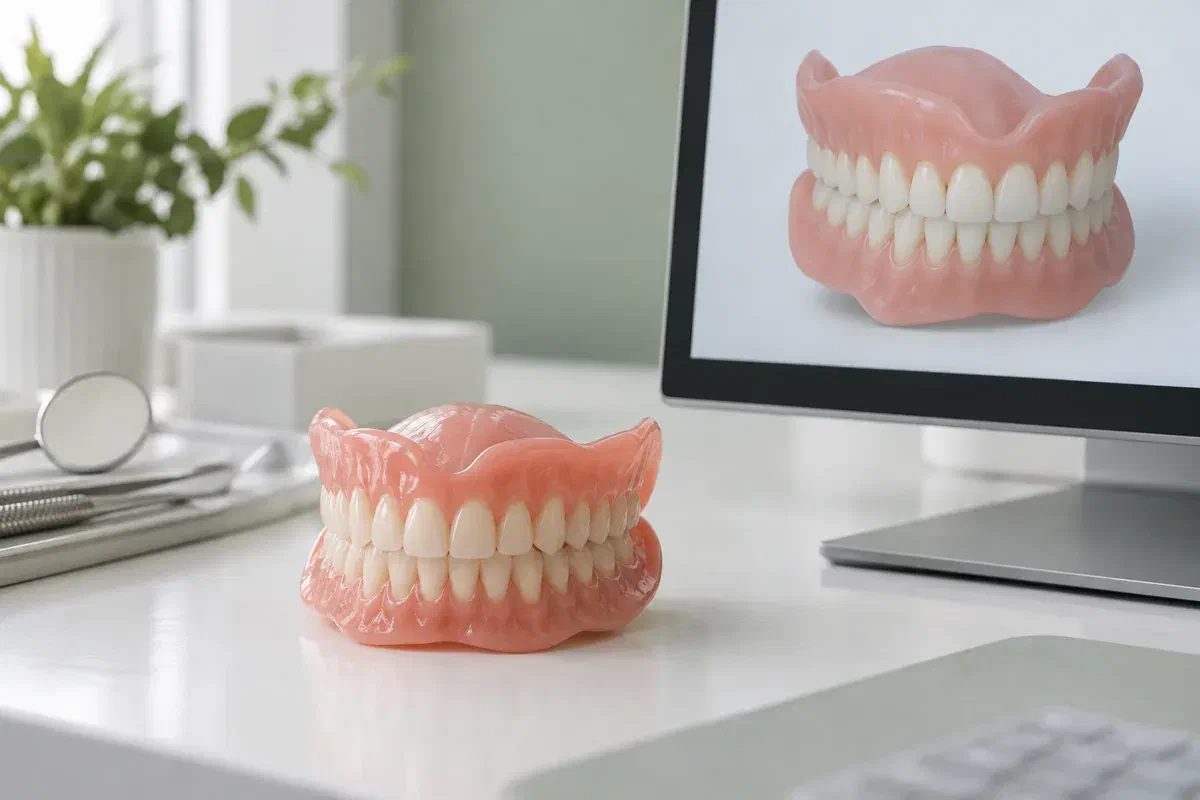
Most questions fall into three groups: how the new denture relates to the old one, how many appointments the plan involves, and what care and repairs will look like once you are wearing it.
Explain where it rubs, slips or feels awkward. Those details guide the new design, but the dentist will check whether your gums and bite have changed before reusing any features of the old appliance.
Request the expected sequence of records, trial fittings and follow-up visits. Digital production does not fix their number, and reviews after you have worn the denture are an expected part of care.
The manufacturing method affects the material, and the material affects repair and relining. Ask about the specific appliance proposed so you know what would happen if it ever needed attention.
No design on a screen can show how a denture will behave on the third day of wear. Fitting and review appointments are where comfort is checked and improved.
Software can coordinate tooth arrangement, base and bite into one design and pass it to manufacture as a single, consistent file. In some systems, that design is kept afterwards.
Those strengths support, but do not replace, the adjustments that come after delivery. A digital denture is not inherently better than a well-made conventional one. The fair questions are how the plan suits your mouth, your look and your routine, and how its success will be measured once you have worn it.
Patient information: American College of Prosthodontists — clinical outcomes of digital dentures
A proposed layout helps you and the dentist discuss how the teeth sit and show. Find out at which stage you review it and what can still be adjusted before the denture is finished.
The information gathered in the chair becomes the basis for production. Understanding that path helps distinguish clinical decisions from what the equipment does.
Ask whether the design is stored and whether it could help with a repair or remake. If your mouth changes in the meantime, new records may still be needed.
Plans vary by appliance and method. Ask for the stages that apply, including any conventional impressions, trial dentures, lab work and the review visits after delivery.
The dentist looks at the supporting tissues, any remaining teeth and your present denture. Your experience with chewing, speaking, appearance and handling sets the requirements for the new one.
Impressions, a scan, bite records and photographs may be used. Ask what each provides and whether your existing denture can be recorded for reference.
You review tooth arrangement and appearance, ideally at a trial stage, and learn how the denture will be made and what its material needs for maintenance and repair.
The denture is fitted and explained. Planned reviews let the dentist relieve pressure, adjust contacts and answer questions after you have worn it through ordinary days.
Daily cleaning and periodic check-ups apply to any denture. Ask for care instructions specific to the material, and keep track of how the denture feels so reviews can focus on what matters.
Confirm which brush, cleanser and storage method suit the new denture. A product that worked on your previous appliance may not be suitable for this one.
Write down where any rubbing, pressure or movement occurs and when. Bringing those notes to review helps the dentist find and adjust the cause, however the denture was made.
Ask which material and design information to keep. If you later see another clinician, it can help them understand repair and reline options.
These answers address the first weeks of wear, follow-up visits, design changes, and what to do if something feels wrong between appointments.
Set aside time with us at our Bronte Street clinic to discuss a new denture and how digital steps might be used. We will examine your mouth and current denture, then explain the proposed stages, material and review plan so you can arrange visits ahead.
If you wear a denture now, bring it, along with notes on where it rubs or slips during the day.
