Your present denture is reaching its limit
Tell the dentist what you want to carry over and what needs to change. Your old set may be a helpful reference, though it should not be copied without checking that it still fits the mouth as it is now.

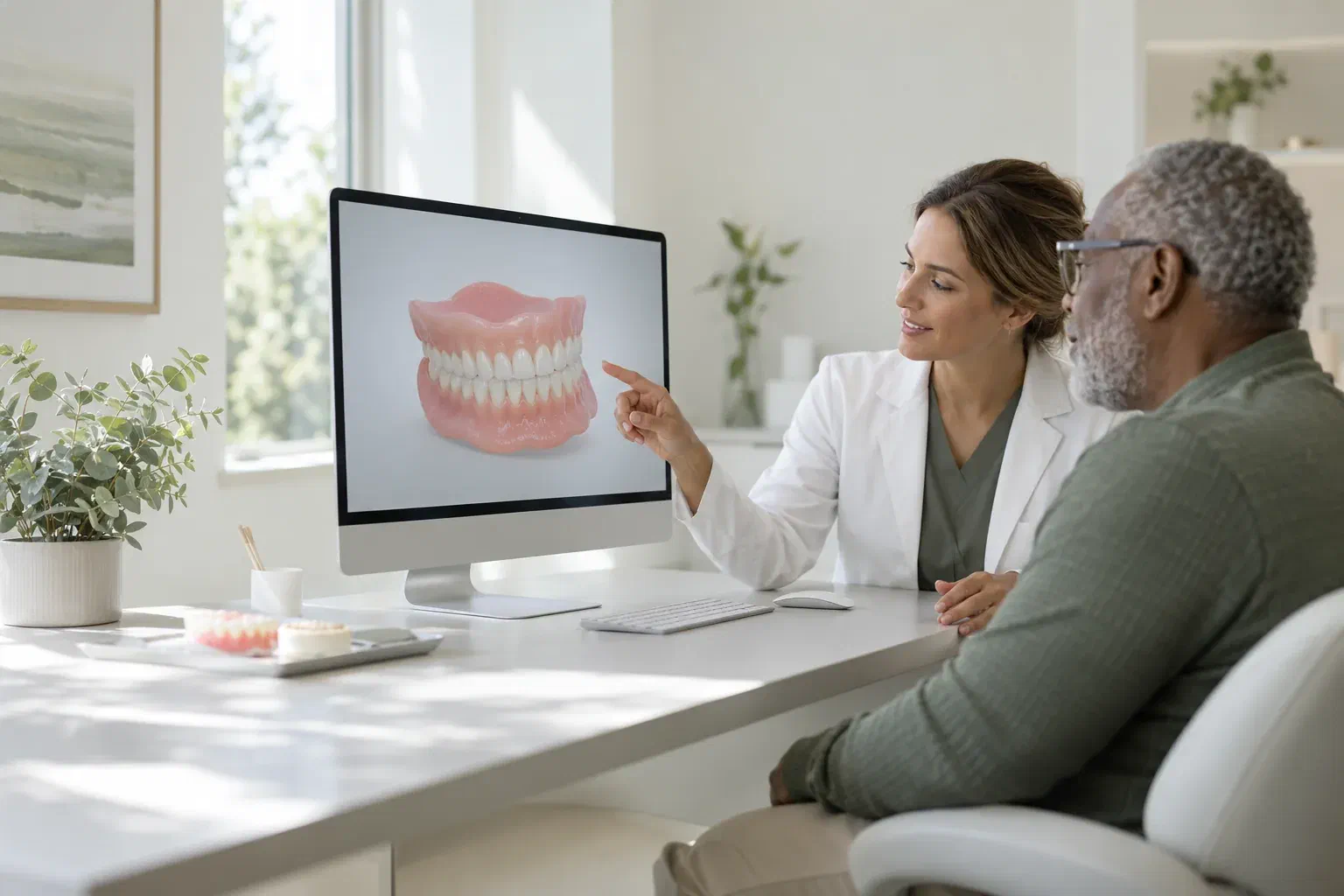
Coming from Etobicoke, it pays to know the shape of a denture plan before you start. Here is how digital design sits alongside records, try-ins and reviews, and how to organize the visits a new appliance needs.
When the trip to a dental appointment is a long one, every visit counts. That is a practical reason people ask about digital dentures: will a computer-designed appliance mean fewer trips? The honest answer is that it depends on your mouth and the method, and a clear plan matters more than any single technology.
Digital simply means a computer is involved somewhere in designing or making the denture. It may handle the whole process or only part of it. Either way, the appliance must rest securely on your gums, bring your teeth together evenly, suit your appearance and be easy to look after, and those things are confirmed in the chair.
For anyone travelling from Etobicoke, we can set out the expected stages at the first consultation, explain which would be digital and describe the planned material. Knowing the sequence lets you group errands, book time off and decide in advance what to do if a problem comes up between visits.
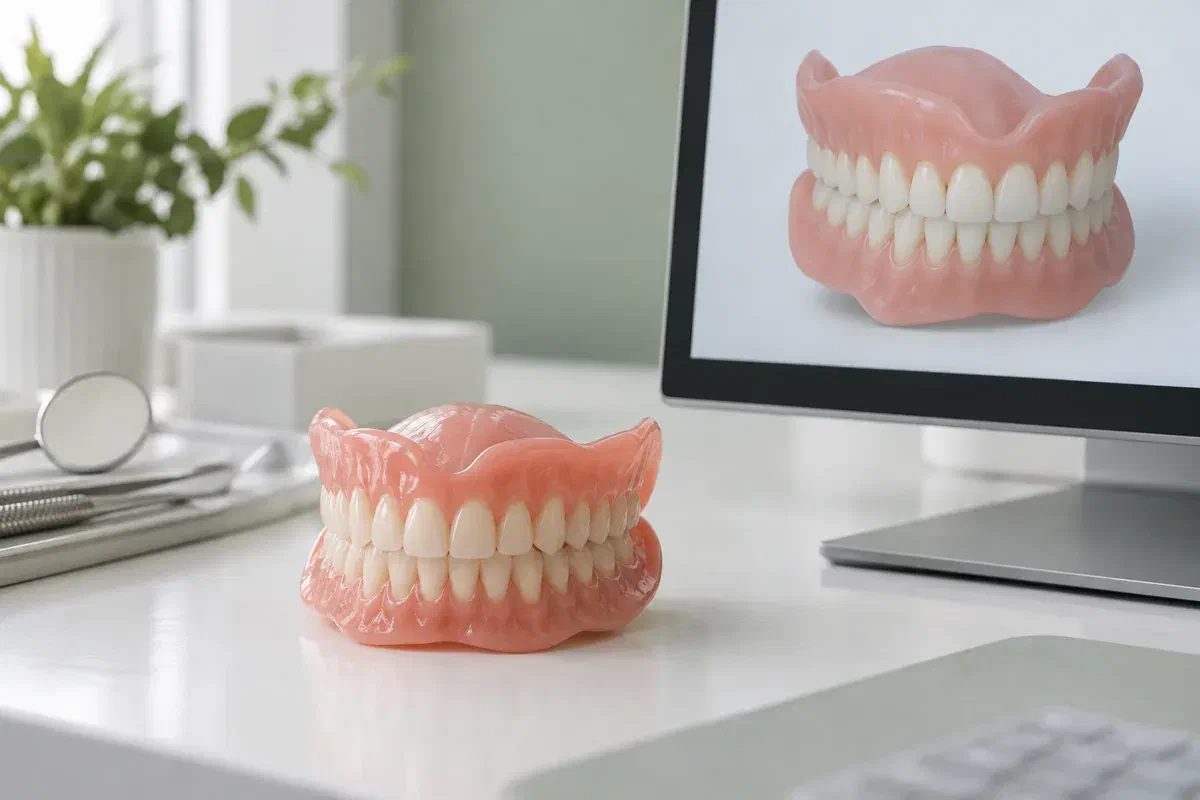
With a longer trip, it is worth sorting out your priorities before treatment begins. Most people want to talk about their existing denture, the appointment plan and what maintenance will look like.
Tell the dentist what you want to carry over and what needs to change. Your old set may be a helpful reference, though it should not be copied without checking that it still fits the mouth as it is now.
Ask how many record, try-in and review visits the plan is likely to need, and which could be combined. A digital process does not guarantee a set number, and fitting checks still happen in person.
Repairs and relines depend on the material used, which varies with the manufacturing method. Find out how this particular denture would be fixed or adjusted later, and whether that would mean extra trips.
No on-screen design can tell you how a denture will feel. Plan for examination and fitting visits as part of the process, even when much of the design work happens digitally.
Software allows tooth arrangement, base shape and bite relationship to be worked out together and sent to production as one design. Depending on the system, that design can be stored for future reference.
These features matter only if they help create a denture that suits you. They do not make a digital appliance better than every conventional one. Ask how the plan handles your fit, appearance and daily needs, and what the dentist will check at delivery and review to confirm it.
Patient information: American College of Prosthodontists — clinical outcomes of digital dentures
A design gives you something specific to respond to about tooth position and how your smile reads. Ask when you will see it and how changes are checked before production, so a visit is not spent on surprises.
Your records feed into the design that guides fabrication. Understanding that connection helps you see which steps involve the dentist’s judgement and which are carried out by equipment.
Ask whether the design will be kept and whether it might help with a future repair or remake. If your mouth changes, an updated examination and new records may still be required.
The workflow depends on your case and the chosen method. Ask for a list of stages, including any traditional impressions, trial dentures, lab work and reviews after delivery, so each trip has a clear purpose.
The dentist examines your gums, remaining teeth and current denture. Your experience with eating, speaking, appearance and handling defines what the new appliance needs to do.
This may involve impressions, scanning, bite records, photographs or a mix. Ask what each record is for, whether your existing denture can help, and whether some can be taken at the same visit.
You review the tooth arrangement and appearance, and possibly a trial version. The team explains how the denture will be made and what the material means for care and future repair.
The denture is placed, adjusted as needed and explained. Review appointments let the dentist relieve pressure or correct contacts after you have worn it at home for a while.
A digitally designed denture still needs daily care and periodic check-ups. Ask for instructions specific to its material, and agree on a plan for problems that arise between visits.
Confirm which brush, cleanser and soaking method suit the new material, and how to store it overnight. Older products may not be appropriate for every denture.
Mild pressure, movement or an uneven bite can often wait for a planned review, but call us to discuss it. Severe pain, swelling or an injury needs prompt attention, and closer urgent care may be the right first step.
Ask which material and design details to keep on file. If you need help at a clinic nearer home, that information can help another dentist understand the denture and its repair options.
These answers focus on scheduling, what to do between visits, how materials compare, and what to expect after the denture is delivered.
Set up a consultation at our Bronte Street clinic and bring your current denture. After the examination, we will lay out the likely sequence of visits, what the denture would be made from and when fitting checks would happen, so you can plan the trips ahead.
Let us know about any travel constraints when booking so we can discuss scheduling realistically.
