
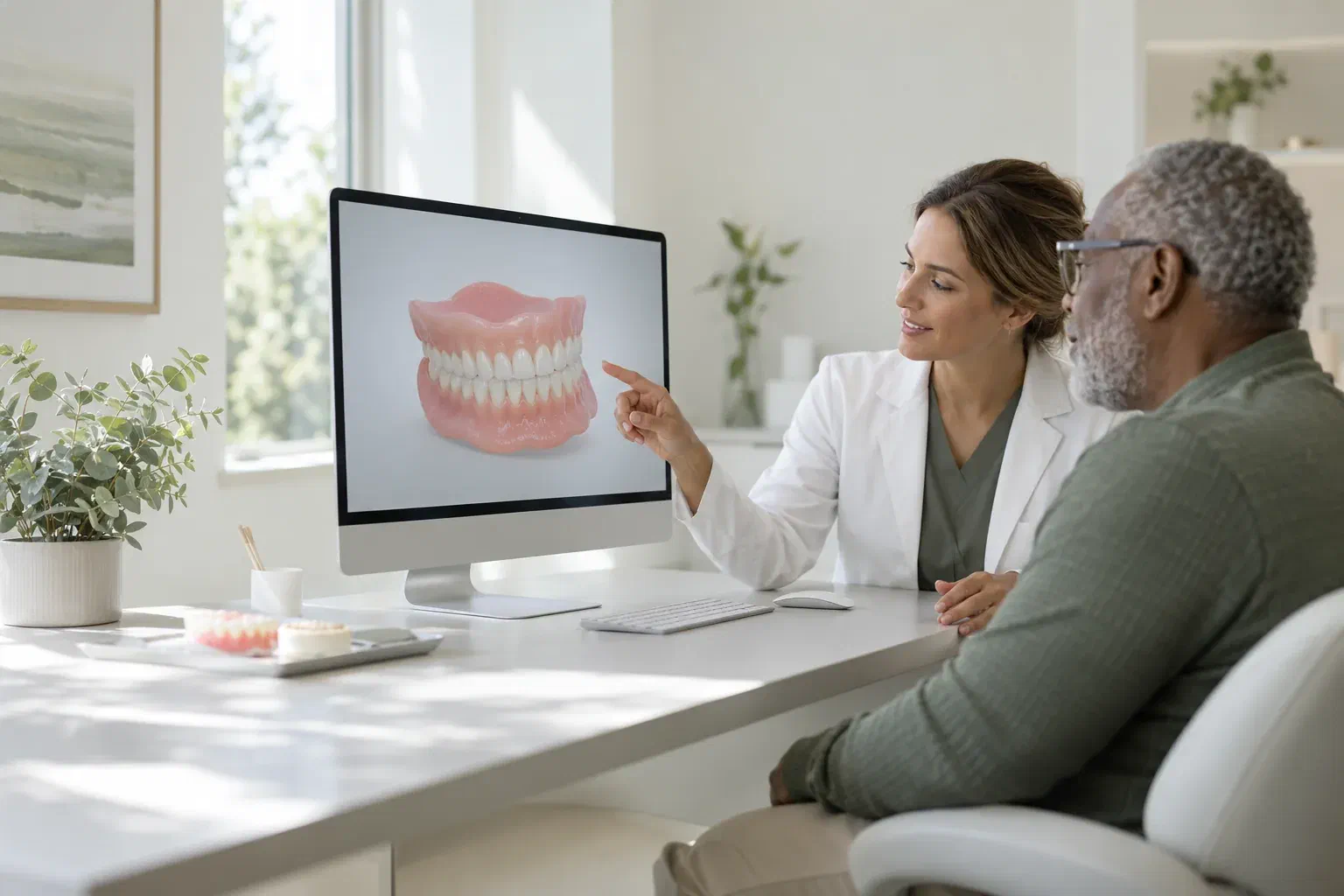
Illustrative patient and dentist reviewing a digital denture design
Restorative Dentistry

Digital Dentures in Milton

Digital dentures pair computer-based design with the clinical records and fitting checks every appliance needs. In Milton, you can talk through how your bite, gums and appearance goals would shape a denture planned this way.

Digital dentures, close to home in Milton

What does “digital” actually change?

Most people hear the word and picture a quick scan replacing everything else. In practice, a digital denture is one where some part of the design or manufacture happens on a computer. That might be the whole workflow, or it might be a conventional impression that is scanned and designed on screen afterwards.

What the word does not change is the list of jobs a denture has to do well. It needs to sit securely on the ridges and tissues that support it, bring upper and lower teeth together evenly, suit your face, and be something you can put in, take out and clean without a struggle.

When you come in from anywhere in Milton, we can look at whether a digital route fits your situation. You are welcome to ask exactly which steps would be computer-based, which material is planned, and how the fit will be confirmed. A good plan explains its own value; the label should not have to.

Talk through a digital denture plan
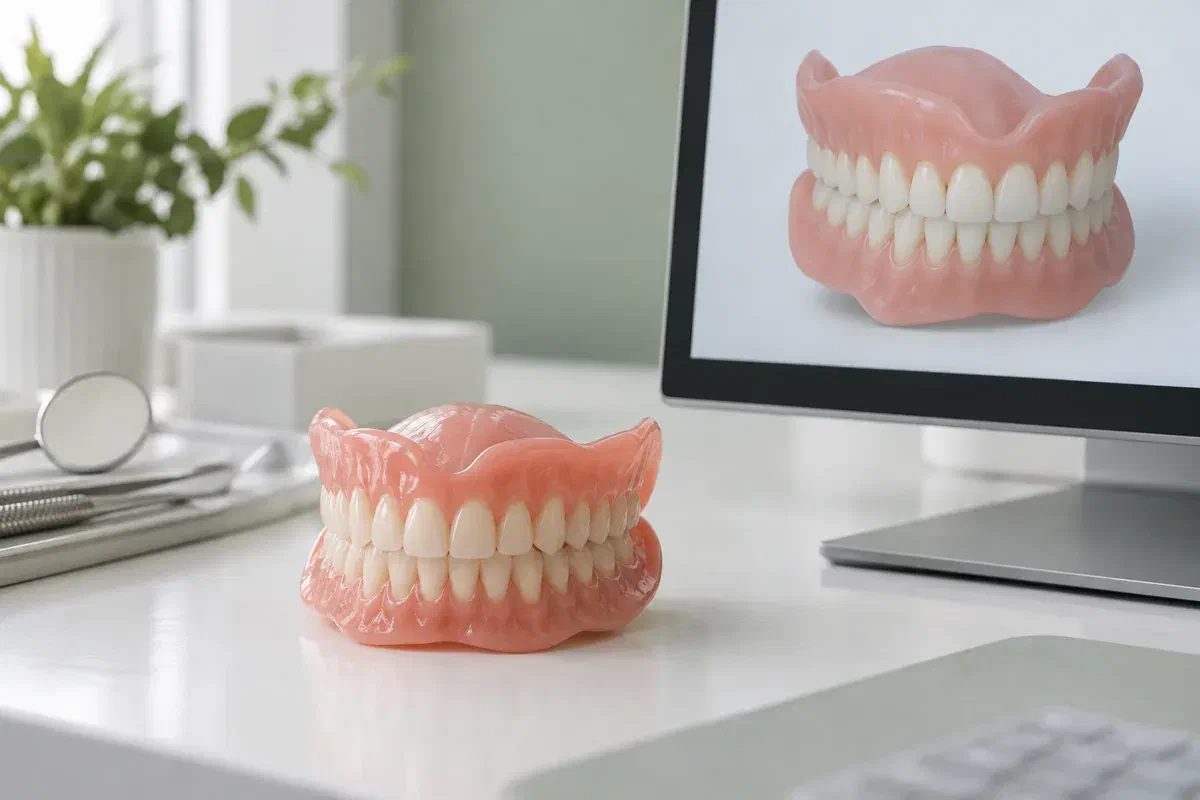
Removable denture beside an illustrative computer-based denture model
Where the conversation usually begins

Your reasons shape which questions matter most.

Some people arrive with a worn set they have relied on for years. Others want to know how many visits to expect, or how a newer material will hold up. Each starting point leads to a slightly different discussion.

Your current set is wearing out

Point out what you like about the denture you have now and what bothers you. Its shape can be a useful reference, yet copying it outright only makes sense once the dentist has confirmed it still matches your gums and bite.

You want a sense of the timeline

It is reasonable to ask how many record, try-in and review visits the plan involves. A computer-designed appliance still has to be checked in your mouth, so the schedule depends on your case rather than on the technology.

You are thinking about long-term upkeep

Different manufacturing methods use different materials, and that affects how a denture is repaired or relined later. Find out what applies to the specific appliance proposed instead of treating all digital dentures as one product.

An on-screen model helps with planning, but it cannot tell you in advance exactly how a denture will feel once it is in your mouth. Examination and fitting appointments stay in the plan.

Where computer design earns its place

Good information, used for good decisions.

Designing on a computer can make it easier to lay out tooth positions, the base and the bite relationship, and to pass that plan accurately to whoever produces the appliance. With some systems, the design can also be kept on file.

Those are genuine advantages when they lead to a denture that fits and works for you. They are not proof that a digitally made appliance will outperform a carefully made conventional one. A useful question is how this process handles your particular fit, appearance and day-to-day needs, and how the finished result will be judged.

Patient information: American College of Prosthodontists — clinical outcomes of digital dentures

A shared picture of the tooth layout

A design on screen gives you and the dentist something concrete to discuss when it comes to tooth position and how your smile looks. Find out when you will see it and how requested changes get evaluated before anything is final.

A clear path from chair to lab

Information about your mouth and bite has to reach the production stage intact. Knowing how that hand-off works helps separate the clinical judgement in your plan from the machinery that carries it out.

Records that might help next time

If design files are kept, they may assist with a future repair or remake. Your mouth may have changed by then, though, so a fresh examination and new records could still be required.

How the appointments unfold

Four stages, each anchored in your mouth.

No two workflows are exactly alike. Expect the dentist to walk you through which stages apply to you, from any traditional impressions and try-ins to lab work and the follow-up visits after delivery.

  1. Examination and a conversation about goals

    Your gums, any natural teeth that remain and your current denture are assessed. How you eat, speak and feel about your appearance today all inform what the new appliance needs to achieve.

  2. Gathering records

    Depending on the plan, this could mean impressions, an intraoral scan, bite registrations, photographs or several of these together. You can ask what each one contributes and whether your existing denture can help.

  3. Checking the design and material

    You look at tooth arrangement and appearance, and where possible try an intermediate version. The team explains the production method and what the chosen material means for upkeep and repairs.

  4. Delivery and real-life testing

    The finished denture is fitted and checked, and you receive instructions for wearing and cleaning it. Follow-up visits let the dentist deal with sore spots or uneven contact once you have worn it at home.

Living with the new appliance

Care depends on what it is made of.

Being designed on a computer does not change the need for daily cleaning and regular check-ups. Request guidance that fits the finished material, especially if it differs from the denture you wore before.

Cleaning and overnight storage

Confirm which brush, cleanser and soaking routine suit this appliance, and how it should be stored. A product that worked on your old denture is not automatically safe for a newer material.

Comfort checks after delivery

Mention any pressure, rocking or a bite that feels lopsided. Even an accurately produced denture may need assessment and small adjustments once it meets the demands of ordinary meals and conversation.

A record of what you are wearing

Find out which material and design details are worth keeping on file. Should you ever see a different dentist, that history can help them understand how the appliance can be repaired.

Three routes to a finished denture

The method should follow the plan.

Traditional and computer-based techniques can be mixed in several ways. Compare them on suitability for your mouth, material, chances to review, future maintenance and the visits each one needs.

A long-established way to build a denture

Conventional fabrication

Traditional methods still produce carefully planned appliances. Ask how this route records your mouth and bite, lets you review appearance, and supports fitting and later adjustments.

Using each method where it helps most

Blending clinical and digital steps

A plan might rely on conventional impressions or try-ins and then move to computer design and production. It is worth understanding which parts of your own plan are digital and the reason for that mix.

Where the system and material fit the case

Fully digital design and production

Some dentures are milled by machine and others are built up through 3D printing. These are distinct processes with their own material considerations, so find out which applies and how relines and repairs would work.

Milton questions about digital dentures

Plain answers on a technical topic.

These answers cover the practical side: what records involve, how the process unfolds, what you can influence, and what to expect once the denture goes home with you.

(905) 876-4488
Is a digital denture automatically better than a traditional one?
Not automatically. Computer design can help organize and communicate the plan, but the quality of the result depends on accurate records, sound clinical decisions and careful fitting. A well-made conventional denture can be an equally appropriate choice; the right method depends on your mouth.
Can my current denture be used as a starting point?
Sometimes. An existing appliance can show what you like about tooth position or shape, and some workflows can record it. The dentist will still check whether its fit and bite suit your mouth today before borrowing anything from it.
Do I have to have a scan instead of impressions?
Not necessarily. Some plans use an intraoral scanner, others start with traditional impressions that are digitized afterwards, and some combine both. The choice depends on the records your mouth needs, and you can ask why a particular method has been chosen.
Will I go without teeth while the new denture is being made?
That depends on your situation. In many cases you can keep wearing your current denture through the planning stages. If teeth need to be removed or your existing appliance is damaged, discuss interim arrangements with the dentist so you know what to expect.
How will I know whether the bite is right after the fitting?
The dentist checks how your teeth meet at delivery, but some issues only show up after a few days of meals and conversation. Note any spot that feels high, sore or uneven and raise it at your review rather than waiting it out.
Can visits fit around a busy Milton schedule?
Our hours run Monday to Thursday, 11am to 7pm, with Friday to Sunday by appointment only. Tell us what works for you when booking, and we can outline how many visits the proposed plan is likely to involve so you can plan ahead.
Planning your Milton visit

Bring your questions about how it’s made.

Book a consultation at our Bronte Street practice and we will look at your mouth, your current denture if you have one, and whether digital steps would help. You will leave knowing which records, materials and fitting stages your plan involves.

If you wear a denture now, bring it along, and jot down what you would keep and what you would change.

Visit Milton Dental Clinic
Unit 1, 342 Bronte St. S, Milton, ON L9T 5B7
Get directions Clinic hours
Monday–Thursday
11am–7pm
Friday–Sunday
By appointment only

Areas we serve

  • Milton
  • Oakville
  • Mississauga
  • Georgetown
  • Halton Hills
  • Acton
  • Campbellville
  • Brampton
  • Burlington
  • Puslinch
  • Rockwood
  • Erin
  • Caledon
  • Etobicoke
  • Old Milton
  • Bronte Meadows
  • Timberlea
  • Dorset Park
  • Dempsey
  • Clarke
  • Beaty
  • Coates
  • Harrison
  • Scott
  • Willmott
  • Ford
  • Bowes
  • Cobden
  • Walker
  • Mountain View
  • Milton Heights
  • Hawthorne Village
  • Valley View
  • Fallingbrook
  • Nassagaweya
  • Trafalgar
  • Esquesing
  • Nelson
  • Brookville
  • Moffat
  • Glen Williams
  • Norval
  • Limehouse
  • Stewarttown
  • Ashgrove
  • Hornby
  • Silver Creek
  • Speyside
  • Scotch Block
  • North Oakville
  • River Oaks
  • Glen Abbey
  • West Oak Trails
  • Palermo
  • Bronte Creek
  • College Park
  • Joshua Creek
  • Uptown Core
  • Preserve
  • Iroquois Ridge
  • Lisgar
  • Meadowvale
  • Meadowvale Village
  • Churchill Meadows
  • Erin Mills
  • Central Erin Mills
  • Streetsville
  • East Credit
  • Creditview
  • Heartland
  • Sheridan
  • Mount Pleasant
  • Credit Valley
  • Huttonville
  • Churchville
  • Springbrook
  • Northwest Brampton
  • Bram West
  • Fletcher's Meadow
  • Fletcher's Creek South
  • Alton Village
  • Orchard
  • Millcroft
  • Headon Forest
  • Tansley
  • Brant Hills
  • Tyandaga
  • Kilbride
  • Lowville
  • Aberfoyle
  • Morriston
  • Arkell
  • Hillsburgh
  • Freelton
  • Carlisle
  • Waterdown
  • Flamborough
  • Mountsberg

How can we help?

Milton Dental Clinic

Have a question about your smile? Choose the option that works best for you.

For urgent dental concerns, please call.
Messages are reviewed during clinic hours.