Your familiar denture is wearing thin
Say what you value and what needs to change. Your existing appliance can be a useful reference, as long as the dentist confirms its features still suit your gums and bite.

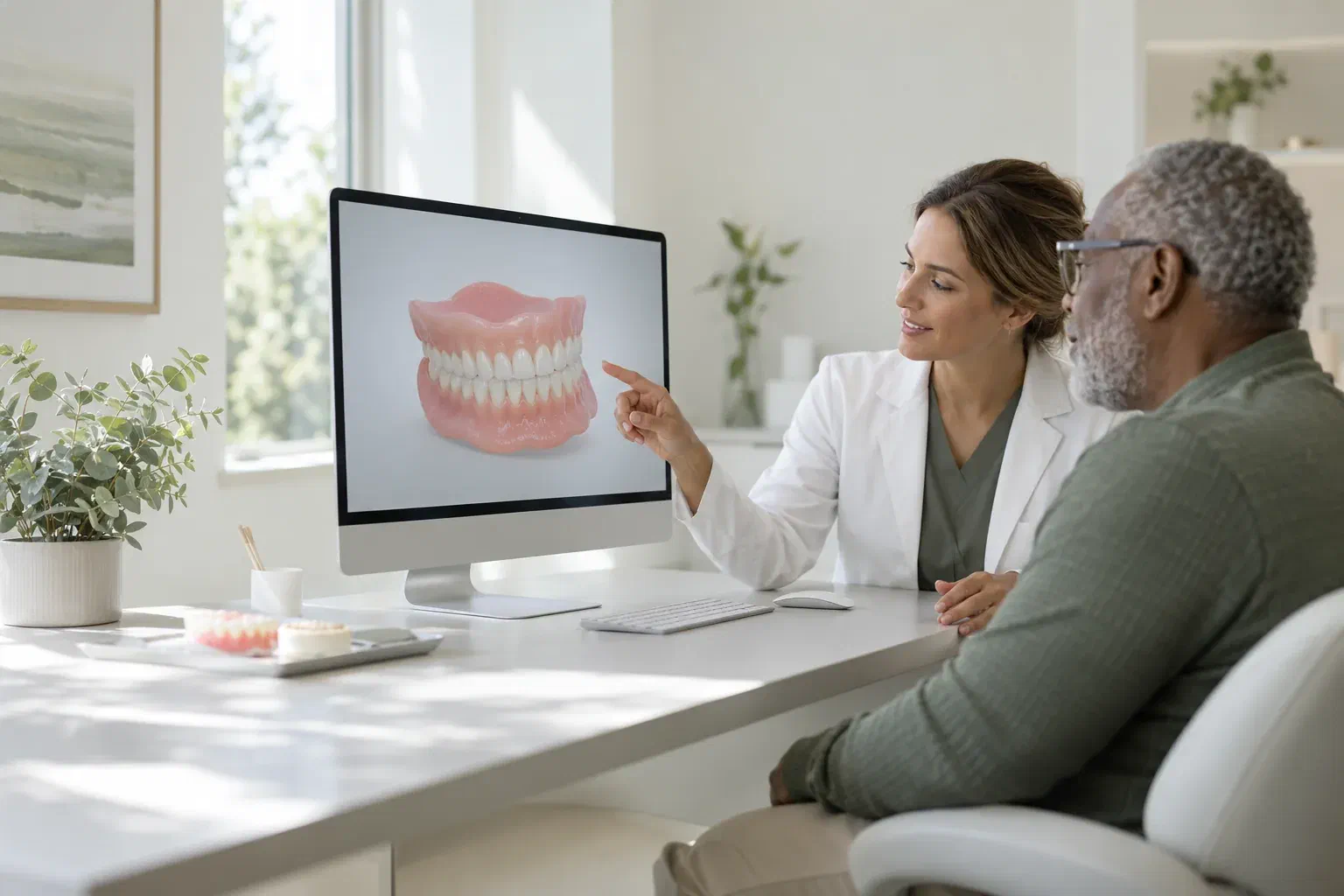
The cleaning tablets on the bathroom shelf may have suited your last denture well. For Rockwood wearers considering a digitally made appliance, here is how design, materials and daily care connect, and what still needs checking clinically.
Most discussion of digital dentures focuses on scanners and software. Less is said about the moment you get home, open the old box of denture cleaner and wonder whether it is still the right product. Because digital methods can use different materials, daily care is one of the more practical questions to ask before treatment starts.
A denture counts as digital when computers take part in its design or manufacture, whether for one stage or the entire process. Its basic jobs remain the same: resting steadily on the tissues that support it, closing evenly, looking appropriate and being straightforward to put in, remove and clean.
For people coming from Rockwood, a consultation can cover both ends of the process. We can talk about which steps would be digital, what the base and teeth would be made of and how the fit would be checked, then explain the care routine that material would need.
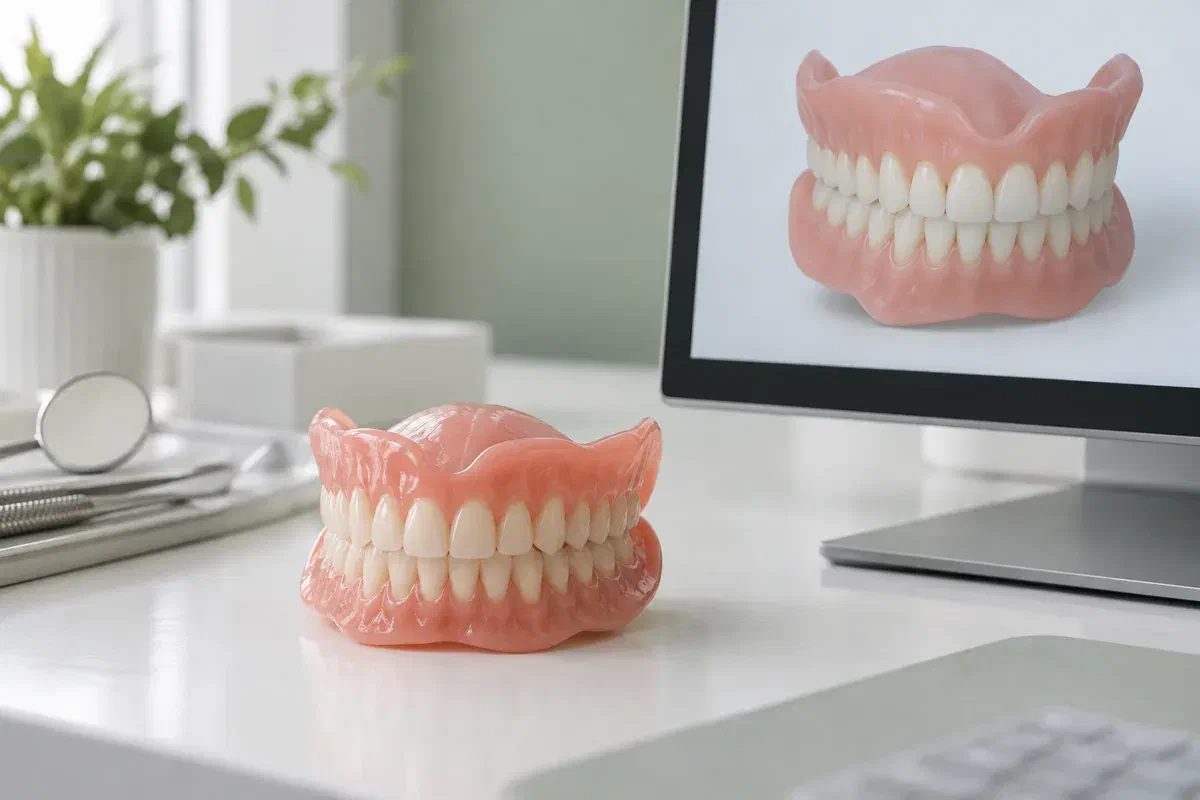
Interest in digital dentures often comes from a familiar appliance wearing out. Along the way, most people want clarity on the appointment plan and on how a new material would be looked after.
Say what you value and what needs to change. Your existing appliance can be a useful reference, as long as the dentist confirms its features still suit your gums and bite.
Ask for a summary of the records, trial stages and reviews involved. Digital design does not determine a set number of visits, and the finished denture must still be checked in your mouth.
A new material may call for a different cleaner, soak or storage method, and may be repaired or relined differently. Clarify those details for the appliance proposed rather than assuming they match your old one.
Design software produces a plan, not a guarantee of comfort or appearance. Examination and fitting appointments are where the denture is truly tested.
Design software can organize tooth positions, base contours and bite into one plan, then send it on for milling, printing or other production. Depending on the system, the design may be kept for later reference.
That is useful when it helps produce a denture suited to you. A digital denture is not automatically better than a conventional one. It is fair to ask how the plan meets your fit, appearance and practical needs, including care at home, and how the result will be evaluated.
Patient information: American College of Prosthodontists — clinical outcomes of digital dentures
A design allows you to comment on tooth arrangement and appearance before production. Ask at which visit it is reviewed and how adjustments are confirmed.
Your clinical records are the basis of the plan sent for manufacture. That link clarifies which decisions are clinical and which belong to the production equipment.
Ask whether the design and material details are stored. They may help with care, repair or a future remake, though updated records may still be needed if your mouth changes.
Not every plan runs the same way. Ask which stages apply to you, from conventional impressions or scans to trial dentures, lab work and the review appointments that follow.
The dentist checks your gums, remaining teeth and current denture. Your experience with eating, speech, appearance and daily care helps establish what the new one should do.
Scans, impressions, bite registration and photographs may be used. Ask what each record adds and whether your current appliance can be recorded as a reference.
Tooth arrangement and appearance are reviewed, ideally with a trial stage. The production method and the material’s cleaning, repair and reline needs are explained.
The denture is fitted, and you are shown how to clean and store it. Later reviews address pressure points, movement or contacts once you have worn it at home.
A digitally made denture still needs daily cleaning and periodic examination. Before reaching for your usual products, ask for guidance specific to the finished appliance and its material.
Some cleansers and abrasive pastes are unsuitable for certain materials. Ask which brush and product to use, whether soaking is appropriate and how long a soak should last.
Find out whether the denture should be kept moist or dry overnight, and in what container. Pressure, movement or an uneven bite should be raised at review, since adjustment may still be needed.
Keep a record of the material and any design details. If you see another clinic later, that information can help them understand cleaning and repair options.
These answers focus on cleaning, storage, materials and the follow-up that keeps a new denture comfortable over time.
Book time at our Bronte Street practice to discuss a new denture from design to daily care. We will examine your mouth and current appliance, explain which steps could be digital and what material is planned, and go over the routine it would need.
Bring the cleaning products you use now so we can tell you whether they suit a new material.
