You have heard the tooth is beyond repair
Ask what led to that view and whether any reasonable treatment could keep it. Questions about bone and implant timing follow once removal is confirmed and replacement options are understood.


Once a tooth is gone, the bone and gum that held it begin to change. From Georgetown, you can explore whether an implant might be placed at the moment of extraction, when grafting or a healing interval may be advised, and how the gap will be covered.
A tooth root is surrounded by a thin wall of bone and a cuff of gum. After extraction, that area reshapes as it heals, and the amount of change differs from person to person. This is one reason people ask about placing an implant in the same appointment as the removal.
Immediate placement does exactly that: the implant is set into the fresh socket during the extraction. It is not the same as receiving a crown that day, and the new tooth is not usually ready for full biting straight away. It also does not remove the possibility of grafting, because the socket’s shape and the tissue around it may still need support.
Planning starts with whether the tooth truly needs to go and which replacements make sense. From there, our Bronte Street team can look at the bone, the gum and the tooth’s position, explain whether same-visit placement is worth considering and say when a specialist should be involved. Some findings become clear only after removal, so a backup plan is agreed too.
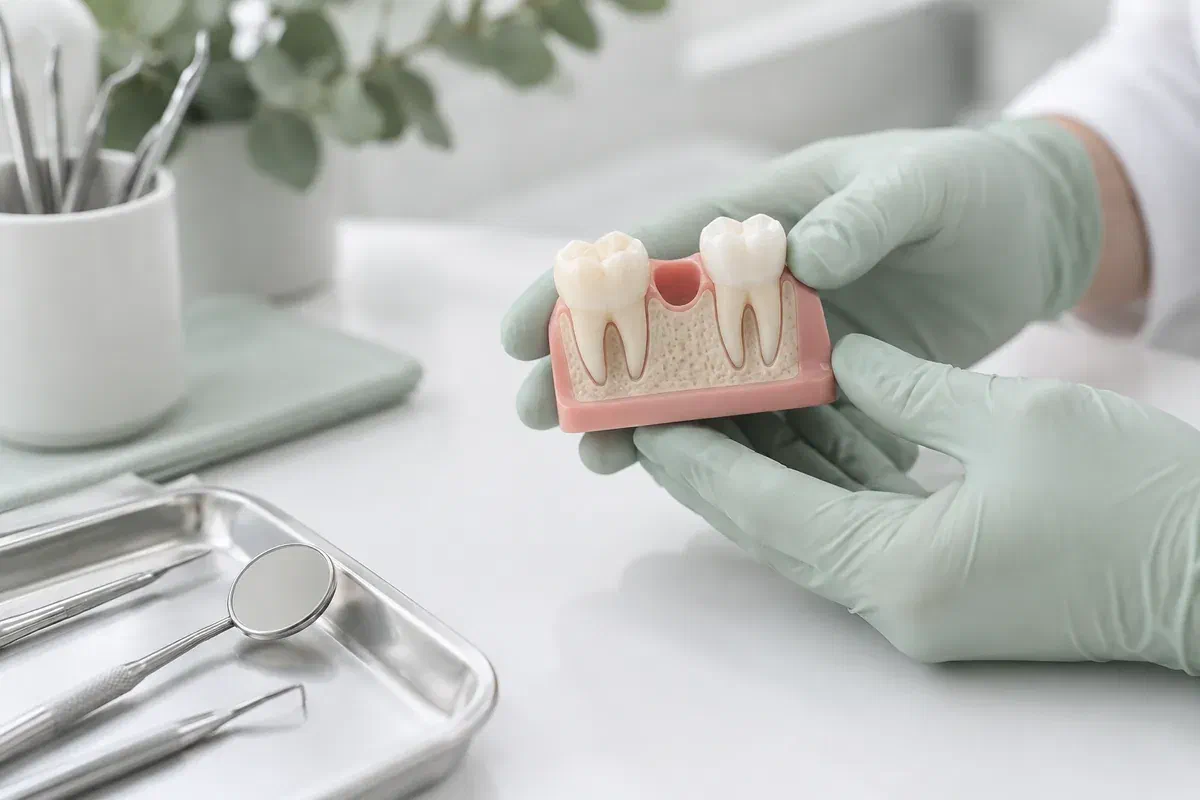
Sharing what concerns you most, whether it is the look of the gum, the number of procedures or how the gap will be covered, helps the team weigh those priorities against what imaging and examination reveal.
Ask what led to that view and whether any reasonable treatment could keep it. Questions about bone and implant timing follow once removal is confirmed and replacement options are understood.
Gum and bone changes after extraction are a real consideration, especially for visible teeth. Ask how the planned timing, any graft and the temporary tooth may influence the appearance.
Combining removal and placement does not guarantee a graft-free plan. Ask what the imaging suggests, what would decide it on the day and how a graft affects healing and the schedule.
If the socket walls or surrounding tissue turn out to be unsuitable once the tooth is removed, a staged approach may be safer. Agreeing on that possibility first is part of informed consent.
In a favourable socket, putting the implant in during extraction can bring together parts of the surgical treatment. That has to be balanced against how precisely the implant must be angled and how carefully the thin bone and gum around it must be managed.
The risks deserve the same attention as the benefits: infection, an implant that fails to integrate, bone or gum changes and an appearance that is not what you expected. Ask how your health, smoking history or other factors influence the advice, and what a delayed or non-implant route would offer. Immediate timing is an option to weigh, not an assurance of a better result.
Patient information: International Team for Implantology — immediate placement and restoration selection
Knowing where the new crown should sit helps decide how much support the site will need. Planning this before removal also gives you time to understand each step.
Find out how placing the implant now or after healing would affect the site in your case. The reasoning should rest on the socket and the planned restoration, not on speed.
An agreed alternative explains what happens if the site needs more support than expected. Cover grafting, the temporary tooth, reassessment and any change to cost or timing.
Assessment, surgery and restoration may be shared between clinicians. It is fair to ask who handles each stage and how records, especially imaging, will be passed along.
Your diagnosis, health history and suitability for an implant are reviewed. Appropriate imaging helps the clinician assess the bone around the root and nearby structures before suggesting a timing.
Talk through same-visit placement, later placement and options without an implant. Settle whether grafting may be needed, the temporary, risks, costs and the steps if conditions differ during surgery.
With the tooth out, the treating clinician judges whether the bone and gum support the planned implant. Placement goes ahead only if appropriate; otherwise, the agreed alternative guides site care.
Follow-up visits assess how the implant and any graft are healing. The timing of a temporary or permanent tooth depends on that progress and the plan, not only on the surgery date.
Instructions vary with what was done, including whether a graft was placed and what temporary you have. Ask for written guidance and a contact route, and follow your treating clinician’s advice closely.
Ask how to clean nearby without dislodging anything and what pressure to avoid. A temporary may have limits, and comfort is not proof that the site is ready for chewing.
Raise allergies, your usual medicines and any confusion about prescriptions before leaving. Avoid stopping regular medication or adding treatments without advice.
Report worsening symptoms, movement you did not expect or other changes in your instructions. Reviews show when the next restorative stage can begin and whether the plan needs adjusting.
Bone and gum changes are often the least understood part of tooth replacement. These answers explain the basics and what depends on your site.
Arrange a consultation at our Bronte Street practice to look at removal, replacement and the bone and gum around the tooth. We can review your starting point, explain the timing choices and identify any further imaging or specialist input.
Bring any scans, X-rays or referral letters you have, and mention any extraction already on the calendar.
