

Illustrative consultation about tooth extraction and implant timing
Restorative Dentistry

Extraction and Immediate Implant Placement in Milton

Sometimes the implant can go in at the same appointment the tooth comes out, and sometimes it should wait. Talk through extraction with immediate implant placement in Milton, including the site, healing, a temporary tooth and other timing.

What “immediate” covers

One appointment for the implant does not mean one appointment for the tooth.

The term sounds like everything happens at once. In practice, it describes one thing: the implant is set into the socket at the same visit the tooth is taken out. A finished crown, or a tooth you can chew on normally, is a separate step with its own timeline.

Whether the timing fits depends on what is there to work with. Clinicians look at the bone that remains, the gum around the tooth, where the tooth sits, and whether an implant can be held firmly in a sensible position. Some of that only becomes clear once the tooth is out, which is why a fallback plan belongs in the conversation before the day.

An assessment at our Bronte Street practice can help you see whether this approach is worth considering for you and whether a specialist should be involved. The starting point is still whether the tooth truly has to go and how it could be replaced. Saving a visit is a fair goal, but it sits beside those decisions rather than ahead of them.

Ask about implant timing at extraction
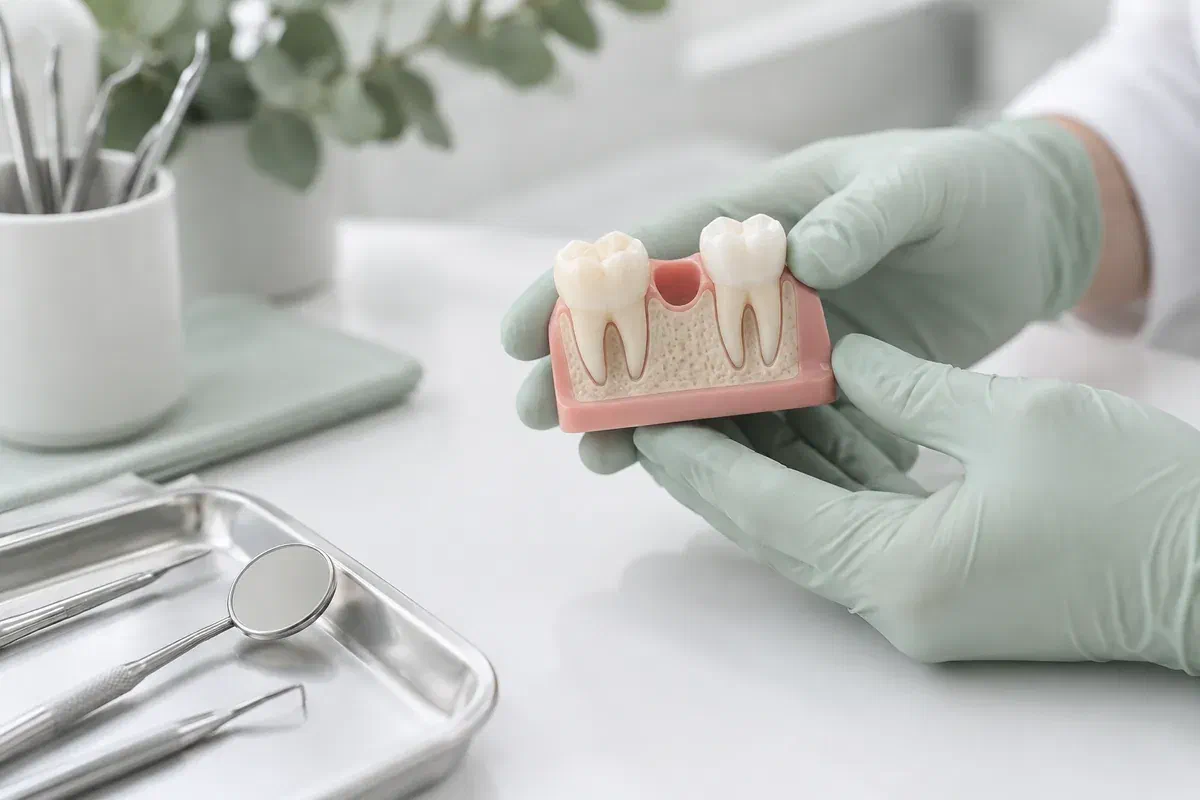
Dental teaching model showing a single tooth space and surrounding structures
Before a Milton extraction is booked

Talk about the gap before the tooth leaves.

When an implant is on the table, it helps to plan removal and replacement together. Let the team know what matters most to you, whether that is appearance, the number of visits or how a temporary tooth will look, so it can be weighed alongside what the examination shows.

You have been told the tooth may not be saveable

Find out what is behind that judgement and whether any reasonable way of keeping the tooth is left. Questions about implant timing only make sense once removal is confirmed and the replacement choices are clear.

The space would show when you smile

How the gap is covered in the meantime needs its own plan. Placing the implant at extraction is not the same as attaching a tooth to it right away, and a temporary option may still be needed.

You are hoping for fewer stages overall

Combining steps can sometimes work, but it is not a given. Ask what might alter the plan and how healing, any grafting and the eventual crown affect the full timeline.

An immediate implant that has been planned can still turn into a staged one if the socket is not right on the day. Hearing about that possibility early is part of making an informed choice.

Weighing the same-visit option

A combined visit can help, but the site sets the limits.

Where the socket is suitable, setting the implant during removal can fold together part of the surgical work. That potential convenience has to be balanced against how demanding it can be to position the implant well and look after the surrounding tissue at the same time.

Risks deserve equal airtime: infection, an implant that does not integrate, changes in the gum or bone, and a final look that may not match what you pictured. Ask how your own health and habits shift the advice and what the other routes would give you. Same-visit timing is something to evaluate, not a guarantee of a better outcome.

Patient information: International Team for Implantology — immediate placement and restoration selection

Picture the finished tooth first

Thinking about the removal and the final restoration together helps settle where the new tooth should sit, what covers the gap meanwhile and which records are needed. It also gives you room to understand the order of events before anything permanent happens.

Set the two timings side by side

Ask what placing the implant at extraction would actually gain for your mouth and what might argue for a pause. A good answer points to the site and the restorative plan, not simply to finishing faster.

Agree on a plan B in advance

Knowing the fallback explains what happens if the socket is not suitable once the tooth is out. Cover the temporary tooth, any site care, when things would be reassessed and whether cost or timing would change.

How the planning usually runs

Settle the options well before surgery day.

Assessment, the surgery itself and the eventual restoration may be handled by more than one clinician. Ask who looks after each part and how records and follow-up will pass between them.

  1. Review the tooth, your mouth and your health

    The clinician looks at the diagnosis, your medical history and whether the tooth can be replaced with an implant. Suitable imaging and other records show the site and nearby structures before any timing is suggested.

  2. Choose a first plan and a fallback

    Go over same-visit placement, later placement and options without an implant where they apply. Pin down possible grafting, the temporary tooth, risks, fees and what would happen if the site looks different during surgery.

  3. Take out the tooth and look again

    Once the tooth is removed, the treating clinician checks whether the conditions needed for the planned implant are actually present. The implant goes in only if that is appropriate; if not, the agreed fallback guides what is done for the site and later.

  4. Check healing before the next stage

    Follow-up visits look at how the area is settling and whether it is ready to move on. When a temporary or permanent tooth goes on depends on the plan and on healing, not just on the date the implant was placed.

Looking after the area

Your written instructions are the ones to follow.

Advice after surgery varies with the extraction, the implant, any graft and the temporary tooth. Leave with written instructions and a way to reach the team, and follow the guidance from the clinician who treated you.

Keep to the food and cleaning limits

Ask how to keep the area clean and what kind of pressure to avoid. A temporary tooth can come with its own restrictions, and feeling comfortable is not a sign that the site can handle ordinary chewing yet.

Take medicines exactly as directed

Mention allergies, current medications and any confusion about the prescription before you go home. Do not stop your usual medicines or add new ones on your own simply because two procedures happened together.

Keep every healing check

Let the team know about symptoms that get worse, any unexpected movement or other changes your instructions mention. These visits help decide when the next stage can begin and whether the original timeline needs to shift.

When to replace the tooth, and how

The calendar should follow the treatment.

The right route depends on whether the tooth can stay, how healthy the site is and whether you are a good fit for the planned restoration. Ask how each relevant choice compares for you.

When the socket is suitable

Implant at the extraction visit

The implant may be set during removal if the clinical picture supports it. When the temporary and final teeth go on are still separate choices, and extra tissue care may be needed anyway.

When staging makes more sense

Implant once the site has healed

Waiting can let the site heal or receive other treatment before the implant goes in. Ask what needs to improve during that time and how the gap will be handled while you wait.

When the diagnosis points elsewhere

Keeping the tooth, or a non-implant option

Depending on what is found, keeping the tooth, a bridge or a removable appliance may be worth discussing. The advice should set out what each relevant option offers and where it falls short.

Milton questions about same-visit implants

Clearing up what “immediate” promises.

People often hear the word and picture a finished tooth by the end of the day. These answers separate what is being proposed from what depends on findings.

(905) 876-4488
Will I leave the extraction visit with a permanent tooth?
Usually not. Same-visit placement means the implant itself goes into the socket. Whether anything is attached that day, and when it can be used for biting, are separate clinical decisions made within your plan.
How many appointments should I expect in total?
That varies with your assessment, any grafting, healing and the type of restoration. Ask for an outline of the likely stages, keeping in mind that the count can change if the site needs a different approach after removal.
Does placing the implant straight away shorten healing?
Not necessarily. Placing it at extraction can combine surgical steps, but the bone and gum still need time to settle before the final tooth. Your follow-up reviews decide when the next stage is ready.
What happens if the socket is not suitable on the day?
The agreed fallback takes over. That may mean caring for the site, fitting a temporary option and reassessing later for an implant. Ask in advance how that would affect your schedule and fees.
Can I return to work the next day?
This depends on the procedure, how you feel and the nature of your work. Ask your clinician for guidance specific to you, and follow the activity advice in your written instructions.
Is it worth getting a second opinion before a tooth is removed?
If you are unsure whether the tooth must go or what replacement suits you, a further assessment can help. Bring any imaging or notes you have so the options can be explained clearly.
Implant timing in Milton

Plan what fills the space, then plan the removal.

Book an assessment at our Bronte Street practice to discuss removing the tooth and how it might be replaced. We can review where things stand, explain the timing choices and note any extra records or specialist input that may help.

Bring any X-rays or referral letters you have, and let us know if an extraction is already on the calendar.

Visit Milton Dental Clinic
Unit 1, 342 Bronte St. S, Milton, ON L9T 5B7
Get directions Clinic hours
Monday–Thursday
11am–7pm
Friday–Sunday
By appointment only

Areas we serve

  • Milton
  • Oakville
  • Mississauga
  • Georgetown
  • Halton Hills
  • Acton
  • Campbellville
  • Brampton
  • Burlington
  • Puslinch
  • Rockwood
  • Erin
  • Caledon
  • Etobicoke
  • Old Milton
  • Bronte Meadows
  • Timberlea
  • Dorset Park
  • Dempsey
  • Clarke
  • Beaty
  • Coates
  • Harrison
  • Scott
  • Willmott
  • Ford
  • Bowes
  • Cobden
  • Walker
  • Mountain View
  • Milton Heights
  • Hawthorne Village
  • Valley View
  • Fallingbrook
  • Nassagaweya
  • Trafalgar
  • Esquesing
  • Nelson
  • Brookville
  • Moffat
  • Glen Williams
  • Norval
  • Limehouse
  • Stewarttown
  • Ashgrove
  • Hornby
  • Silver Creek
  • Speyside
  • Scotch Block
  • North Oakville
  • River Oaks
  • Glen Abbey
  • West Oak Trails
  • Palermo
  • Bronte Creek
  • College Park
  • Joshua Creek
  • Uptown Core
  • Preserve
  • Iroquois Ridge
  • Lisgar
  • Meadowvale
  • Meadowvale Village
  • Churchill Meadows
  • Erin Mills
  • Central Erin Mills
  • Streetsville
  • East Credit
  • Creditview
  • Heartland
  • Sheridan
  • Mount Pleasant
  • Credit Valley
  • Huttonville
  • Churchville
  • Springbrook
  • Northwest Brampton
  • Bram West
  • Fletcher's Meadow
  • Fletcher's Creek South
  • Alton Village
  • Orchard
  • Millcroft
  • Headon Forest
  • Tansley
  • Brant Hills
  • Tyandaga
  • Kilbride
  • Lowville
  • Aberfoyle
  • Morriston
  • Arkell
  • Hillsburgh
  • Freelton
  • Carlisle
  • Waterdown
  • Flamborough
  • Mountsberg

How can we help?

Milton Dental Clinic

Have a question about your smile? Choose the option that works best for you.

For urgent dental concerns, please call.
Messages are reviewed during clinic hours.