Being told the front tooth may not last
Ask what the problem is and whether any sensible way to keep the tooth is still available. Once removal is genuinely needed, timing and replacement can be planned properly.


Losing a front tooth raises an urgent, very human question: what will I look like next week? From Oakville, you can plan the extraction, whether an implant might go in at the same visit, and how the space will be covered while things heal.
Most people facing the loss of a front tooth think first about appearance, and that is entirely reasonable. It helps, though, to pull two ideas apart. Immediate implant placement is about when the implant post goes into the socket: at the same appointment the tooth is removed. What you smile with in the following weeks is a different decision.
In some cases a temporary tooth can be attached to a newly placed implant. In others, the implant needs to heal without that kind of load, and the gap is covered another way, perhaps with a small removable tooth or a temporary bonded to the neighbours. Your bite, the stability of the implant and the condition of the site all shape that choice.
An assessment at our Bronte Street practice looks at whether same-visit placement is worth considering, how the gum and bone around the tooth may respond, and whether a specialist should be involved. It starts, as it should, with whether the tooth really needs to come out and which replacements suit you.
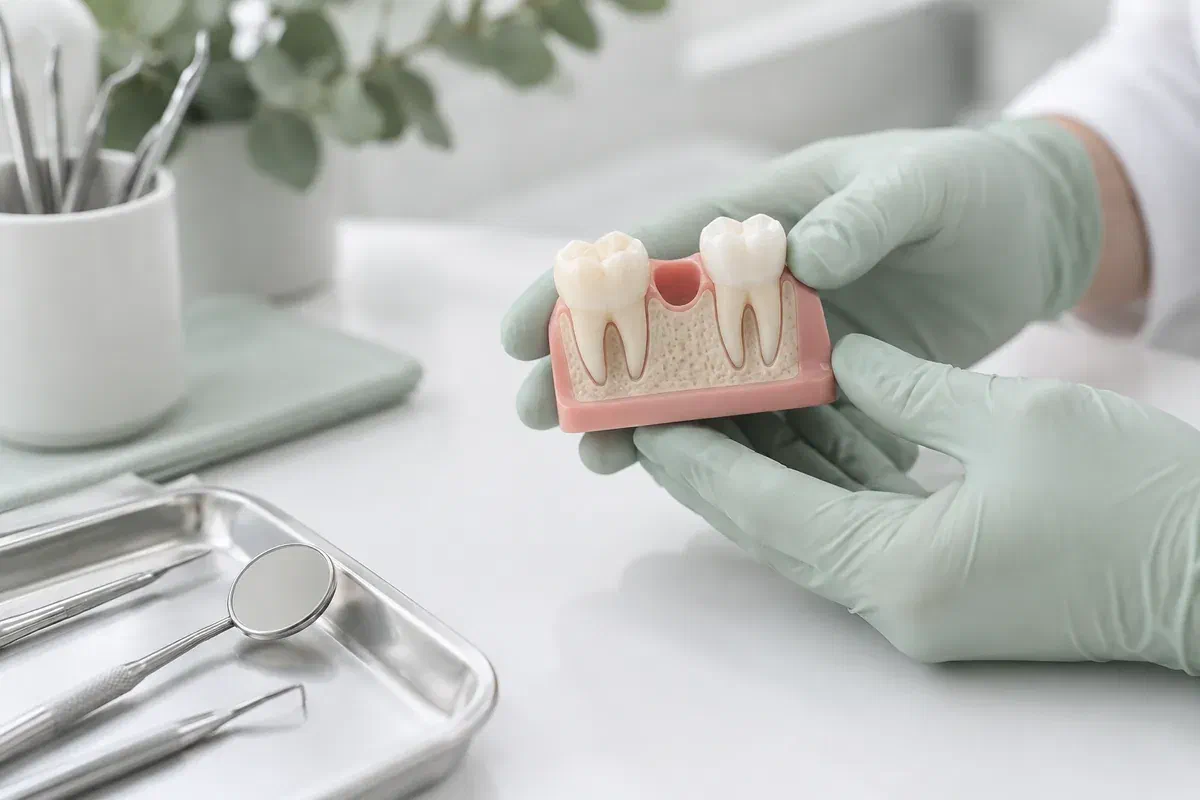
Sharing your priorities early lets the team weigh them against what the examination shows. Mention events you have coming up, how you feel about removable temporaries and how many visits you can fit in.
Ask what the problem is and whether any sensible way to keep the tooth is still available. Once removal is genuinely needed, timing and replacement can be planned properly.
A plan for the gap comes first in this conversation. Placing an implant at extraction does not by itself give you a tooth on the day, so ask which temporary options could suit your mouth.
Doing more in one visit is sometimes possible but cannot be assumed. Ask what could lengthen the plan, including grafting, healing time and the steps needed for a natural-looking final crown.
Front-tooth sites can be demanding. If the socket does not offer what an implant needs once the tooth is out, a staged plan may be safer, and a temporary tooth would be arranged accordingly.
For a favourable socket, setting the implant during removal can merge part of the surgical work. In the front of the mouth, positioning matters a great deal for how the final tooth and gum line look, and that precision has to be balanced against the convenience of combining steps.
Ask openly about the risks: infection, an implant that does not take, gum or bone that recedes over time, and an appearance that differs from what you hoped for. Your clinician can explain how your own health and gum type influence the advice and what other timings would offer. Same-visit placement is worth assessing, not a guarantee of a nicer result.
Patient information: International Team for Implantology — immediate placement and restoration selection
Agreeing where the new tooth should sit, how the gap will be covered and what records are needed helps everyone aim at the same result. It also gives you time to understand the sequence before an irreversible step.
Ask what immediate placement would add in your case and what might favour a pause. The explanation should come from the site and the restoration, not from a race to finish.
If same-visit placement turns out not to suit you, a backup should already be agreed. That includes how the gap is covered, any site care, when you would be reassessed and any change in cost or timing.
More than one clinician may share the work, especially for the surgical and cosmetic stages. Ask who leads each part and how they will keep each other informed.
The clinician confirms the diagnosis, reviews your medical history and checks whether an implant is suitable. Imaging and records reveal the bone, the gum and nearby structures before any timing is offered.
Talk through same-visit placement, later placement and non-implant choices. Settle the temporary tooth, possible grafting, risks, fees and the plan if the site turns out differently during surgery.
With the tooth out, the treating clinician looks at whether the socket can support the planned implant in the right position. If so, placement proceeds; if not, the agreed alternative shapes the next steps.
Reviews check how the gum and bone are settling. A provisional tooth may be adjusted along the way, and the final crown follows when healing and the plan allow, not on a fixed date.
Your instructions will reflect the extraction, the implant, any graft and the temporary tooth you have. Ask for them in writing, along with a contact route for questions, and follow your treating clinician’s advice.
Front temporaries are often not meant for biting into firm foods. Ask what to avoid and how to clean around the area, and remember that feeling fine does not mean the site can take ordinary chewing.
Confirm allergies, current medications and any questions about the prescription before you leave. Avoid changing your regular medicines or adding products on your own because of the combined procedure.
Report worsening pain or swelling, a temporary that moves, or any other change your instructions mention. Reviews decide when the next stage can begin and whether the timeline needs adjusting.
Appearance tends to drive the questions people ask about a visible tooth. These answers explain what can be planned and what depends on the findings.
Book an assessment at our Bronte Street practice to talk through the extraction and the replacement. We can review where things stand, explain the timing choices for a visible tooth and identify any additional records or specialist input needed.
Bring any recent X-rays or referral notes, and let us know about dates you are planning around or an extraction already booked.
