Taking a denture in and out has become a chore
Describe exactly what frustrates you, from movement to the nightly routine. That helps the comparison, but a dislike of removable teeth is not enough on its own to show that a fixed design will suit.


Torn between a snap-in overdenture and teeth that stay in? Adults from Acton can compare a fixed implant denture with removable designs, and learn how each is assessed, staged and cared for before choosing.
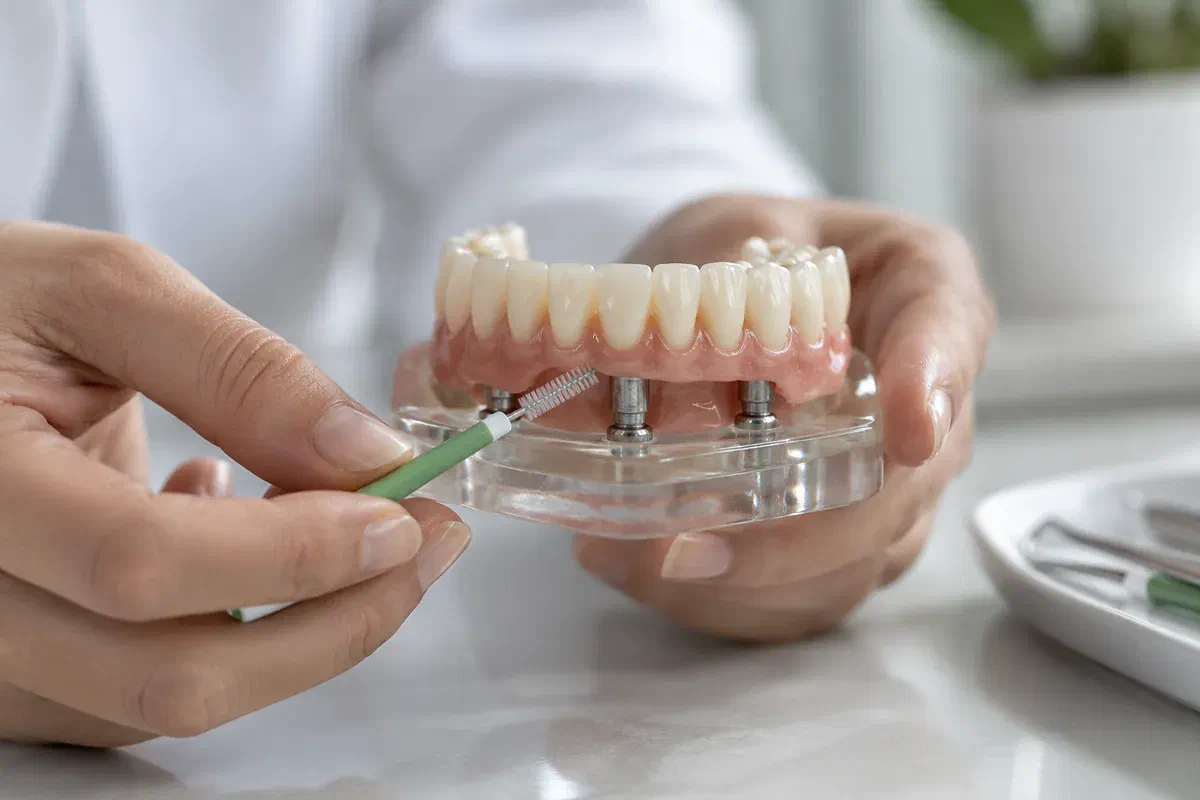
Once implants enter the conversation, the next fork in the road is usually this one: teeth you unclip each evening, or teeth that stay. A fixed implant denture is the second kind. Sometimes called a fixed implant bridge, it is a complete arch secured to implants and cleaned in place, while an overdenture rests on implants but comes out for cleaning.
Each design still has two parts. The implants give support inside the jaw, and the arch on top replaces teeth and, often, receded gum. What differs is how the two connect, which shapes your daily handling, how you clean, how forces are spread and what maintenance looks like. Speech, appearance and bite all need planning in either case.
If you are coming from Acton, a single consultation at our Bronte Street practice can lay the two options side by side. Dr. Anjum will examine your mouth, explain which designs are realistic for you and outline the records or specialist input that planning would involve. You leave with the trade-offs in plain view.
Implant arches of either kind are usually considered when most teeth in a jaw are missing or expected to be. Examination decides suitability, and that includes whether some natural teeth could stay.
Describe exactly what frustrates you, from movement to the nightly routine. That helps the comparison, but a dislike of removable teeth is not enough on its own to show that a fixed design will suit.
Ask for each tooth’s diagnosis and whether keeping some is sensible. Either implant design should follow that discussion rather than assume a clean slate.
One design is cleaned in your hand, the other in your mouth. Mention grip, vision and any help you receive so the team can judge which routine is realistic before planning goes further.
How many implants either design needs, and where, depends on your assessment and the restoration. A package name or advertised count does not answer that.
In a suitable case, an implant-supported fixed arch holds the teeth in place during ordinary eating and talking, without the nightly removal an overdenture involves. The expected benefit should be explained against your present difficulties and planning results.
Fixed teeth are not maintenance-free, and their lifespan is not guaranteed. Implants, gums, the arch and your bite forces all need review. Ask about complications, repair arrangements and ongoing costs for both designs, so the comparison is fair.
Patient information: Leeds Teaching Hospitals — dental implant patient information
Ask the clinician to explain how a fixed arch and an overdenture each connect to implants. Understanding the mechanics makes the choice clearer than product names do.
Tooth arrangement, gum replacement, speech and how the arches meet matter in either design. Share your priorities and ask when you can preview the teeth before the final version is made.
The better design is the one you can maintain. Ask for a practical explanation of each cleaning routine and the professional reviews involved before you choose.
Both implant designs involve several stages and sometimes a team. Ask who provides each step, what you will wear while healing and what findings could change the order.
Your remaining teeth, gums, existing appliances and medical history are reviewed. Imaging and records show the support available, which can itself narrow the choice between designs, and whether more assessment or earlier treatment is needed.
Compare fixed and removable implant designs, the support each needs, materials, temporary teeth, risks and maintenance. Ask why any extraction or graft is advised, as those steps are permanent.
The sequence depends on findings and the approach agreed. Interim teeth and how much you can chew on them are decided separately, so a fixed final design does not mean fixed teeth at once.
Records and fittings guide the final arch. The team checks function, shows you how to clean in place and arranges reviews of both the arch and the tissues around each implant.
With a fixed arch, cleaning reaches beneath the teeth and around the parts that anchor them while they stay in your mouth. That is a different skill from scrubbing a denture over the sink, so ask for a hands-on demonstration using the arch you will actually wear.
Practise reaching under the arch with tools that fit the space, never ones you have to force. If an area is hard to get at, raise it at your next visit; a change of technique, a different tool or a design review may help.
Checks look at gum health, hygiene, contacts and components. The interval should suit your needs, and the team should tell you whether the arch will be removed at the clinic from time to time.
Contact the team about looseness, chips, persistent bleeding or discomfort. Do not test the arch by moving it or tighten anything yourself; the cause needs assessment.
Patient information: Canadian Dental Association — dental implants and ongoing care
The choice between removable and fixed implant teeth is personal. These answers cover common comparison points to discuss at your consultation.
Set aside one appointment with Dr. Anjum on Bronte Street to compare full-arch options. We will assess your mouth, explain which fixed or removable designs could suit, and tell you whether more records or a specialist would be part of planning.
Bring your current denture if you wear one, and jot down what you like and dislike about it.
