Your current denture limits you
Describe how it moves, how meals go and what handling it is like. Those details guide the comparison, though they do not on their own show that a fixed implant design is right for your mouth.


A fixed full arch is a long commitment, not a one-time purchase. For Brampton adults, this page explains how implant-supported fixed teeth are assessed and staged, and the reviews, repairs and running costs worth asking about early.
People weighing a full arch often focus on the initial treatment. It is just as sensible to ask what the following ten years would look like. A fixed implant denture, which you may also hear called a fixed implant bridge, is a complete set of teeth for one jaw held on implants. It does not come out at home, which sets it apart from an overdenture that you remove for cleaning.
Behind that one appliance are two kinds of work. Implants sit in the bone and provide support, while the arch restores the visible teeth and, where needed, lost gum. Planning ties them together so the look, the bite, your speech and the space for cleaning beneath the arch are all considered from the outset.
From Brampton, you can begin with an assessment at the clinic on Bronte Street South. Dr. Anjum can examine your mouth, compare fixed and removable designs and explain what records or specialist involvement might be needed. Just as importantly, you can talk through what maintenance, reviews and possible repairs would mean over time.
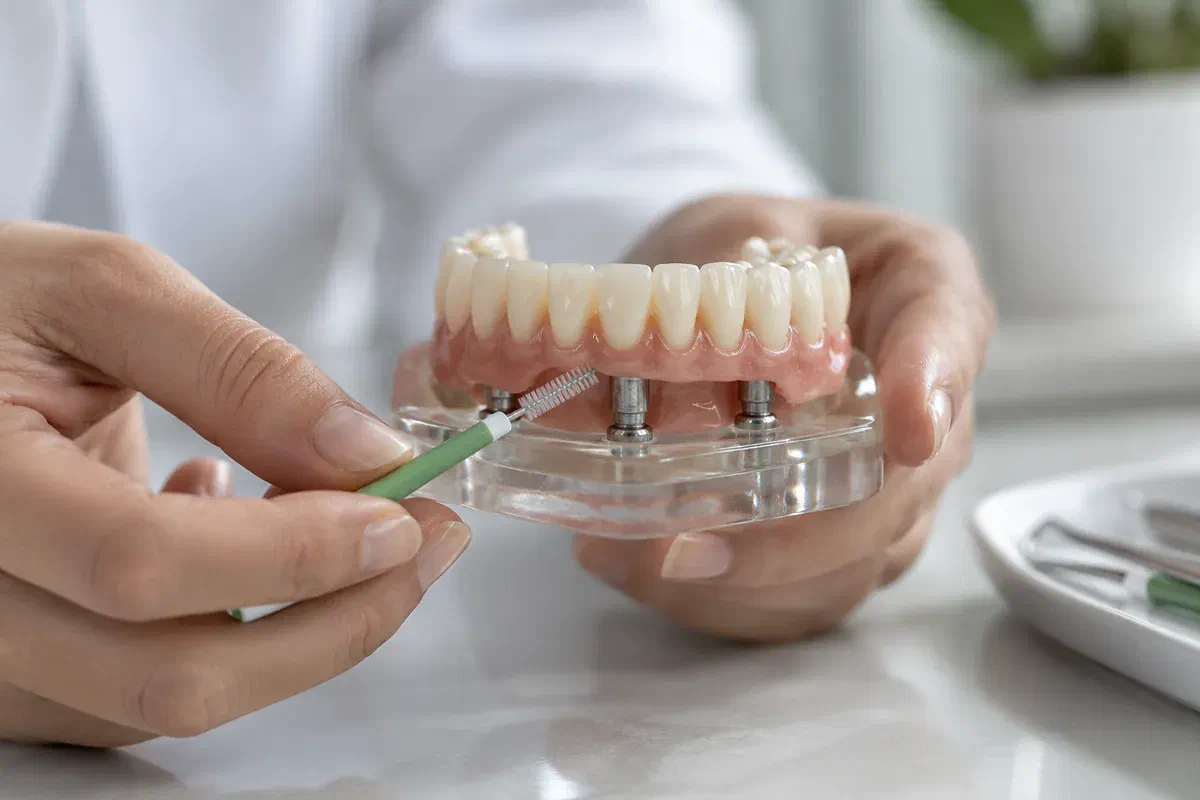
This kind of arch is generally considered when one jaw is missing most of its teeth or soon will be. Examination decides whether it is suitable, including whether any of your natural teeth are worth keeping.
Describe how it moves, how meals go and what handling it is like. Those details guide the comparison, though they do not on their own show that a fixed implant design is right for your mouth.
Ask for the diagnosis of each relevant tooth and the realistic ways of keeping it. Keeping a useful tooth can change the whole plan, so a full-arch proposal should come after that discussion.
Daily cleaning beneath fixed teeth matters from the planning stage onward. Mention your hand strength, sight and any help you have, so the proposed design can be weighed in everyday terms.
Implant count and positions come from your assessment and the planned teeth. A promotional package or quoted number of implants cannot substitute for that.
For the right person, an implant-supported fixed arch offers teeth that stay attached through normal eating and speaking. The expected improvement should be described against your actual difficulties and what planning reveals.
Fixed teeth still need looking after and are not guaranteed for life. Implant and gum health, wear on the arch and the forces it takes all require periodic review. Ask about complications, how repairs would be arranged and what ongoing costs to expect before deciding.
Patient information: Leeds Teaching Hospitals — dental implant patient information
A clear explanation of how the implants hold the finished teeth lets you compare fixed and removable proposals on their function rather than on how they are described.
Tooth position, any replacement gum, speech and bite are connected. Share your priorities, and ask when you will be able to see and adjust the planned teeth before the definitive arch is made.
Being able to maintain the design is part of its suitability. Ask how cleaning access and professional reviews will work, so the routine and its costs are understood before you begin.
Expect treatment in stages, sometimes with a team. Ask who provides each one, how interim teeth are handled and which findings could change the plan or its timing.
Remaining teeth, gums, current appliances and medical history are reviewed. Imaging and records show the support available and whether additional assessment or earlier treatment should come first.
Set fixed and removable designs side by side and go over how the implants would carry the arch, what it is made from, what you would wear while healing, the risks and the upkeep. Ask for the rationale behind any extraction or graft, since those steps cannot be reversed.
The sequence depends on findings and the agreed approach. Interim teeth timing and allowed chewing pressure are separate decisions; a fixed final outcome does not guarantee immediate fixed teeth.
Records and fitting checks guide the final arch. The team assesses your bite and function, demonstrates cleaning on the arch you will actually wear, and books reviews for both the teeth and the tissue around the implants.
Because the arch stays in, cleaning needs to reach beneath it and around its supporting parts. Ask for a demonstration with tools chosen for your arch’s actual spaces.
Learn to reach beneath the arch without forcing tools into spaces too small for them. Tell the team about any area you struggle with so the technique or design can be revisited.
Regular checks assess the gums, hygiene, contacts and components. Your interval should suit your needs, and you should be told whether professional removal or other maintenance is expected.
Contact us about looseness, a chip, ongoing bleeding or discomfort. Do not rock the arch to test it or try to tighten components; the cause must be assessed.
Patient information: Canadian Dental Association — dental implants and ongoing care
Full-arch decisions affect your routine and budget for years. These answers can help you ask the right questions at a consultation.
Come to our Bronte Street practice to discuss a full-arch replacement. We will review your starting point, explain which designs could suit you and talk through what maintenance would involve, including when a specialist might be part of your care.
Bring any quotes, insurance information or records of existing implants or dentures, and tell us your priorities for daily life.
