Your removable denture is wearing on your confidence
Explain the moments it lets you down, from meals to removing it. Those experiences help shape the choice, although they do not by themselves prove a fixed implant arch is right for your mouth.


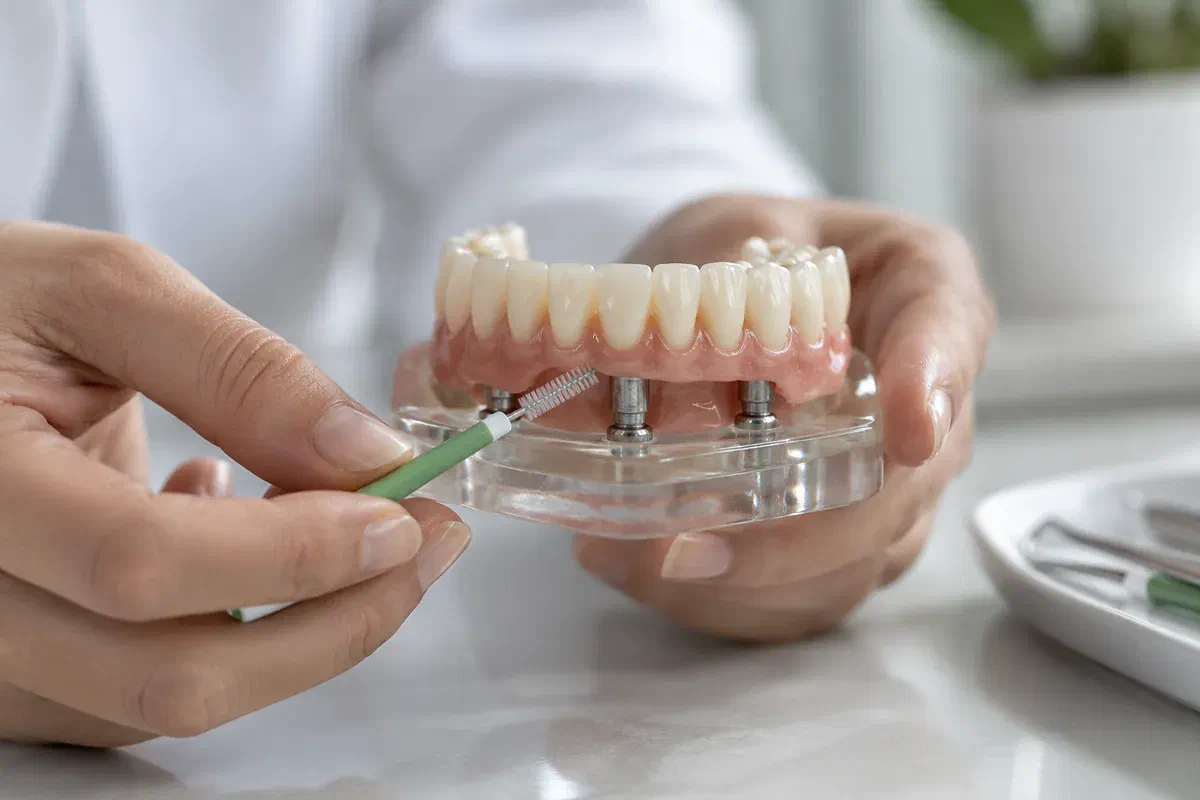
A full arch that never comes out still has to be cleaned underneath, every day. For adults in Burlington weighing a fixed implant denture, this page starts with that routine, then covers suitability, treatment stages and reviews.
Most conversations about fixed teeth begin with how they will look. A more useful first image is the end of the day, brush in hand, working along the underside of an arch that does not come out. A fixed implant denture, or fixed implant bridge, is a whole arch of teeth secured to implants, and unlike a removable overdenture it stays in while you clean.
Think of the treatment in two parts. Implants placed in the jaw carry the load; the visible arch restores teeth and, where needed, gum that has been lost. Both have to be planned together, because tooth position, speech and bite matter alongside the small channels a brush must reach beneath the arch.
Coming from Burlington, you can start with a consultation at our Bronte Street practice. Dr. Anjum will assess your mouth, explain fixed and removable alternatives and outline the records and any specialist opinion a plan would need. You will also hear what the upkeep looks like before anything is booked.
A fixed design is generally raised when an arch has lost most of its teeth, or is expected to. Examination decides whether it fits, and part of that is asking if any of your own teeth can sensibly stay.
Explain the moments it lets you down, from meals to removing it. Those experiences help shape the choice, although they do not by themselves prove a fixed implant arch is right for your mouth.
Each tooth in question should have its diagnosis explained, along with any realistic way to keep it. Planning for a full replacement arch should follow that, not begin by assuming all of them will be removed.
That is a good instinct. Mention your grip, eyesight and dexterity, and whether a partner or caregiver helps, so the team can judge how workable a fixed design would be for you.
Your examination and the planned teeth determine how many implants are used and where. An advertised implant count or package title is no substitute.
When the treatment suits the person, implant-supported fixed teeth stay attached through everyday chewing and talking. The expected change should be measured against your own current difficulties and the planning findings.
It is worth saying clearly that fixed is not maintenance-free and carries no lifetime guarantee. Implants, gums, the arch and the forces on it all need ongoing review. Raise complications, repair arrangements and continuing costs at the outset.
Patient information: Leeds Teaching Hospitals — dental implant patient information
Your clinician should describe how the implants support the finished arch. That makes it easier to judge fixed and removable proposals by how they function, not by how they are named.
Tooth arrangement, gum-coloured material, speech and the meeting of your arches are intertwined. Name your priorities and ask when you can review the setup before the final arch is produced.
A design suits you only if you can keep it clean. Ask for a concrete explanation of access beneath the arch and how often professional care will be needed before you agree to treatment.
Treatment spans several stages and can involve more than one practitioner. Ask who looks after each step, what interim teeth you will have and what might shift the order.
The clinician examines your remaining teeth, gums and any current appliance, and goes over your medical history. Imaging and records show what support exists and whether other care should happen first.
Talk through removable versus fixed, implant support, materials, interim arrangements, risks and maintenance. Proposed extractions or grafts should each have a reason you understand, as they are irreversible.
The order depends on findings and the approach chosen. Interim teeth and how hard you may bite on them are decided separately, so fixed final teeth do not guarantee fixed teeth immediately.
Records and try-ins shape the finished teeth. The team checks your bite and function, shows you how to clean under the arch and books reviews of the teeth and the implant tissues.
Fixed teeth have to be cleaned where you cannot see easily: under the teeth and around the parts that anchor them. Ask for a hands-on demonstration with tools matched to your own arch.
Practise reaching beneath the arch without forcing in anything that does not fit the space. If one area defeats you, tell the team so they can change the technique or review the design.
Professional reviews check gum health, cleaning, contacts and the state of each component. Your interval should suit you, and you should know whether professional removal is expected at any point.
Call us if the arch moves, chips, bleeds persistently or aches. Resist checking it by rocking it or tightening anything yourself; the source of the problem needs a clinician.
Patient information: Canadian Dental Association — dental implants and ongoing care
Most questions about fixed arches come back to daily care. These answers cover the practical side and can help you prepare for a consultation.
Book a consultation at our Bronte Street practice to discuss a full-arch replacement. We will review where things stand now, compare the designs that might suit you and let you know whether more planning or a specialist opinion would help.
Bring any records of existing implants or dentures, and let us know what you want from your teeth day to day, including how you prefer to clean.
