Your removable teeth hold you back
Tell us when your denture shifts, how meals go and how you manage removing it. That context helps, though frustration with removable teeth is not by itself enough to show fixed implant teeth will suit.


A fixed full arch is a relationship that runs for years, not a single appointment. For adults in Bolton and across Caledon, this page covers the assessment and stages behind a fixed implant denture, and what the long run of reviews involves.
It is easy to treat the fitting day as the finish line. In reality it begins the longest part of treatment: years of daily cleaning and regular professional checks. A fixed implant denture (the term fixed implant bridge is also used) gives one jaw a complete set of teeth fixed to implants, and you never take it out at home. An overdenture, by contrast, is removed for cleaning.
Two structures share the load for all those years. Implants within the jaw provide support, and the arch replaces teeth and, where tissue has shrunk, some gum. Their long-term health is linked, so planning considers appearance, speech and bite alongside how you will reach the spaces beneath the arch, day after day.
For households in Caledon, from Bolton to the smaller villages, an assessment at our Bronte Street practice is the place to see the whole picture. Dr. Anjum can examine your mouth, set out fixed and removable designs and explain any specialist involvement or records needed. You will also hear what the review schedule is likely to look like.
Clinicians generally raise fixed arches when a jaw has few teeth left, or soon will. Examination establishes suitability, and part of that is whether any natural teeth are worth keeping.
Tell us when your denture shifts, how meals go and how you manage removing it. That context helps, though frustration with removable teeth is not by itself enough to show fixed implant teeth will suit.
Ask for a clear diagnosis of each tooth and what keeping it would involve over time. A full-arch plan should build on that conversation rather than presume every tooth must be removed.
Cleaning under a fixed arch is daily, and it does not stop. Mention grip, sight and steadiness, and whether those may change, so the design is considered with the future in mind.
Implant positions and count are set by your assessment and the design of the teeth. An advertised figure or named package does not account for your mouth.
In a well-suited case, a fixed implant arch keeps teeth attached through ordinary eating and speaking. The expected benefit should be explained in light of your present difficulties and what planning finds.
Fixed teeth still need care as time passes, and nothing guarantees they will last a lifetime. Implants and gums need monitoring, the arch can wear, and bite forces need checking. Ask about likely complications, repair arrangements and continuing costs from the outset.
Patient information: Leeds Teaching Hospitals — dental implant patient information
Ask the clinician to explain how the implants hold the arch. That helps you compare fixed and removable approaches by function, and understand what reviews are checking.
The arrangement of the teeth, any replacement gum, your speech and your bite affect each other, and wear can shift them over the years. Say what matters most to you and find out at which stage the planned teeth can be previewed.
A design only suits you if you can keep up with its care. Ask for a practical outline of cleaning access and the review schedule so the long-term commitment is clear.
Treatment usually takes several stages and may involve more than one clinician. Ask who handles each part, including long-term reviews, what interim teeth you will wear and what could change the plan.
Your teeth, gums, any existing appliance and medical history are examined, with imaging where appropriate. These baseline records are also useful for comparison at future reviews.
Talk through fixed and removable designs, how the implants will support the arch, materials, interim teeth, risks and ongoing maintenance. Any extraction or graft should come with a clear rationale, as it is permanent.
Sequence follows your findings and the agreed approach. Interim teeth timing and how much chewing they allow are separate clinical decisions, so fixed teeth right after surgery are not assured.
After try-ins, the finished arch is fitted and checked for function. The team demonstrates cleaning and agrees a review schedule for the restoration and the gum around each implant.
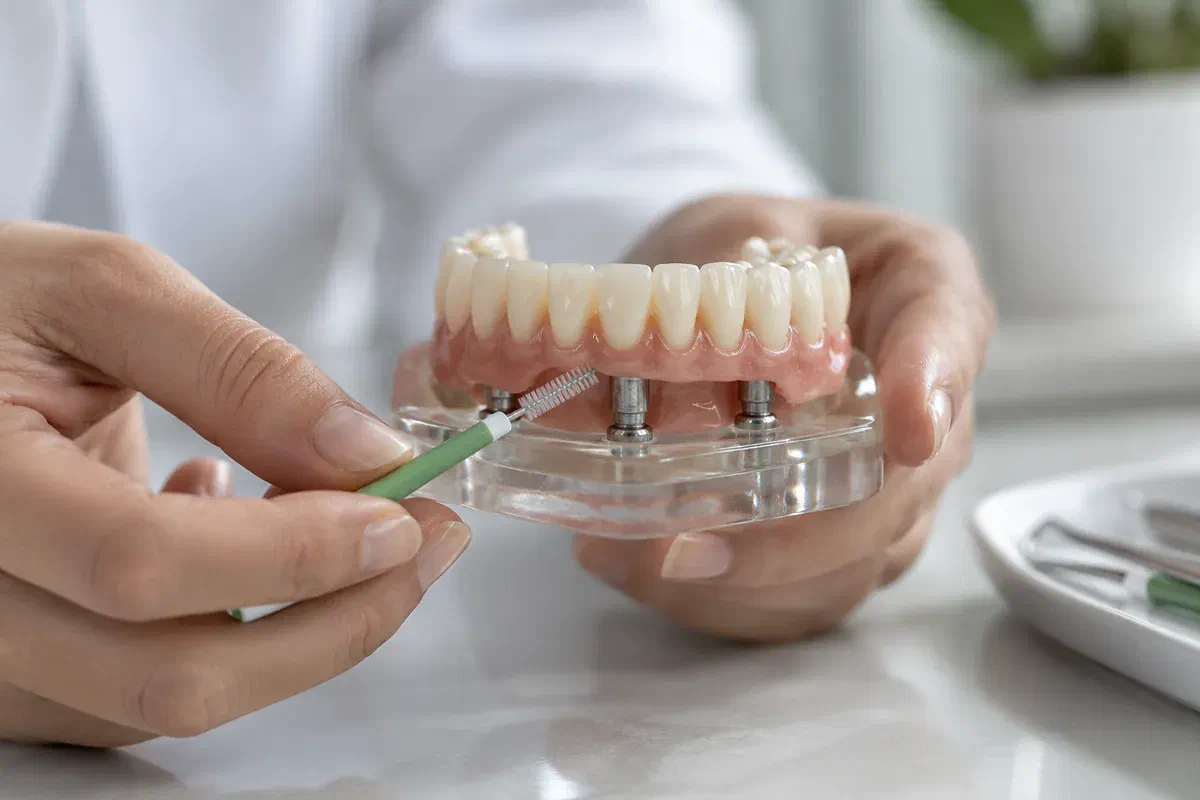
Because the arch stays in, daily cleaning has to reach beneath it and around the parts that hold it. Ask for a demonstration on your arch, and a refresher at reviews if your technique needs it.
Clean under the arch with tools that slip into its gaps without force. If an area becomes harder to reach as the years go by, mention it at a review; your method, your tools or the arch itself may need a rethink.
Professional visits check gum health, hygiene, contacts and components. Intervals should reflect your needs, and the team should explain if professional removal of the arch is part of the plan.
Get in touch about looseness, chips, ongoing bleeding or discomfort. Avoid testing movement or tightening anything yourself; the cause needs assessing.
Patient information: Canadian Dental Association — dental implants and ongoing care
The years after fitting matter as much as treatment itself. These answers can help you understand the ongoing relationship before you commit.
Reserve time with Dr. Anjum on Bronte Street to talk about a full-arch replacement and the care that follows it. We will assess where you are now, compare designs that might suit, sketch out a likely review rhythm and explain any specialist involvement.
Bring any existing implant or denture records and let us know how often you can realistically attend reviews.
