You avoid smiling or speaking freely
Explain when your current denture moves or shows, and how that affects you. Your experience guides the comparison, but self-consciousness about a removable appliance does not by itself make a fixed arch suitable.


How will a fixed arch look when you smile, and sound when you talk? Adults from Georgetown can explore implant-supported fixed teeth, from tooth position and gum replacement to treatment stages and the cleaning they require.
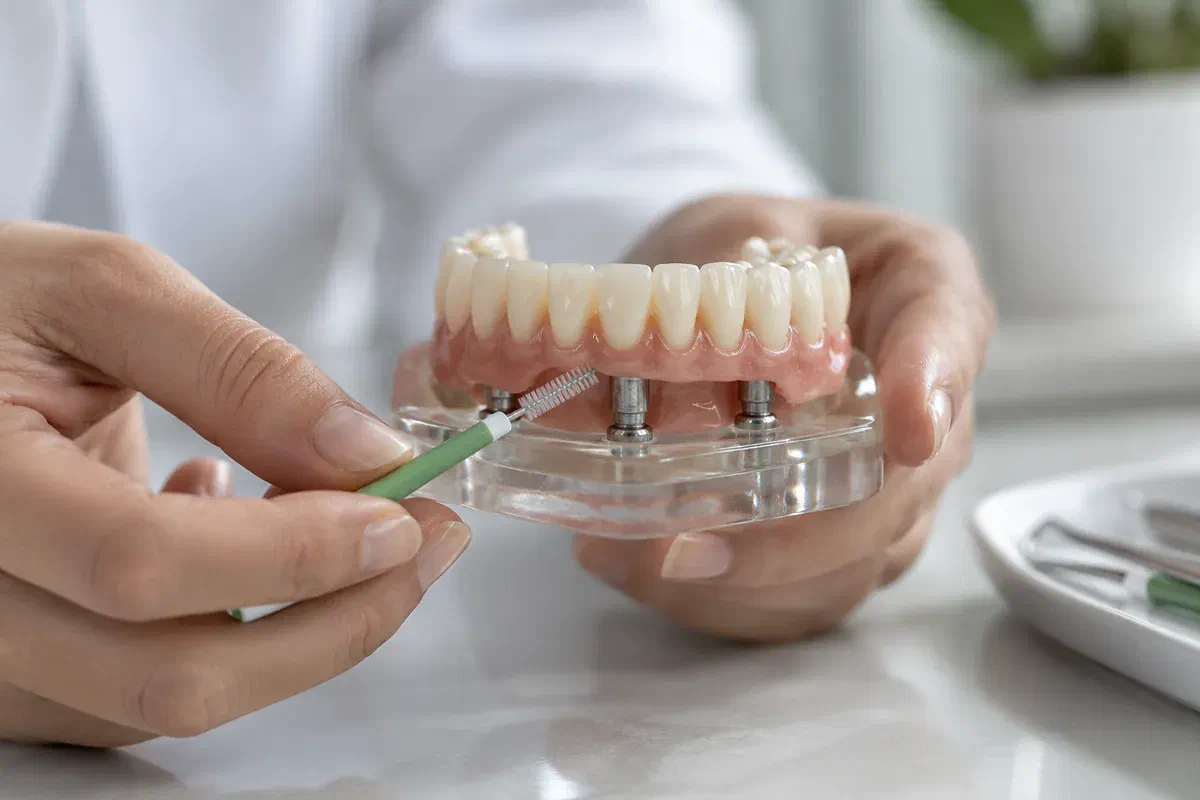
Think of the last photo where you held back a smile. For many people considering a full arch, appearance and speech matter as much as chewing. A fixed implant denture, also known as a fixed implant bridge, gives one jaw a complete row of teeth secured on implants. It is not removed at home, and that is what separates it from a clip-on overdenture.
What you see is only half of it. Beneath the gum, implants provide the anchorage. Above it, the arch recreates teeth and, where bone and gum have receded, the missing contour, which can affect lip support. Getting the look right means planning tooth position, bite and speech together, while leaving room for a brush to reach underneath.
From Georgetown, a first appointment at the clinic on Bronte Street South lets you talk about all of this before any commitment. Dr. Anjum can assess your mouth, compare fixed and removable designs, and explain the records and any specialist input a plan would require. Upkeep is part of that talk, not a footnote.
A fixed arch is generally raised once a jaw has lost most of its teeth or is heading that way. The examination decides whether it is suitable, including whether any of your natural teeth could reasonably remain.
Explain when your current denture moves or shows, and how that affects you. Your experience guides the comparison, but self-consciousness about a removable appliance does not by itself make a fixed arch suitable.
Ask what is wrong with each tooth and whether keeping some could serve you better. Full replacement should be the conclusion of that discussion, not its premise.
Appearance is easy to picture; the daily routine under the arch is not. Mention any problems with grip, sight or dexterity so the design can be judged on how you would actually care for it.
Implant positions and number are set by your examination and by how the teeth need to sit, not by a branded package or advertised count.
In a suitable mouth, implant-supported fixed teeth stay attached while you talk, eat and smile. The difference it may make should be explained against what bothers you today and the findings of the planning records.
That is not a promise of zero maintenance or a lifetime result. Implants, gums, the arch material and bite forces all need periodic review, and the visible teeth can wear or chip. Ask about complications, repairs and ongoing costs at the start.
Patient information: Leeds Teaching Hospitals — dental implant patient information
Your clinician should describe how the implants hold the arch. With that, a fixed plan and a removable one can be compared on function, not just on how natural each is said to look.
Where teeth sit, how much gum-coloured material shows, how words sound and how the arches meet all affect each other. Ask when you will see a trial arrangement and how feedback is handled.
A beautiful arch that cannot be cleaned is not a good result. Ask how access underneath will work and how often professional reviews are needed before you agree to proceed.
Treatment runs over several stages and may involve a team. Ask who does each part, what interim teeth will look like and what findings could change the plan.
The clinician reviews your teeth, gums, current appliance and health history. Imaging, photographs and other records show the support available and help plan where the new teeth should sit.
Talk about fixed and removable options, implant support, materials, the look of the interim teeth, risks and upkeep. If extractions or grafts are proposed, ask why, since those cannot be undone.
Sequence depends on your findings and the agreed approach. Interim teeth timing and permitted chewing are separate decisions, so a fixed final arch does not mean fixed teeth straight away.
Try-ins let you see tooth position and shade before the final arch is made. At fitting, the team checks your bite and speech, teaches cleaning and books reviews for the arch and implant tissues.
Because the arch stays in, cleaning has to reach under it and around the parts holding it. Ask to be shown on your own arch with tools that suit its spaces.
The underside needs the same attention as the visible surface, using tools that slip in easily rather than ones you have to push. Tell the team about any area you cannot reach so they can revise the technique or look again at the design.
These visits check gum health, hygiene, contacts and the condition of components and visible teeth. Your interval should match your needs, and the team should explain whether removal at the clinic is planned.
Get in touch about a chipped tooth, movement, bleeding that persists or discomfort. Avoid wiggling the arch or tightening parts at home; the cause has to be assessed.
Patient information: Canadian Dental Association — dental implants and ongoing care
Appearance and speech are often top of mind with a new arch. These answers can help you think about what to discuss at a consultation.
Book a consultation with our Bronte Street team to discuss replacing a full arch. We will look at your starting point, compare suitable designs and explain whether further records or specialist assessment are needed before planning the look of your teeth.
If you have photos of your earlier smile or records of existing implants or dentures, bring them along.
