A loose denture is affecting meals and mood
Describe what happens at mealtimes, when the denture moves and how hard it is to handle. Those observations help, though they do not by themselves show that a fixed implant arch is the right answer.


Helping a parent or partner decide about fixed teeth? For households across Halton Hills, here is how a fixed implant denture is assessed, how treatment unfolds, and how daily cleaning can be shared when hands or eyesight need support.
Full-arch decisions are often made at the kitchen table with a son, daughter or spouse listening in. That is a good thing, because a fixed implant denture asks for daily care that someone has to provide. Also called a fixed implant bridge, it is an entire arch of teeth held on implants. It stays in, so it is cleaned in the mouth rather than lifted out like an overdenture.
Two pieces of work sit behind it. Implants placed in the jaw give the support, and the visible arch replaces teeth and, where needed, gum that has shrunk away. Good planning looks at both: how the teeth will look and sound, how the bite will come together, and whether the person doing the cleaning, you or a helper, can reach the spaces underneath.
From Georgetown, Acton, Glen Williams or elsewhere in Halton Hills, families can come together to a first visit on Bronte Street, where Dr. Anjum will examine the mouth, set out fixed and removable choices, and explain what records or specialist input may be needed. The upkeep gets as much attention as the result.
A fixed arch is usually considered when a jaw has lost most or all of its teeth, or is about to. Suitability comes from examination, including a careful look at whether any natural teeth are still worth keeping.
Describe what happens at mealtimes, when the denture moves and how hard it is to handle. Those observations help, though they do not by themselves show that a fixed implant arch is the right answer.
Ask for a plain explanation of each problem tooth and whether it can be kept. A whole-arch plan should follow that conversation, not start by assuming every tooth needs to be removed.
Say so early. Arthritis, tremor, low vision or reliance on a caregiver all affect whether a fixed design is practical, and they are best weighed before anything is decided rather than after the arch is fitted.
The number and placement of implants follow from the examination and the design of the teeth. A packaged offer or a number in an advertisement cannot stand in for that.
For the right person, an implant-supported fixed arch gives teeth that stay put through meals, conversation and laughter. What that might change should be explained against current difficulties and the findings of planning, not in general terms.
No one should present it as maintenance-free or as lasting forever. Implant health, the gums around them, the arch material and the way the bite loads it all need regular review. Ask about complications, how repairs are handled and which costs continue after treatment.
Patient information: Leeds Teaching Hospitals — dental implant patient information
The clinician should explain how the implants and the arch connect. That understanding helps the whole family compare a fixed plan with a removable one by how each works rather than how it is advertised.
Tooth position, replacement gum, speech and bite all interact. Share what matters most and ask when there will be a chance to see and adjust the planned teeth before the final arch is made.
A design only suits someone if it can be looked after. Ask for a concrete explanation of cleaning access and professional reviews, and whether a helper could learn the routine as well.
Treatment usually involves several stages and possibly more than one clinician. Ask who is responsible for each, what interim teeth will be worn, and which findings could change the sequence, so family schedules can be planned.
Remaining teeth, gums, current appliances and medical history are reviewed. Imaging and records show the available support and whether other care, or input from a physician, is needed first.
Discuss fixed and removable designs, how the implants will carry the arch, materials, interim teeth, risks and upkeep. Ask why any extraction or graft is suggested, because these steps are irreversible.
The sequence follows the findings and agreed approach. Interim teeth timing and allowed chewing are separate clinical decisions, so a fixed final arch does not promise fixed teeth immediately.
Records and try-ins guide the final arch. The team checks the bite and function, demonstrates cleaning to the patient and any helper, and books reviews for the arch and implant tissues.
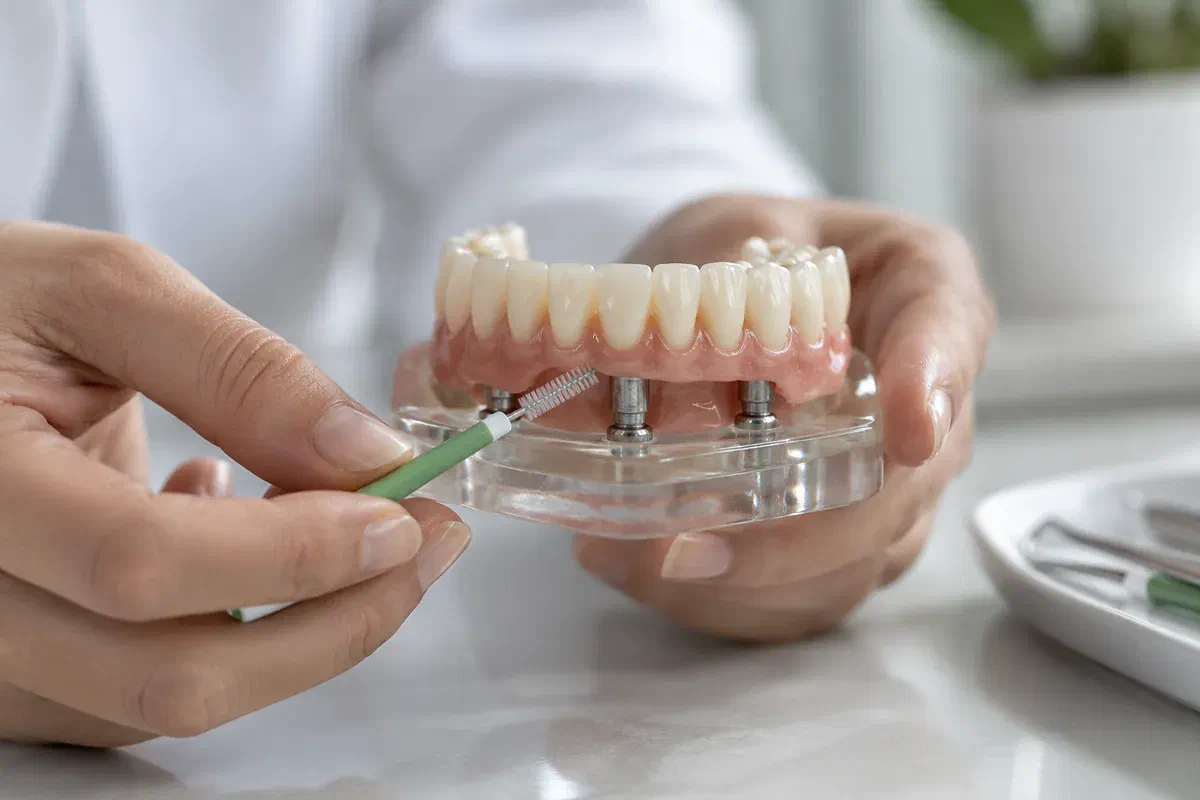
Because the arch stays in, cleaning must reach under it and around its supporting parts. Ask for a demonstration on the actual arch, with tools that suit its spaces and the hands that will use them.
Learn to reach under the arch without forcing in tools that do not fit. If a helper is involved, practise together, and tell the team about any area that is hard to reach so the approach can change.
Professional reviews check gum health, hygiene, contacts and components. The interval should suit individual needs, and you should hear in advance if the arch will ever be taken off at the clinic for servicing.
Call about looseness, chipping, bleeding that persists or new soreness. Do not rock the arch or try to tighten anything; the cause needs a clinician’s assessment.
Patient information: Canadian Dental Association — dental implants and ongoing care
When more than one person is involved in daily care, extra questions come up. These answers can help families prepare for a consultation.
Book a visit to our Bronte Street practice to discuss replacing a full arch. We will review the starting point, compare designs that could suit, and say whether a specialist or more records would help, leaving time for family questions.
Bring a medication list, any paperwork from past implant or denture treatment, and the family member or caregiver who may help with daily care.
