Your removable teeth are unreliable
Explain how often your denture shifts, breaks or limits what you eat. That information guides the comparison, though unhappiness with a removable appliance does not by itself make a fixed arch suitable.


What happens if fixed teeth chip, loosen or need servicing? Adults in Puslinch can read how fixed full-arch teeth are evaluated and staged, and why repair planning belongs in the decision as much as the treatment itself.
Most people ask how long full-arch treatment takes. Fewer ask what happens when something on the finished arch chips or works loose, yet that question tells you a lot about a plan. A fixed implant denture, or fixed implant bridge, is a full row of teeth attached to implants that you do not remove at home. Unlike an overdenture, any servicing happens in the clinic.
Two components share the work. The implants, set into the jaw, provide support; the arch replaces visible teeth and, where needed, lost gum. Either can need attention over time. That is why sound planning covers tooth position, speech and bite, and also cleaning access, how forces are managed and how repairs would be carried out.
From Puslinch, west of Milton, you can start with a consultation on Bronte Street, where Dr. Anjum will look at where your mouth stands today, explain which fixed or removable designs may suit and describe the records or specialist involvement a plan would need. We will also talk through how maintenance and repairs are typically handled.
Fixed full arches are mostly considered when a jaw is missing most teeth, or extensive loss is expected. Assessment determines suitability, and that includes whether natural teeth can sensibly be kept.
Explain how often your denture shifts, breaks or limits what you eat. That information guides the comparison, though unhappiness with a removable appliance does not by itself make a fixed arch suitable.
Ask for each diagnosis and whether retention is reasonable. Any full-arch plan should be the result of that discussion, not a decision taken before it.
Cleaning beneath a fixed arch is daily work, and professional servicing is periodic. Tell us about grip, vision and dexterity, and any help you have, so the design can be judged realistically.
The number and position of implants come from your assessment and the restorative design. An advertised count or package title does not replace that analysis.
In a suitable case, an implant-supported arch keeps teeth attached during everyday use. The benefit you might see should be explained against your current problems and what planning reveals, rather than promised in general terms.
Fixed does not mean indestructible. Implants and gums need monitoring, the tooth material can wear or chip, and components can loosen. Ask about possible complications, how repairs would be organized and what ongoing costs to expect, before you commit to treatment.
Patient information: Leeds Teaching Hospitals — dental implant patient information
Ask the clinician to explain how the implants, connecting components and arch fit together. Knowing which parts exist makes it easier to understand what maintenance might involve later.
Tooth position, gum replacement, speech and bite all interact, and some choices affect strength. Tell the team what matters most and find out at which stage a trial setup can be checked before the final arch is completed.
A design fits you only if you can care for it and attend reviews. Ask for a clear explanation of cleaning access and servicing, so the long-term commitment is understood from the outset.
Treatment normally proceeds in stages, sometimes with a coordinated team. Ask who is responsible for each part, including future repairs, and what could alter the plan along the way.
We look at your remaining teeth, gum health, any appliance you wear now and your health background. X-rays or scans and other records reveal what support is available and whether other assessment or preparatory care is needed.
Discuss removable and fixed designs, implant support, materials, interim arrangements, risks and the servicing each design will need. Ask why any extraction or graft is proposed, since it is permanent.
The order follows your findings and agreed approach. Interim tooth timing and allowed chewing pressure are separate decisions; fixed final teeth do not guarantee fixed teeth immediately after surgery.
Records and fitting checks guide the final arch. The team checks contacts and function, shows you the cleaning routine and arranges reviews, with an explanation of how repairs would be handled if needed.
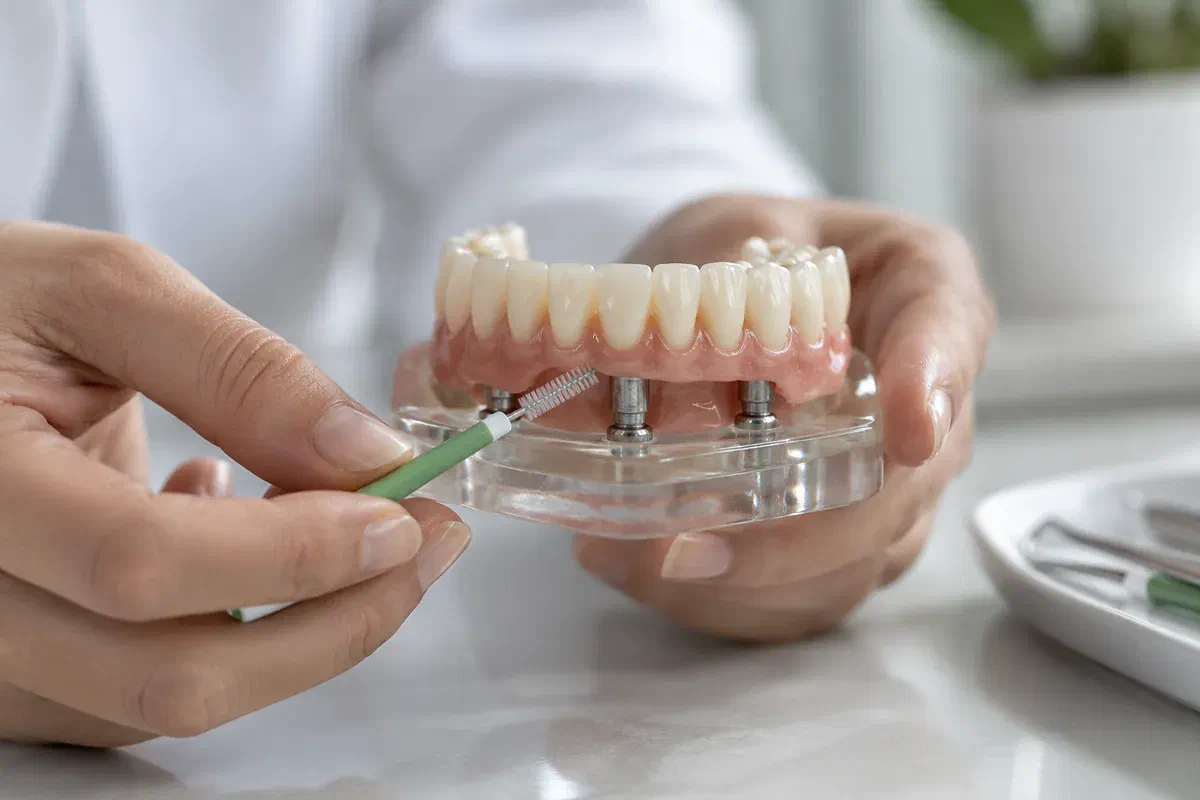
Because the arch stays in, daily cleaning has to reach beneath it and around the components that hold it. Ask the team to demonstrate on your own arch, with tools that fit comfortably.
Learn to reach under the arch gently, without forcing tools that do not suit the gaps. If any area is difficult, tell the team, because a missed spot can affect the gums around an implant.
Professional checks assess gum health, hygiene, contacts and the condition of components. They are also when early wear or loosening can be found, and when the team can tell you if professional removal is due.
Call about looseness, chips, persistent bleeding or discomfort. Resist pushing on the arch to see if it moves or try to tighten anything; doing so can make the problem harder to fix.
Patient information: Canadian Dental Association — dental implants and ongoing care
Knowing how problems are handled makes it easier to choose with confidence. These answers cover common maintenance questions for full-arch patients.
Book a full-arch consultation with Dr. Anjum. We will look at your starting point, explain the designs that might suit and how each is maintained, and let you know whether specialist input is likely to be part of the plan.
Bring any existing implant or denture records, and tell us about grinding, clenching or past breakages.
