A missing tooth affects how you smile
Describe where the gap bothers you and whether there is a date ahead. You will get an honest idea of the appearance to expect, along with a view on whether the calendar leaves room to plan properly.


The first week with a removable tooth is mostly about adjusting: to the feel of the base, the sound of your voice and the habit of taking it out. A flipper tooth may fill a gap while lasting care is planned. If you are coming from Erin or Hillsburgh, we can prepare you for those early days.
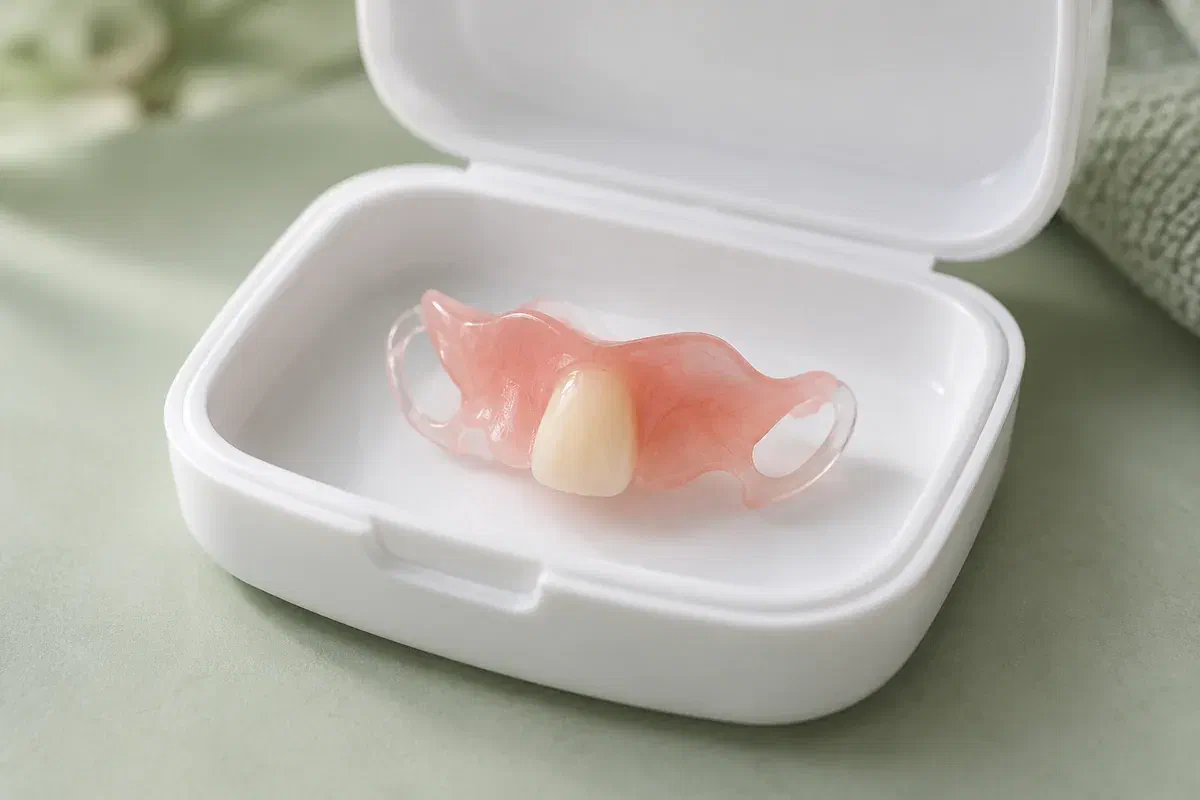
Your tongue will find it first. Even a small appliance can feel large for the first few days, and many people notice it most when speaking or swallowing. What dentists call an interim partial, and most people call a flipper, is a lightweight removable denture: replacement teeth set on a base that is shaped to rest on the gums and, in many designs, the palate.
Its outline comes from your gap, and its hold comes from the teeth around it. It normally plays a temporary role, covering a healing period or the time it takes to arrange a lasting replacement. A flipper is not built for the chewing demands or long service of a definitive denture, so the early instructions are worth following closely.
When you travel in from Erin, we can examine the space, explain what the adjustment period may involve and talk about what would make it easier for you. Tell us about any worries over comfort, gagging or handling. We will agree on a temporary tooth with plain limits and a review that catches early problems.
An interim appliance serves one stage of your care. Its suitability depends on the present state of your mouth and on what treatment follows.
Describe where the gap bothers you and whether there is a date ahead. You will get an honest idea of the appearance to expect, along with a view on whether the calendar leaves room to plan properly.
Tissue recovering from an extraction keeps changing, and an appliance resting there must allow for it. Ask when wearing may begin and when the fit will be checked.
A flipper can cover a staged plan, but the next decision still needs to happen. Agree on a likely duration and the visits that will follow.
If an extraction is booked, ask about a temporary tooth before the appointment. Some appliances need records and preparation in advance.
In the first days you may notice extra saliva, a change in some sounds and a feeling that the base is bulky. Many people find these ease as they adapt. Practising speech by reading aloud, and placing the appliance slowly in front of a mirror, can help. Soreness, rocking or persistent gagging, however, should be reported.
After that settling-in stretch, the right flipper does a simple job: it puts a tooth where one is missing until the next stage of care, and you lift it out for cleaning and check-ups. What you may eat with it varies by design and by how any extraction site is mending. Treat it as a helper, not a natural tooth.
Patient information: American Dental Association — removable partial dentures
An interim tooth may be worth it if the lasting restoration has to wait. Mention the details that matter to you, such as shade, position and how visible the base might be.
Knowing where the temporary phase leads makes the adjustment feel worthwhile. Ask which healing milestones will mark the time for the next decision.
Learning insertion, removal, cleaning and storage before you leave makes the first week smoother. Raise grip or gagging concerns while the design can still be changed.
The number and order of appointments depend on whether the tooth has been removed, whether an extraction is planned and which lasting options are being considered. Ask what each visit covers.
We examine the space, nearby teeth and gums, and review any existing treatment plan. Share what you hope the appliance will do for you and any dates on the horizon.
You will hear how the appliance stays in, how it may feel at first and what it cannot do. We also go over appearance, eating limits, care, fees and other interim options.
Impressions or similar records give the lab what it needs. Where the flipper is meant to go in right after a tooth is removed, you will hear how that day works and what could shift as the socket heals.
We check the fit and guide you through handling it until you feel comfortable. Ask about the first week before you go, and keep the review appointment.
Use the instructions given for your appliance and healing stage. Clean it daily, handle it carefully and arrange a check if it loosens or becomes sore.
Ask whether it should come out for meals and at night, and follow any post-extraction directions. If wearing it as instructed becomes painful, call rather than pushing on.
Check which products are safe for the material, and clean your remaining teeth and gums as shown. Tell us if parts of the appliance make cleaning difficult.
Store it in its case and follow the storage advice. A tissue is easily thrown away, and heat, pets and hard floors can damage the appliance.
Each appliance and healing stage comes with its own instructions. These answers address the early adjustment period that new wearers ask about most.
A consultation at our Bronte Street clinic is the place to ask what life with a removable tooth really feels like. We will look at the gap, lay out your choices and, if a flipper suits, time the fitting and reviews to lead into the next stage.
When you book, mention any extraction date and any concerns about gagging or handling, so the appointment can address them.
