The gap is making you self-conscious
Explain where the space bothers you and whether there is a date you are working toward. We can outline how a removable tooth is likely to look and whether the time available allows a careful fitting.


A temporary tooth involves more than one appointment, so the trip matters. A flipper tooth is a removable partial that may fill a gap while lasting care is planned. If you are coming from Etobicoke, we can map out the visits, explain the appliance’s limits and agree on what to do between them.
From the west end of Toronto, each appointment is a real commitment of time. That is a good reason to understand the whole sequence before you start. A flipper, more formally a small removable partial denture, sets one or more artificial teeth into a base that is fitted to sit against the gums and palate.
The design is tailored to the gap, and the neighbouring teeth help hold it. In most cases it is a placeholder, used while an extraction heals or a permanent option is arranged. It is not designed to bear the full bite or offer the lifespan of a definitive denture, and knowing that early helps you plan around it.
When you travel in from Etobicoke, we can examine the space and lay out how many visits are likely and what each one is for. Tell us about your schedule and any concerns about comfort or handling. Together we can choose a temporary tooth with clear limits, a review date and a plan for what to do if something changes in between.
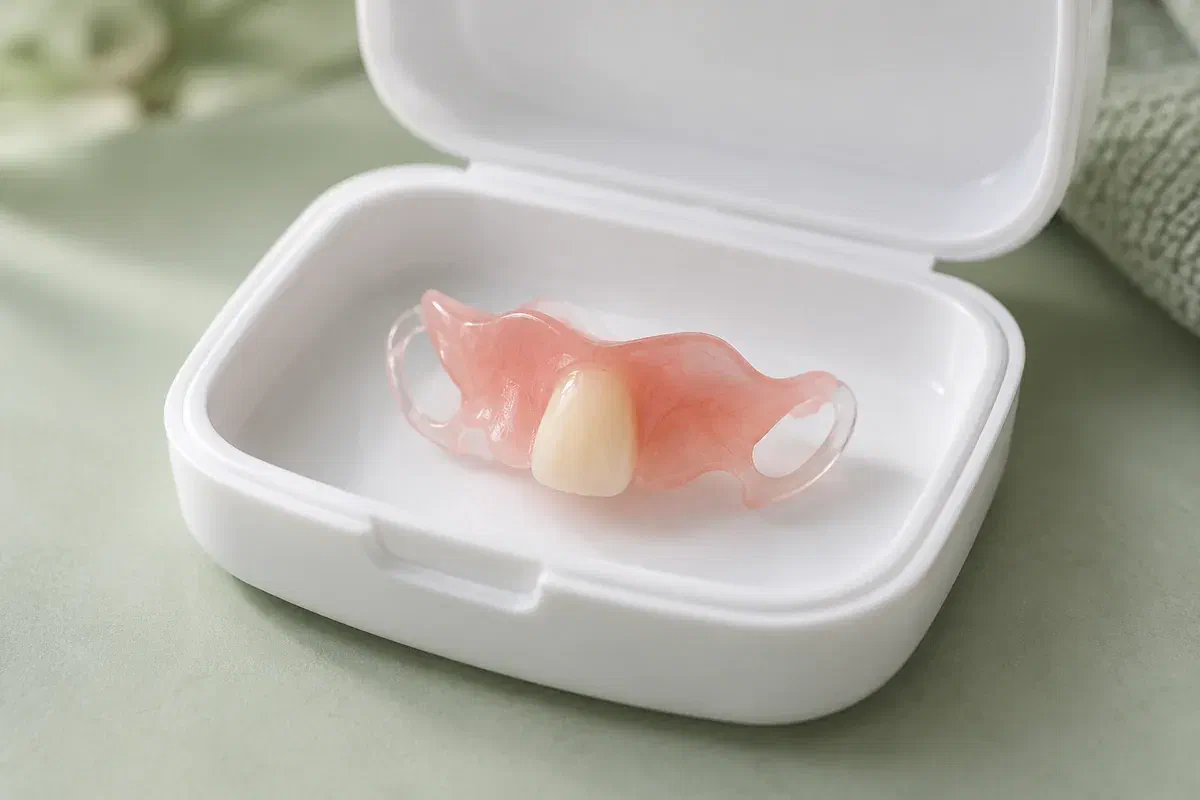
A flipper is tied to a defined period of care. Its suitability rests on the current condition of your mouth and the treatment that is expected to follow.
Explain where the space bothers you and whether there is a date you are working toward. We can outline how a removable tooth is likely to look and whether the time available allows a careful fitting.
The tissue around a fresh socket changes as it heals, and an appliance resting there must allow for that. Ask when wearing may begin and how fit reviews can be timed to limit extra trips.
A flipper can hold the space in a staged plan, but the remaining decisions still need attention. Agree on an expected duration and on the appointments that will follow.
Planning an extraction? Ask about a temporary tooth beforehand. Records taken in advance may allow the appliance to be ready, and it may save a separate trip.
In the right case, a flipper restores a visible tooth while treatment is paused between stages. You can take it out for cleaning and appointments as directed. It works best when its narrow, short-term role is matched to your specific gap and to a timeline you understand.
Getting used to the feel, the effect on certain words and the knack of handling it can take some days. Food guidance depends on the design and on healing near any extraction site. Knowing what the appliance is meant to do, and what it is not, means fewer surprises far from the clinic.
Patient information: American Dental Association — removable partial dentures
Ask about a temporary tooth when the final restoration is not yet possible. Tell the dentist which details matter, including shade, position and how visible the base might be.
Defining the interim stage shows the route to a long-term replacement and lets you book ahead. Ask which healing signs will decide when the next choice is made.
Practising insertion, removal, cleaning and storage at the clinic makes you more self-sufficient at home. Raise any gagging, grip or handling issues before the design is complete.
The number of visits depends on whether the tooth is already missing, whether an extraction is planned and which long-term options are being weighed. Ask for the full schedule at the start.
The dentist examines the space, adjacent teeth and gums and reviews any existing plan. Ask whether records can be taken at this visit, too, if it is clinically appropriate.
We explain how the appliance will be retained, how it may feel and what restrictions apply. Appearance, food, cleaning, fees and other temporary options are covered so you can decide.
Impressions or other records guide the lab. If the flipper is for use after an extraction, we explain how fitting will be arranged and what may need rechecking.
We assess the fit and show you how to place and remove it. Ask your questions while you are in the chair, and book the review for when the tissues are expected to have changed.
When the clinic is a longer drive away, you handle more of the day-to-day yourself. Your instructions are specific to the appliance and to how healing is going.
Confirm whether it comes out for meals and overnight, and follow any after-extraction advice. Tips from a previous denture may not apply to this one.
Find out which cleaners are gentle enough for the appliance, and keep up careful brushing of your natural teeth. If parts of the appliance make some areas hard to reach, tell us at the fitting.
Always use its case, especially when travelling. Tissues get thrown away, and heat, pets and hard floors can damage the appliance.
Practical details vary with the appliance and your stage of care. These answers focus on scheduling, distance and day-to-day use.
Your first appointment at our Bronte Street practice sets the pattern for the rest. We will examine the space, talk through which interim and lasting options fit and then schedule fitting and reviews so the drive is worth it every time.
Mention your travel when booking so we can plan appointments efficiently and explain what to do between visits.
