The space is affecting how you feel
Let us know when the missing tooth bothers you, whether at work or in family photos. We can describe a realistic appearance for a removable tooth and say whether the timing allows a careful fitting.


A temporary tooth spends part of every day outside your mouth, on a counter, in a case or by the bed. A flipper tooth is a removable partial that may fill a gap while longer-term care is arranged. For households in Georgetown, we can explain the fit, the limits and a care routine that protects it.
People rarely think about the bathroom counter when they picture a replacement tooth, yet that is where a lot of its life happens. A flipper is the everyday term for a small removable partial denture. It carries one or more artificial teeth on a base made to sit against your gums, and it comes out for cleaning and, often, for sleep.
Its shape follows your gap and the teeth that help hold it. For most people it is an interim step, worn during healing after an extraction or while a lasting replacement is organised. Because it is lighter in purpose than a permanent partial denture, it is not built for the same chewing load or service life.
From Georgetown, many households juggle work, school and activities, so a routine that is easy to keep matters. At your consultation we can examine the space, explain how the appliance would be cared for and talk about where it can be kept safely. We will also agree on its limits and when it should be reviewed.
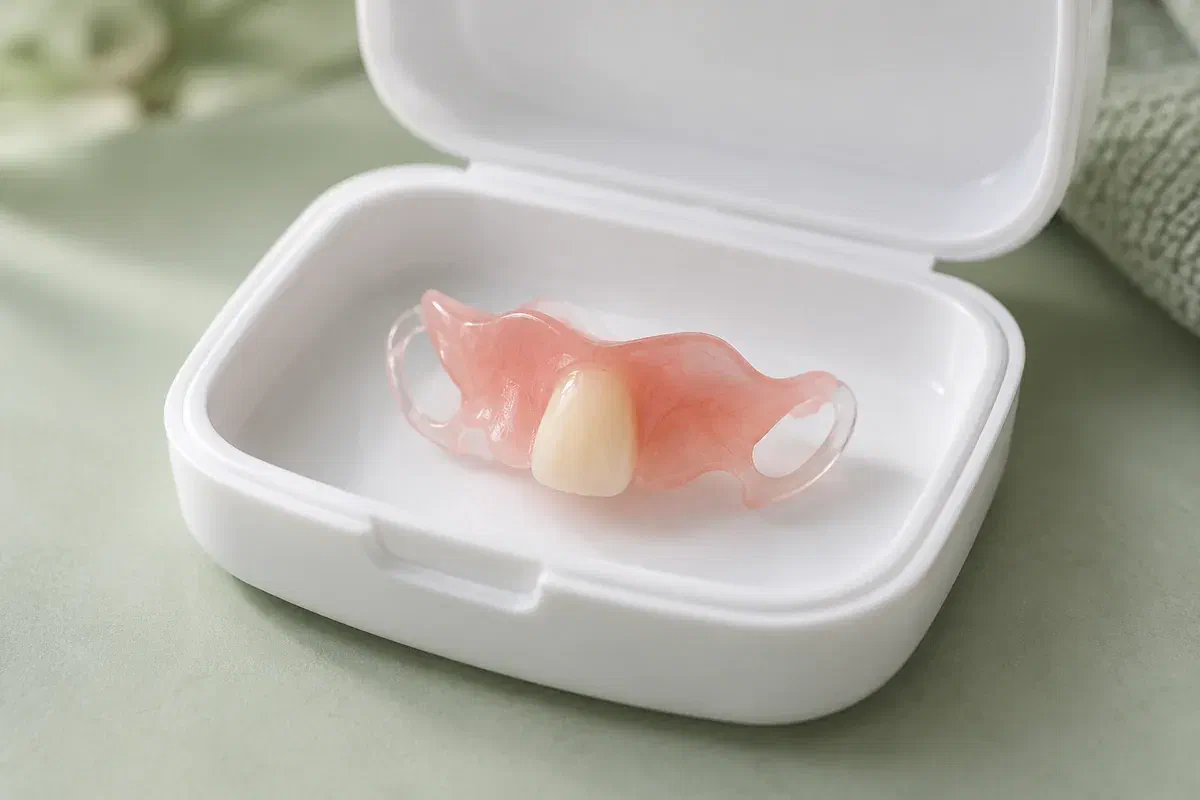
A flipper is linked to a particular stretch of treatment. Its suitability comes down to the condition of your mouth now and the care likely to follow.
Let us know when the missing tooth bothers you, whether at work or in family photos. We can describe a realistic appearance for a removable tooth and say whether the timing allows a careful fitting.
After an extraction the area changes shape for some time, so an appliance resting there must be planned accordingly. Ask when wearing can start and how the fit will be followed up.
An interim tooth can hold your place in a staged plan, but the next decision still needs a date. Ask how long you are likely to wear it and what comes afterward.
If a tooth is due to be removed, ask about a temporary replacement before then. Making the appliance can depend on records taken ahead of the extraction.
The daily side of a flipper is not complicated, but it does need consistency. Food can collect beneath the base, the material can scratch or warp if handled roughly, and an appliance left lying around can be lost or chewed. A short routine you can stick to protects both the appliance and the healing gums.
In return, a suitable flipper puts a tooth back in your smile during a pause in treatment. Getting used to how it feels and how you sound may take time, and the rules at mealtimes follow from its design and your healing. Asking what the appliance is for keeps everyone on the same page.
Patient information: American Dental Association — removable partial dentures
Talk about an interim tooth when the permanent restoration is not yet possible. Say which details matter to you, such as colour, position and how much of the base is visible.
Seeing the temporary phase as part of the plan keeps the longer-term choice moving. Ask which healing milestones or findings will prompt it.
Learning to place, remove, clean and store the appliance at your fitting helps you judge whether it suits your household. Mention handling or gagging trouble before the design is settled.
A tooth that is already gone needs a slightly different path from one still waiting to be removed, and the permanent options you are considering matter too. Ask which visits you should expect.
We examine the space, nearby teeth, gums and any planned work. Let us know what prompted you to ask and whether family or work dates affect the timing.
You will hear how the appliance stays in place, how it may feel and what upkeep it needs. Appearance, eating limits, fees and other temporary choices are part of the discussion.
Impressions or similar records guide fabrication. For a flipper that goes in once a tooth is removed, the fitting arrangements are explained ahead of time, along with what might need adjusting later.
We check the fit and walk you through placing, removing, cleaning and storing it. Ask anything that is unclear, and keep your follow-up while the tissues settle.
Use the instructions set for your appliance and your stage of healing. The basics are daily cleaning, careful handling and a call if it loosens or feels sore.
Confirm whether it should be out for meals and overnight, and keep to any post-extraction advice. Do not assume another person’s denture instructions fit your appliance.
Ask which brush and cleaner are suitable, and clean over a basin of water or a towel in case it slips. Keep brushing your own teeth and gums around the space as shown.
Choose one safe spot for the case, out of reach of children and pets. A tissue on the nightstand is easily swept into the bin, and hot water or a sunny windowsill can damage some materials.
Every appliance comes with specific instructions. These answers cover the household details that first-time wearers often ask about.
At our Bronte Street clinic we can examine the space, explain whether an interim tooth makes sense and show you how to look after it. Fitting and reviews can then be planned around the next stage of your treatment.
When booking, tell us about any planned extraction, and mention if pets or young children share your home so storage can be discussed.
