Large old restorations and thinning teeth
Teeth that are mostly filling material, edges worn short or cracks around old work deserve a combined look. The aim is to understand what caused the damage before deciding how much rebuilding is sensible.


Fillings from decades ago, a bridge that has seen better days, teeth that have quietly worn down. A full-mouth review takes stock of everything at once and helps you decide what to keep, repair or replace.
A mouth that has been cared for over a long life often carries a record of many dentists and many decisions. Amalgam from the 1980s may sit next to a newer crown, a partial denture and a tooth that has been root treated. None of it was wrong at the time, but the parts were rarely planned as a whole.
Full-mouth rehabilitation is a way of stepping back. It looks at the teeth, the restorations already present, any gaps and the bite, then asks how they affect each other. It may lead to repairs, replacements or both. Equally, it may confirm that much of the existing work is still serving you well.
From our Bronte Street practice, a short way from Milton’s historic downtown, we can help collect the background and explain what an organized plan might include. Some cases benefit from a prosthodontist or other specialist. You should hear clearly who does what, the reasoning behind each suggestion and how progress will be reviewed.
A broad assessment helps when deciding about one tooth could limit choices for others. Bring whatever you have about past treatment and describe which issues bother you day to day.
Teeth that are mostly filling material, edges worn short or cracks around old work deserve a combined look. The aim is to understand what caused the damage before deciding how much rebuilding is sensible.
Any replacement depends on neighbouring teeth, the support beneath and the teeth that meet it from the opposite jaw. Ask how a new option would sit with the expected future of the rest of your mouth.
If the last few years have been a run of unrelated patches, share that story. A combined review can show which needs are pressing and which deserve more records, an outside opinion or a slower approach.
Toothache, swelling or a newly broken tooth may need to be seen before planning is complete. Let the front desk know about anything troubling you when you call.
Planning across the whole mouth shows how individual decisions link together. A new crown should fit its tooth, but it also has to work with the teeth beside and opposite it. Looking at everything clarifies which choices are tied together and which can be settled independently.
A careful plan is also frank about its limits. It should describe what is uncertain, the realistic alternatives, expected maintenance and the effect of putting off certain steps. No extensive treatment comes with a promise of permanence, and it should not be the default before lighter options have been explored.
Patient information: American College of Prosthodontists — full-mouth reconstruction
Treating disease or restoring comfortable chewing may be more time-sensitive than cosmetic changes. Ask what each recommendation is for, so you can see which decisions matter now and which can wait.
Extracting a tooth or reducing its structure can affect later choices. A whole-mouth plan gives you room to discuss those links ahead of time and to seek a second opinion if you would like one.
Visit frequency, healing periods, budget, getting to appointments and home care all matter. Mention them at the outset so the order of treatment is workable and each person’s role is understood.
Rehabilitation follows assessment, planning, treatment and review. The number of visits and the people involved vary with the findings and the options you choose.
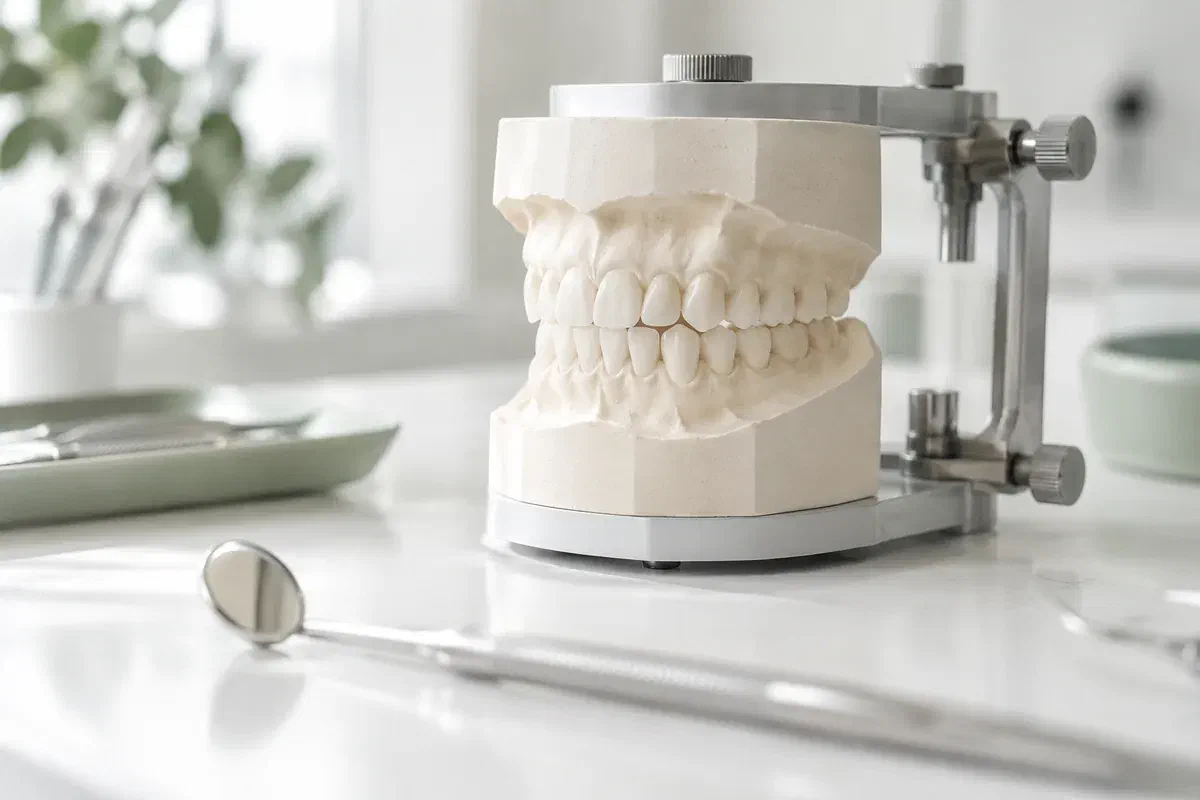
We discuss symptoms, past dental work, medical factors and your priorities. X-rays, photographs and study models may help us assess the teeth, the gums and how your upper and lower teeth meet.
We consider which teeth can reasonably stay and what each one needs. A specialist may be suggested. You should receive the proposed order, alternatives, risks, costs and upkeep in plain language.
The first phase may control active problems or use temporary restorations before anything final. That gives everyone a chance to reassess and to talk about how the planned changes are working.
Final treatment follows the agreed plan, with checks suited to each procedure. The team should tell you what is finished, what remains under watch and how future checkups and repairs will be arranged.
A rebuilt mouth can combine natural teeth, several restorative materials and replacement parts. Cleaning and reviews should match that combination rather than a single standard instruction.
Bridges, implants, dentures and natural teeth all need slightly different care. Ask the team to demonstrate the awkward spots and to recommend any aids that make the routine easier for your hands.
If wear, frequent decay or another ongoing factor played a part, know what prevention looks like. Restorations alone will not remove every reason the original problems developed.
Tell us about new sensitivity, a bite that feels off, broken material or trouble cleaning. Find out which clinician to see for each issue and how records are shared between offices.
These answers touch on scope, order and choice. Your examination will fill in the specifics, and each recommendation should come with its reasons.
Book a comprehensive assessment at our Bronte Street clinic to talk through overlapping dental concerns. We will review where things stand, set priorities with you and explain whether more planning or specialist input would help.
Earlier dental records are useful if you have them, as is a short note of the problems you most want the plan to solve.
