

Illustrative dentist explaining a surgical guide during an implant consultation
Restorative Dentistry

Guided Implant Surgery

A surgical guide can help transfer an implant plan from imaging to the treatment site. Discuss guided implant surgery in Milton, including the records, guide fit, clinical judgement, and restorative planning needed for an appropriate approach.

A closer look at guided implant surgery

Connect the planned tooth with the implant position.

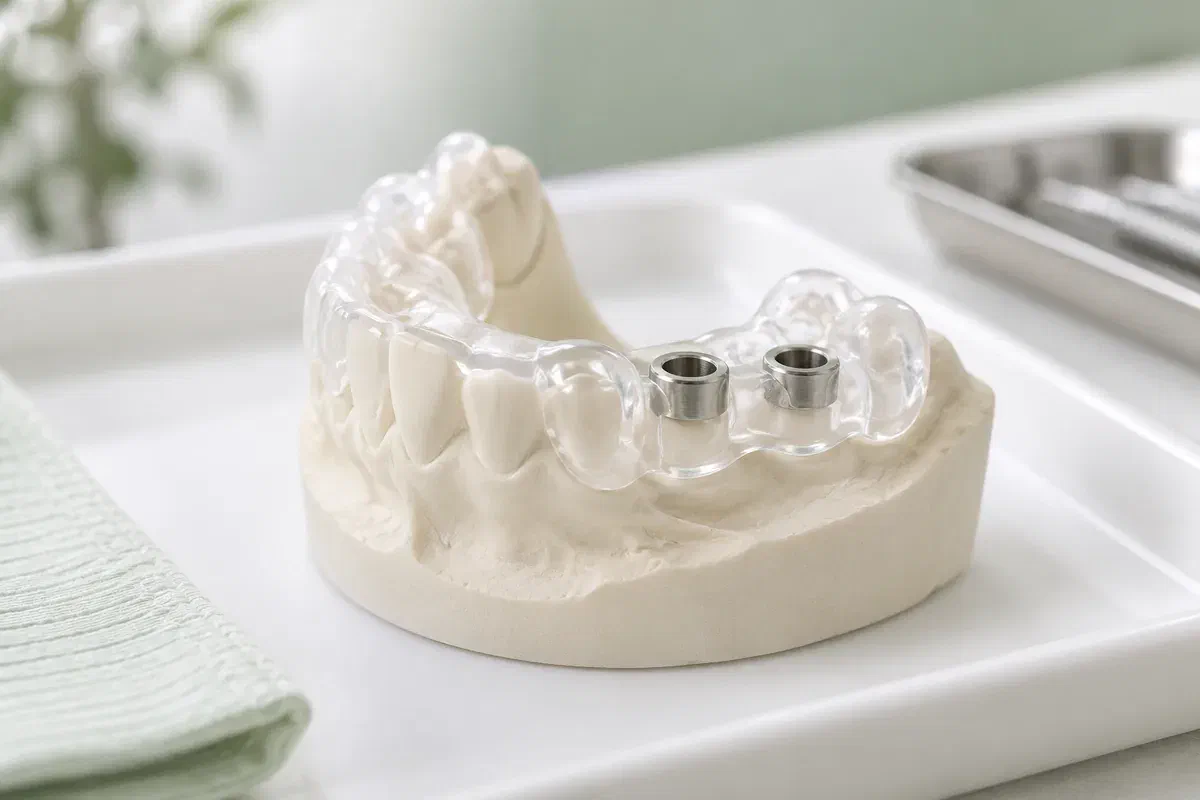
Guided implant surgery commonly refers to using a custom surgical template to help direct steps in implant placement. The guide is developed from planning records and fits onto an appropriate supporting surface in the mouth. Its purpose is to help transfer the intended position into the clinical procedure.

The guide is one part of a larger plan. The proposed replacement tooth, available bone, nearby structures, gum tissues, and access for treatment all matter before a guide is made. A guide cannot make an unsuitable implant site suitable or replace the treating clinician's assessment of the situation.

At Milton Dental Clinic, you can discuss whether a guided approach is relevant to your implant assessment. Ask which steps would be guided, how the guide's fit would be checked, and what alternative would be used if it could not be used appropriately. Understanding those details is more useful than assuming that a digital plan removes every source of uncertainty.

Discuss guided implant planning
Transparent implant surgical guide with metal sleeves seated on a dental model
Questions before choosing the approach

The site and restoration determine what guidance needs to achieve.

A guided approach is considered in relation to a particular clinical plan. The discussion should explain the benefit sought and the practical conditions required for the guide to work as intended.

Implant position must support a planned restoration

The visible tooth and its cleaning access should be considered during implant planning. Ask how the proposed position relates to the final restoration rather than viewing the implant as a separate surgical decision.

The available space or anatomy needs careful review

Imaging and examination help identify relevant structures and access limitations. A guide does not eliminate the need to allow for uncertainty or to check whether instruments can be used appropriately in the mouth.

You want to understand what the technology changes

Ask which parts of the procedure are guided and which still rely on other clinical methods. The explanation should include the guide's limitations, costs, and any additional records or preparation.

Guided surgery describes an approach to placement. It does not automatically mean flapless surgery, immediate teeth, no discomfort, or a shorter healing period.

The intended contribution of a guide

Support the plan with a checked physical reference.

A suitable guide can provide a physical way to relate a planned implant position to the treatment site. Its usefulness depends on the quality of the records, the design and manufacture, the support and fit, and the way it is used.

Planning and clinical judgement remain essential. There can be differences between intended and achieved positions, and the clinician must be able to respond to findings during care. Ask why a guided approach is proposed for your situation and how its limitations are accounted for.

Patient information: International Team for Implantology — computer-guided implant surgery

Link surgical and restorative decisions

Planning can bring the desired replacement tooth and implant support into the same discussion. This helps explain how the proposed placement relates to appearance, function, and access for future cleaning.

Clarify the records needed before surgery

The guide requires appropriate information about the site and supporting surfaces. Ask how imaging and surface records are checked together and whether changes in the mouth could affect the planned guide.

Make the contingency plan explicit

A guide that does not seat correctly should not simply be assumed usable. Discuss how the treating clinician would assess that situation and what changes to the procedure or timing might be required.

From assessment to a usable guide

Check each connection between the records and the mouth.

The exact workflow depends on the implant plan and guide system. Ask who is responsible for planning, guide production, surgery, and the final restoration, particularly if several clinicians are involved.

  1. Assess implant suitability and the planned tooth

    The clinician reviews the mouth, health history, replacement options, and relevant risks. Appropriate records establish whether implant treatment is suitable and what the proposed restoration needs from its support.

  2. Develop and review the placement plan

    Imaging and other records inform the planned position and guide design. The team considers supporting surfaces, access, nearby structures, and whether additional tissue management or specialist involvement is needed.

  3. Check the guide and carry out the agreed care

    The guide's seating and suitability need clinical verification. If findings prevent appropriate use, the clinician follows an assessed alternative rather than relying on the guide simply because it was manufactured.

  4. Review healing and continue restorative treatment

    After surgery, follow-up and the timing of replacement teeth depend on the clinical plan. Guided placement does not remove the need to assess healing, implant support, and readiness for the next stage.

After guided implant placement

The site still needs ordinary surgical care and review.

Postoperative instructions depend on what was actually performed, including any extractions, grafting, or temporary restoration. Follow the treating clinician's written guidance rather than assuming the guide changes recovery requirements.

Protect the area as instructed

Ask how to clean around the site, which foods or pressures to avoid, and how any temporary appliance should be used. A comfortable first day does not establish that healing is complete.

Use the postoperative contact plan

Keep the team's instructions and contact details accessible. Report symptoms identified in those instructions, unexpected movement, or concerns about a temporary restoration so the appropriate clinician can advise you.

Maintain the long-term implant care routine

Once the restoration is completed, cleaning and professional review remain necessary. Ask how to reach the relevant surfaces and how the implant and surrounding tissues will be monitored over time.

Comparing placement approaches

Choose guidance for a reason that fits the case.

Different approaches can be appropriate in different circumstances. Ask how the proposed method relates to the diagnosis, restorative requirements, anatomy, access, and the treating clinician's plan.

When a custom template supports the plan

A static surgical guide

A manufactured guide can help direct selected placement steps when its design, support, and fit are suitable. Clarify whether the proposal guides only part of the preparation or a broader sequence.

When a different approach is appropriate

Another clinically planned placement method

Conventional placement or another available guidance method may be considered. The important comparison is how each approach addresses the actual case, including access and the ability to respond to findings.

When the site or treatment choice needs reconsideration

Further preparation or a different replacement

Additional assessment, site preparation, or a non-implant option may be appropriate before any placement method is selected. A guide should not be used to avoid resolving the underlying suitability question.

Questions about guided implant surgery

Understand what the guide does and what it cannot decide.

The questions below distinguish planning tools from treatment outcomes. Ask for answers that relate to the specific guide and clinical approach proposed for your implant.

(905) 876-4488
Does a surgical guide place the implant automatically?
No. A static guide is a clinical tool used by the treating clinician to help direct planned steps. Its fit and suitability require checking, and the clinician remains responsible for the procedure and decisions made in response to the findings.
Is guided implant surgery always performed without lifting the gum?
No. A guided approach can be used with different surgical access methods. Whether a flap is needed depends on the site and treatment requirements. Ask what approach is planned and why rather than assuming the word guided describes the incision.
What happens if the surgical guide does not fit correctly?
The clinician needs to assess the reason and whether it can be used appropriately. The procedure may need an alternative approach or different timing. Discuss that contingency beforehand so you understand that a manufactured guide is not automatically suitable on the day.
Will a guide remove the need for bone grafting?
A guide does not create missing support or resolve every tissue requirement. Grafting decisions depend on the site and restorative plan. Ask whether additional preparation is needed and how it affects placement, healing, and the eventual replacement tooth.
Are all stages of a guided implant procedure controlled by the template?
Not necessarily. Some plans guide selected preparation steps, while others guide more of the placement sequence. Ask which stages are included in your proposal and how the clinician verifies the result and manages any need to change the approach.
Does guided placement guarantee a more successful implant?
No technique guarantees success. A guide may support an appropriate plan, but records, clinical execution, healing, health factors, and maintenance still matter. Ask what benefit is expected in your case and how the relevant risks and limitations compare with alternatives.
Guided implant surgery in Milton

Let’s connect the technology to your treatment needs.

Arrange an implant consultation at our Bronte Street clinic to discuss planning and placement approaches. We can review the starting point and explain what additional records or specialist assessment may be needed.

Bring available implant plans or imaging information and tell us which part of the proposed process you would like clarified.

Visit Milton Dental Clinic
Unit 1, 342 Bronte St. S, Milton, ON L9T 5B7
Get directions Clinic hours
Monday–Thursday
11am–7pm
Friday–Sunday
By appointment only

How can we help?

Milton Dental Clinic

Have a question about your smile? Choose the option that works best for you.

For urgent dental concerns, please call.
Messages are reviewed during clinic hours.