The crown has to look and work right
Where the implant sits influences the crown’s shape, the gum line and how you clean it. Ask how the planned position supports that final tooth, not just the surgical step.


When the missing tooth is one people see every time you smile, implant position gets extra attention. For Burlington patients exploring guided implant surgery, here is how a surgical guide is planned, checked and used, and where it stops being the deciding factor.
A front tooth leaves very little room for compromise. Its height, angle and the gum around it are all on show, and each depends partly on where the implant underneath ends up. That is often why a surgical guide comes up. The guide is a custom template produced from your scans; it rests on teeth or soft tissue and helps steer chosen surgical steps toward a planned spot.
Even so, the guide follows the plan rather than leading it. The design of the new tooth, the volume of bone, the position of nerves or sinus, the thickness and health of the gum, and access for instruments all need to be understood first. A guide does not make a doubtful site suitable, and it does not replace what the surgeon sees and decides.
In a consultation with us, it helps to be specific. Ask which steps the guide would cover, how its fit would be verified, and what alternative is ready if it cannot be used properly. For a tooth that shows, knowing those details matters more than hearing that digital planning makes everything predictable.
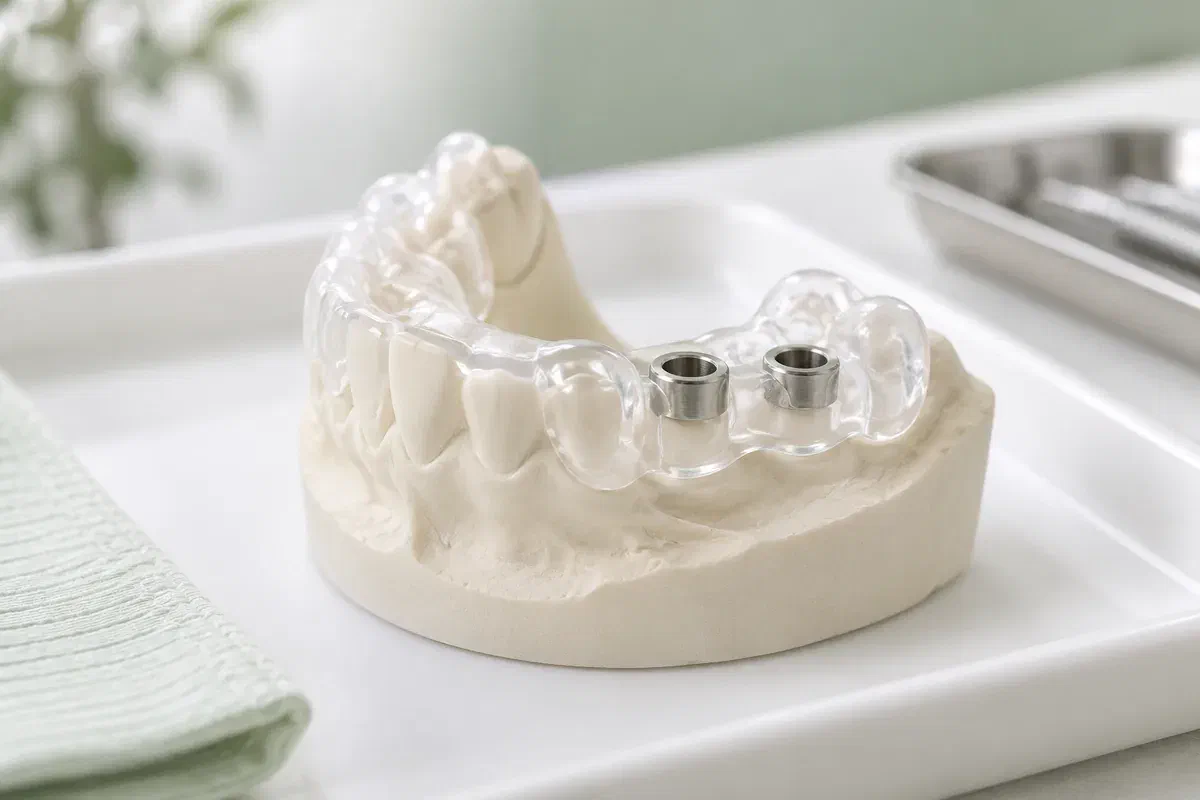
Whether a guide helps depends on your particular plan. The discussion should name the benefit being sought and the practical conditions it relies on.
Where the implant sits influences the crown’s shape, the gum line and how you clean it. Ask how the planned position supports that final tooth, not just the surgical step.
Imaging and examination show nearby roots, structures and space. A guide still needs a margin for uncertainty, and instrument access has to be confirmed in the mouth itself.
Ask which steps follow the template and which rely on other methods. Expect to hear about limitations, costs, and any added scans or preparation visits.
A guided approach concerns implant positioning only. It does not mean flapless surgery, an instant tooth, no soreness or a shorter healing time unless your plan specifically says so.
In a suitable case, a guide gives a physical reference that ties the planned implant position to the site. How well it works depends on accurate records, careful design and manufacture, solid support and fit, and the way it is handled.
Planning and judgement remain central. The achieved position can differ from the plan to some degree, and the surgeon has to respond to what is found. Ask why guidance has been suggested for your tooth and how its limits are accounted for.
Patient information: International Team for Implantology — computer-guided implant surgery
Digital planning lets the visible tooth and the implant be designed side by side. It becomes easier to explain how position affects the look of the tooth, your bite and access for cleaning.
Bone imaging and surface scans must be aligned accurately for the guide to fit. Ask how that alignment is checked and whether changes before surgery could affect it.
A guide that does not seat well should not be used regardless. Discuss how the surgeon would judge it and how the procedure or timing might be adjusted.
The workflow changes with the plan and guide system used. Ask who plans, who produces the guide, who places the implant and who makes the crown, particularly if more than one clinician is involved.
Your dentist looks at the mouth, your health history, the replacement choices and relevant risks. Records show whether an implant suits you and what the planned crown requires.
Imaging and scans shape the implant position and guide design. The team weighs guide support, access, nearby anatomy, and any need for gum or bone work or a specialist.
The guide is tried in to confirm it seats correctly. If findings rule out its use, the surgeon follows a planned alternative rather than relying on the guide because it was made.
Your follow-up schedule and the date for the final tooth come from your plan. Using a guide does not skip the visits that confirm the gum has settled and the implant is ready to carry a crown.
Aftercare depends on what was performed, such as an extraction, grafting or a temporary tooth. Follow the written instructions given to you rather than assuming guidance changes recovery.
Ask how to clean around it, which foods or biting to avoid, and how to look after a temporary tooth. Feeling comfortable early does not mean healing is done.
Keep instructions and phone numbers to hand. Report any listed symptoms, movement you did not expect, or problems with a temporary so the appropriate clinician can help.
Once the crown is placed, daily cleaning and professional reviews remain important. For a front tooth, ask how to keep the gum line healthy and what will be checked over the years.
These answers keep planning tools and treatment outcomes separate. For your own tooth, ask about the specific guide and method proposed.
Book a consultation at our Bronte Street practice to review the gap or failing tooth and the placement options that suit it. We will explain whether further imaging or a specialist opinion would be useful.
Bring any photos, X-rays or plans you already have and tell us which concern matters most to you.
