Can the finished tooth be cleaned well?
An implant set at an awkward angle can leave a crown that traps food or is hard to floss. Ask how the planned position supports both the look of the tooth and your daily cleaning.


An implant is meant to be lived with for many years, so the planning should look that far ahead. From Erin, see how a surgical guide fits into a plan built around the finished tooth and its cleaning, how the template is checked, and what keeps an implant healthy afterwards.
Picture the implant crown a decade from now. Can floss or a small brush reach around it? Does it meet the opposite tooth comfortably? Is the gum healthy? Much of that is decided before surgery, when the implant position is planned. A surgical guide is one way of carrying that plan into the mouth. It is a custom template, produced from imaging and scans, that sits on teeth or tissue and helps direct selected steps toward the chosen spot.
The guide is only the courier. The design of the replacement tooth, the amount of bone, nearby nerves or sinus, the gum’s condition and whether instruments can reach all have to be assessed first. If the site is unsuitable, a guide does not fix it, and the clinician placing the implant still makes the decisions during surgery.
Coming from Erin, it is reasonable to ask the long-term questions at the very first visit. How will this position affect cleaning? Which steps would the guide direct, and how is its fit confirmed? What is the alternative if it cannot be used? Those answers serve you better than the idea that a digital plan makes the outcome certain.
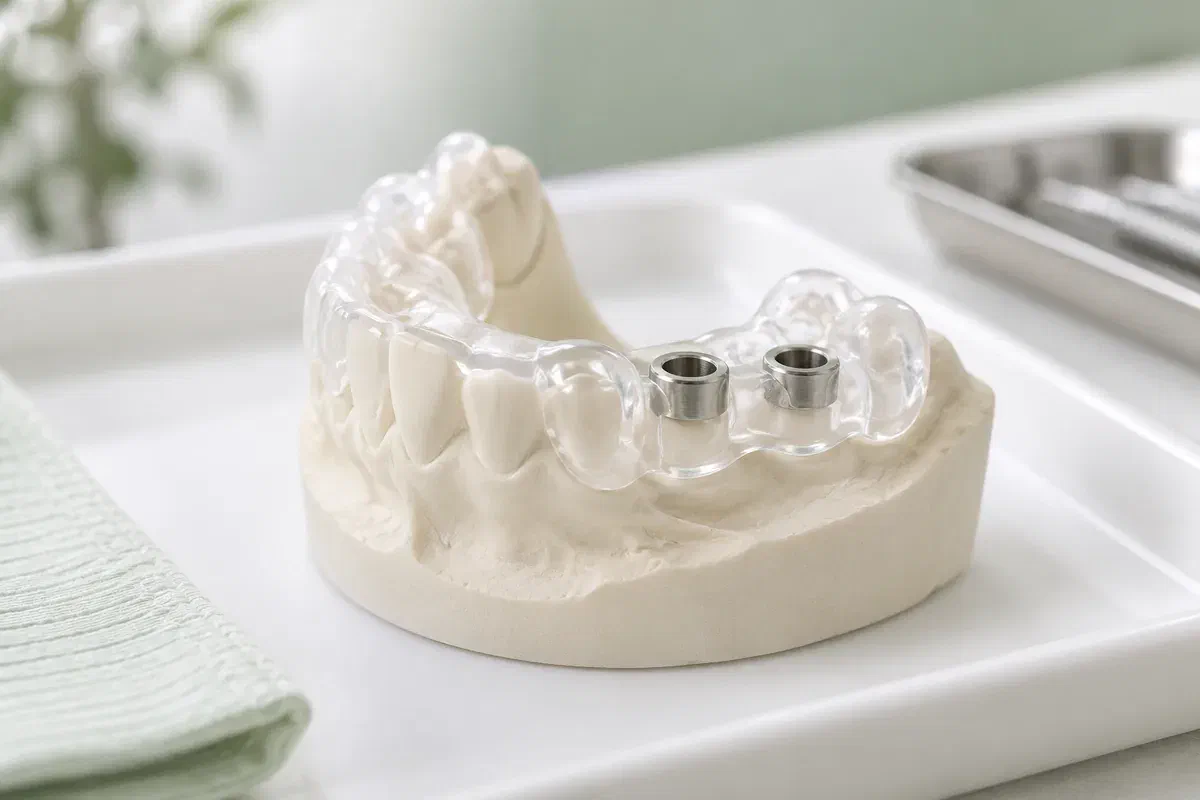
A guide is considered within a plan for a tooth that has to function and stay clean. The discussion should cover what guidance is meant to help with and the conditions it depends on.
An implant set at an awkward angle can leave a crown that traps food or is hard to floss. Ask how the planned position supports both the look of the tooth and your daily cleaning.
Imaging and examination show nearby structures and available access. A guide still needs a margin for uncertainty and a check that instruments will work in your mouth.
Ask which steps follow the template and which use other techniques, along with the limits, cost and any extra records or visits that come with it.
Guided placement describes positioning only. It is not a promise of no incision, an immediate tooth, no discomfort, quicker healing or a longer-lasting implant.
A suitable guide provides a physical link between the planned position and the site. That depends on accurate records, sound design and manufacture, a secure fit and careful use. When those line up, the plan is more likely to be carried out as intended.
Judgement and maintenance carry just as much weight. Achieved positions can differ from planned ones, and the surgeon has to adapt to what the site reveals. Even a well-placed implant relies on your home care and regular reviews. Ask why guidance is suggested and how its limits are allowed for.
Patient information: International Team for Implantology — computer-guided implant surgery
Planning the crown and implant together lets the team consider how easily you will reach the gum line, as well as appearance and bite.
A guide needs good imaging and surface scans. Ask how they are checked against each other and whether changes in your mouth before surgery could affect the fit.
A guide that does not seat correctly should not be used anyway. Talk through how the surgeon would decide and how timing or technique might change.
Workflows depend on the plan and guide system. Ask who plans, who produces the guide, who operates and who completes the crown, and who will look after the implant in the years after.
Your dentist reviews your mouth, gum health, medical history and replacement options and explains the risks. Gum problems elsewhere may need treating before an implant is planned.
Imaging and scans set the position with the future tooth in view. The team considers the guide’s support, access, anatomy and any need for grafting or a specialist.
Before any guided step, the template is seated and checked. If it fails that check, the surgeon moves to an alternative that had already been agreed instead of pressing on with it.
Once healing is confirmed, the crown is made and fitted. This is also when your cleaning routine and review schedule for the implant are set.
Early instructions depend on what the surgery involved, such as an extraction, a graft or a temporary tooth. Your aftercare sheet is the reference, whatever placement method was used.
Ask how to clean gently near the site, what to eat and how to look after any temporary. Feeling comfortable soon after does not confirm the bone has healed.
Store your instructions and the clinic’s number somewhere easy. Call about symptoms the sheet mentions, unexpected movement, or a problem with a temporary tooth.
Daily cleaning around the crown and regular professional checks help protect the gum and bone. Ask which tools suit your implant and how often it should be reviewed.
These answers focus on the years after placement. Ask how they apply to your own plan, guide and crown design.
Book a consultation at our Bronte Street practice to look at your starting point, the placement approaches that may suit you, and how the finished tooth will be maintained. We will explain any further records or specialist input needed.
Bring any X-rays or treatment plans you have, and tell us about your current cleaning routine.
