The implant must suit the crown above it
Position affects how the final tooth looks, bites and is cleaned. Ask how the plan connects the implant to that crown, rather than treating surgery as a separate goal.


An implant takes several stages, and from Etobicoke each one is a planned trip. See how guided implant surgery is organised: which records feed the surgical guide, how its fit is confirmed, how visits can be grouped, and when to seek urgent care closer to home.
From the west end of Toronto, an implant is as much a scheduling question as a clinical one. Records, planning, a possible try-in, surgery, reviews and the final crown each need time. A surgical guide sits in the middle of that sequence. It is a template made from your imaging and scans that fits onto teeth or tissue and helps direct chosen steps toward the planned implant position.
The guide carries out a plan; it does not decide one. The replacement tooth, available bone, nearby nerves or sinus, the gum and working access are assessed before it is designed. It cannot make an unsuitable site work, and the surgeon’s judgement on the day still comes first.
Before committing, ask how the stages would be arranged for someone making the trip from Etobicoke. Which steps would the guide direct? When is its fit checked, and could that happen at a visit you are already making? What is the fallback if it cannot be used? Those practical answers matter more than broad claims about digital precision.
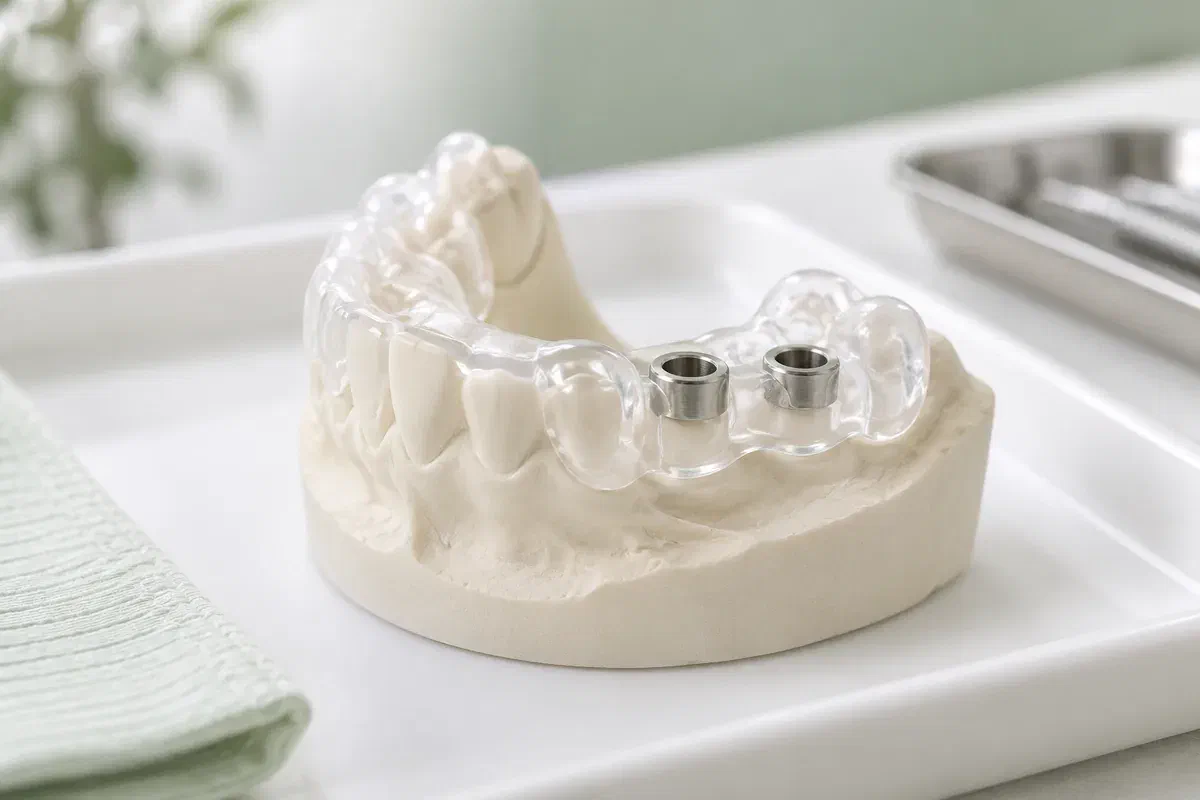
A guide is considered for one specific plan. You should hear what it is meant to help with, what it depends on, and how it affects the number and type of appointments.
Position affects how the final tooth looks, bites and is cleaned. Ask how the plan connects the implant to that crown, rather than treating surgery as a separate goal.
Imaging and examination identify nearby structures and working room. A guide still requires a margin for uncertainty and a check that instruments will fit in your mouth.
Ask which steps are guided, which are not, and whether the guide adds records or a try-in appointment. Its limitations and cost should be part of the explanation.
Guided placement is a technique for positioning. It does not by itself mean fewer stitches, an immediate tooth, no discomfort or quicker healing.
When suitable, a guide gives a physical way to relate the planned implant to your jaw. That depends on accurate records, sound design and manufacture, a stable fit, and how carefully it is used.
Clinical judgement remains essential. Planned and achieved positions can differ, and the surgeon has to respond to findings. Ask why guidance is proposed for you and how the plan absorbs its limitations, including the chance that the surgery date might shift.
Patient information: International Team for Implantology — computer-guided implant surgery
Digital planning lets the team design the visible tooth and implant at once, which makes it easier to explain how placement affects appearance, function and cleaning.
The guide depends on good imaging and surface scans. Ask which can be taken in the same visit and whether changes in your mouth before surgery could affect fit.
If the guide does not seat correctly, it should not be used regardless. Discuss how that would be assessed and whether the procedure or its timing might change.
No two workflows are identical; much depends on the plan and the guide system. It helps to know early who designs the plan, who makes the guide, who operates and who completes the crown, and which of those stages could share an appointment so you are not making the trip more often than necessary.
Your mouth, health history and replacement choices are reviewed alongside the risks. Where appropriate, records are taken to confirm suitability and what the crown needs.
Much of the design work happens without you in the chair, which saves a trip. The team works out what the guide will rest on, how instruments will reach the site, what lies nearby, and whether bone work or a referral has to come before surgery.
The guide’s seating is verified before it is relied on. If it cannot be used appropriately, the surgeon follows a pre-considered alternative instead of using it just because it exists.
Follow-ups and the timing of your crown depend on healing. Guided placement does not remove the need to examine the site and implant before moving on.
Aftercare depends on what was performed, such as an extraction, graft or temporary tooth. Follow your written instructions rather than assuming guided surgery changes them.
Ask how to clean around the site, which foods to avoid and how to manage a temporary appliance. A comfortable first day does not mean healing is finished.
Keep the clinic’s number and your instructions handy. Call about the symptoms they list. If something feels urgent, such as bleeding that will not stop or swelling affecting breathing, seek care nearby without waiting.
After the crown is placed, cleaning and professional reviews remain necessary for as long as you have the implant. Ask which brushes or flossing aids work best for your crown, and how often the implant should be checked. Routine recalls can be lined up well in advance.
These answers separate planning tools from treatment outcomes. For your own care, ask about the specific guide and method proposed.
Your first appointment with us on Bronte Street is a chance to review your starting point, talk over the placement approaches that might suit you, and map out the visits ahead. We will also explain any further records or specialist input you may need, so nothing catches you off guard later.
Send or bring any recent scans, X-rays or treatment plans so we can make the most of your first visit.
