Implants that suit the final bridge or teeth
The spacing and angle of each implant affect how the replacement teeth look, how they meet and whether you can clean beneath them. Ask how the plan links each position to that final design.


More than one tooth missing? When several implants have to work together, their positions relative to each other start to matter. From Halton Hills, explore how a surgical guide may support that kind of plan, what it rests on, how fit is checked and where it reaches its limits.
Replacing a single tooth is one kind of problem. Replacing three, or supporting a bridge or denture on implants, is another: each implant has to be placed in relation to the others and to the teeth it will eventually hold. That is a situation where a surgical guide is often discussed. It is a custom template made from your imaging and scans, fitted to remaining teeth, gum or bone, with sleeves that help direct planned steps at each site.
Yet the hard thinking happens beforehand. What the final teeth should look like, where the bone is strong enough, how close the nerves or sinus sit, how healthy the gum is, and whether instruments can reach each position all need settling first. A guide carries those choices into surgery. It cannot make a poor site acceptable or take over from the surgeon’s assessment.
For anyone in Halton Hills weighing a larger restoration, it is worth asking plainly: will every site be guided, or only some? How will the team confirm the guide is stable, particularly if few teeth remain to hold it? What happens if it cannot be used as planned? Concrete answers are a better basis for a decision than the promise of a perfect digital transfer.
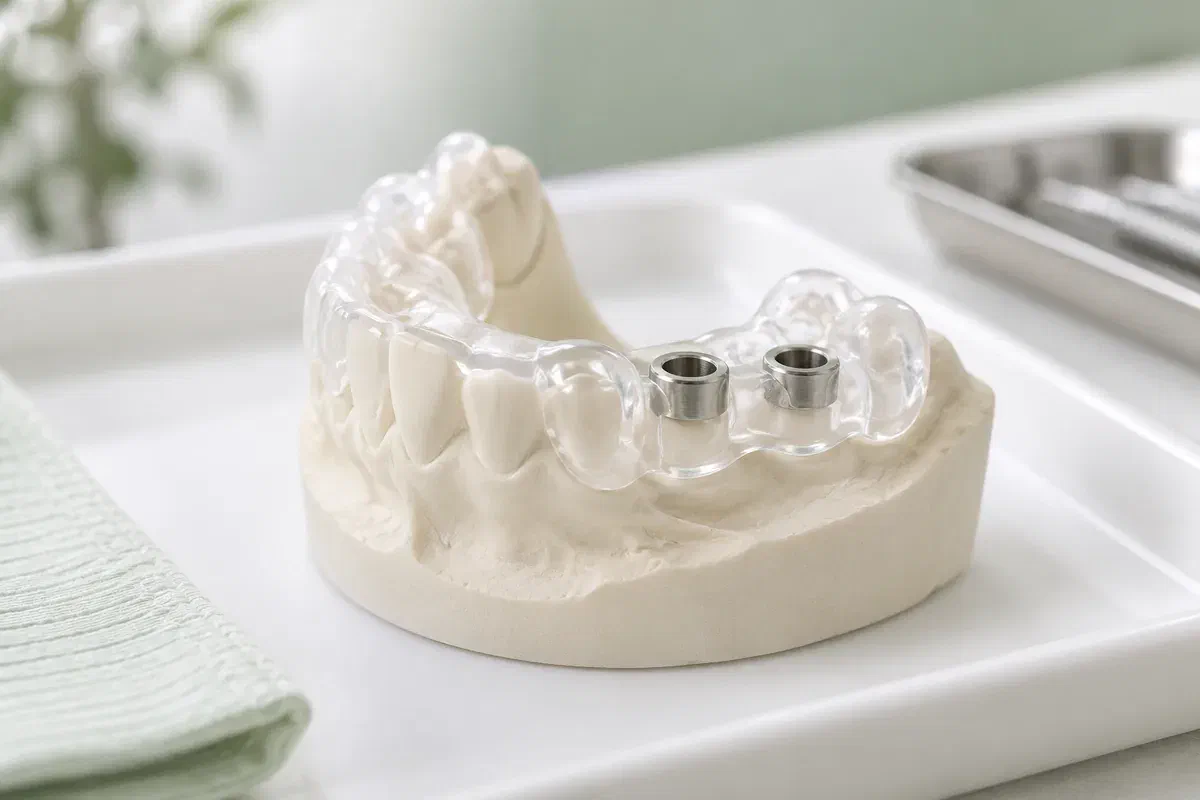
With several implants, the guide serves an overall design. The conversation should cover what it is supposed to help coordinate, and the conditions it needs to be reliable.
The spacing and angle of each implant affect how the replacement teeth look, how they meet and whether you can clean beneath them. Ask how the plan links each position to that final design.
Bone may differ from one site to the next. Imaging and examination map this out, but a guide still needs allowance for uncertainty and a check that instruments reach every position.
Ask whether each implant is guided the same way or whether some steps rely on other techniques. You should hear about limitations, costs and any added records or appointments.
A guided approach describes how implants are positioned. It does not automatically mean no incisions, teeth on the same day, no discomfort or a faster healing period.
In the right circumstances, a single guide can relate several planned implant positions to the mouth at once. Its usefulness depends on precise records, careful design and manufacture, how well it is supported and seated, and how it is used throughout the procedure.
Clinical judgement still steers the work. Some variation between planned and achieved positions is possible, and with more sites there are more chances for findings that call for a change. Ask why a guided approach is suggested and how the plan deals with those possibilities.
Patient information: International Team for Implantology — computer-guided implant surgery
Planning the replacement teeth and their implant support together shows how each position affects appearance, bite and cleaning access across the whole span.
With fewer natural teeth, a guide may rest on gum or bone, which can affect stability. Ask what yours will sit on and how imaging and surface records are checked together.
If the guide does not seat properly, or one site looks different than expected, it should not simply be used anyway. Ask how the surgeon would decide what to change.
The workflow depends on the plan and the guide system used. With larger cases, ask who is responsible for each part, from planning and guide production to surgery and the final prosthesis, especially if more than one clinician is involved.
Your dentist reviews remaining teeth, gum health, medical history and replacement options, along with the risks of each. Records confirm whether implants are suitable and how many might be needed.
Imaging and scans determine where each implant should go and how the guide will be supported. The team considers access, anatomy, possible grafting and whether a specialist should be involved.
The guide is seated and its stability checked before any guided step. If it cannot be used appropriately at one or more sites, the surgeon switches to an alternative already discussed.
Follow-up timing and the move to final teeth follow the plan. Guided placement still requires examining healing and implant support at each site before restoring them.
Instructions depend on what was done, including any extractions, grafting or temporary teeth. Follow the written guidance you receive rather than expecting a guided procedure to change it.
Ask how to clean around each site, what to eat while they heal, and how to use any temporary bridge or denture. A good first day is not proof of complete healing.
Store your instructions and phone numbers somewhere obvious. Report listed symptoms, anything that moves unexpectedly, or problems with temporary teeth so the right clinician can respond.
Implant-supported teeth need daily cleaning, including under bridges, plus regular professional checks. Ask which tools reach each area and how the implants will be followed over the years.
These answers keep planning tools separate from treatment outcomes. Ask about the specific guide and approach proposed for your own case.
Come and see us on Bronte Street for a full look at the gaps, your remaining teeth and the placement approaches that may fit. We will explain what records or specialist input might be required before a design is settled.
If you have a current denture or bridge, wear or bring it, along with any recent X-rays or scans.
