Will the implant support a molar you can chew with?
A back tooth needs to meet its opposing tooth properly and be reachable for cleaning. Ask how the planned position supports that crown, rather than seeing placement as a stand-alone decision.

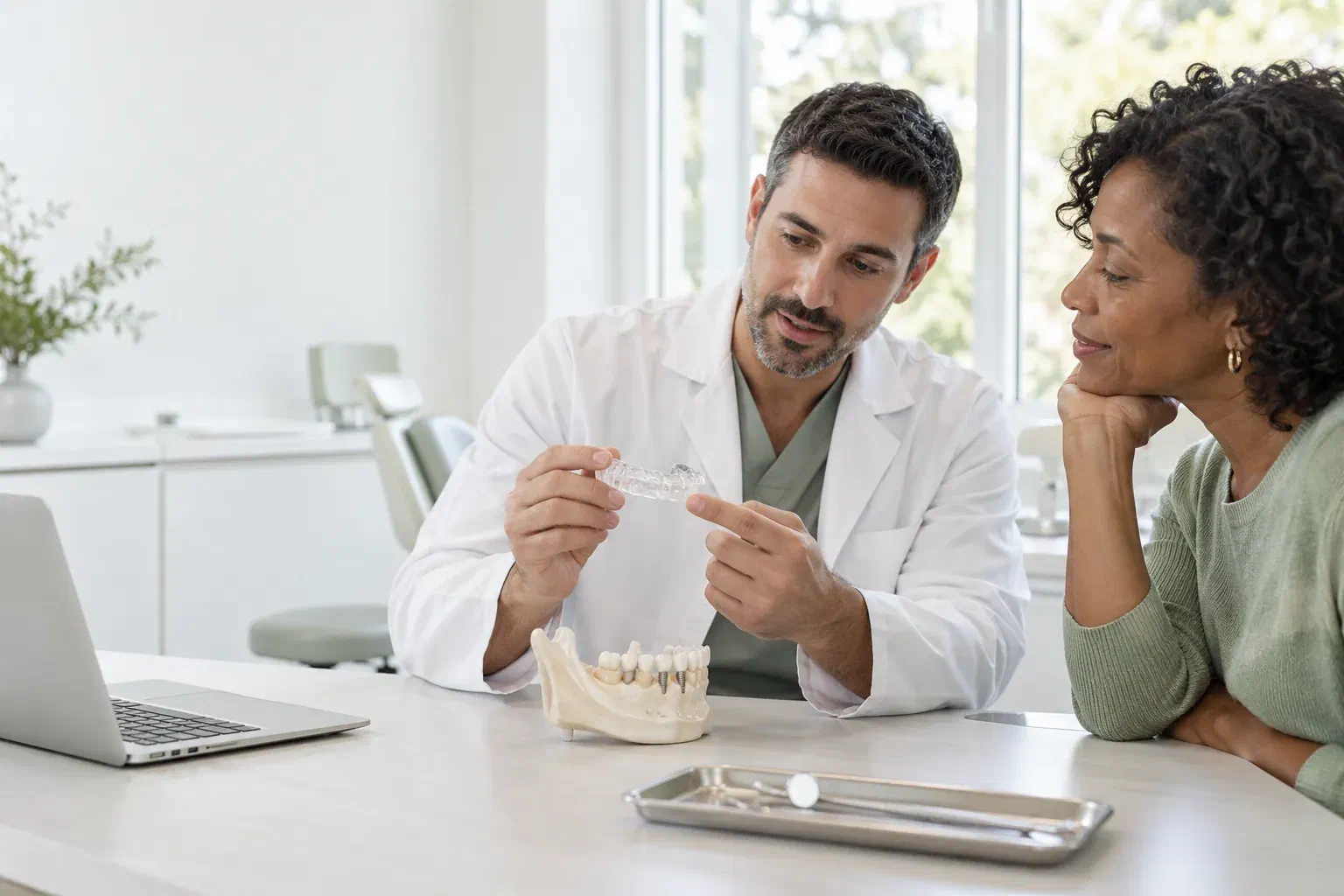
Chewing on one side since a back tooth came out? A molar implant sits close to the sinus or a nerve, so planning carries weight. From Mississauga, learn how a surgical guide is designed from 3D records, checked for fit and used alongside clinical judgement.
Losing a back tooth often changes how you eat before you notice anything else. Replacing it with an implant means working in an area where the upper sinus or the lower jaw’s nerve may be close by, so the planned position matters. A surgical guide is one tool for carrying that plan into the mouth: a custom template, built from imaging and scans, that seats on nearby teeth or tissue and helps direct selected steps.
It does not do the planning. Someone still has to decide on the shape of the new molar, assess the height and width of bone, map nearby structures, check the gum, and confirm that instruments can reach that far back. A guide cannot turn an unsuitable site into a good one, nor does it override the surgeon’s judgement in the moment.
When you come to us from Mississauga, use the consultation to get specific. Ask which steps would follow the guide, how its fit will be checked, and what the alternative is if it cannot be used appropriately. Those details are more reassuring than any claim that a digital plan removes all uncertainty.
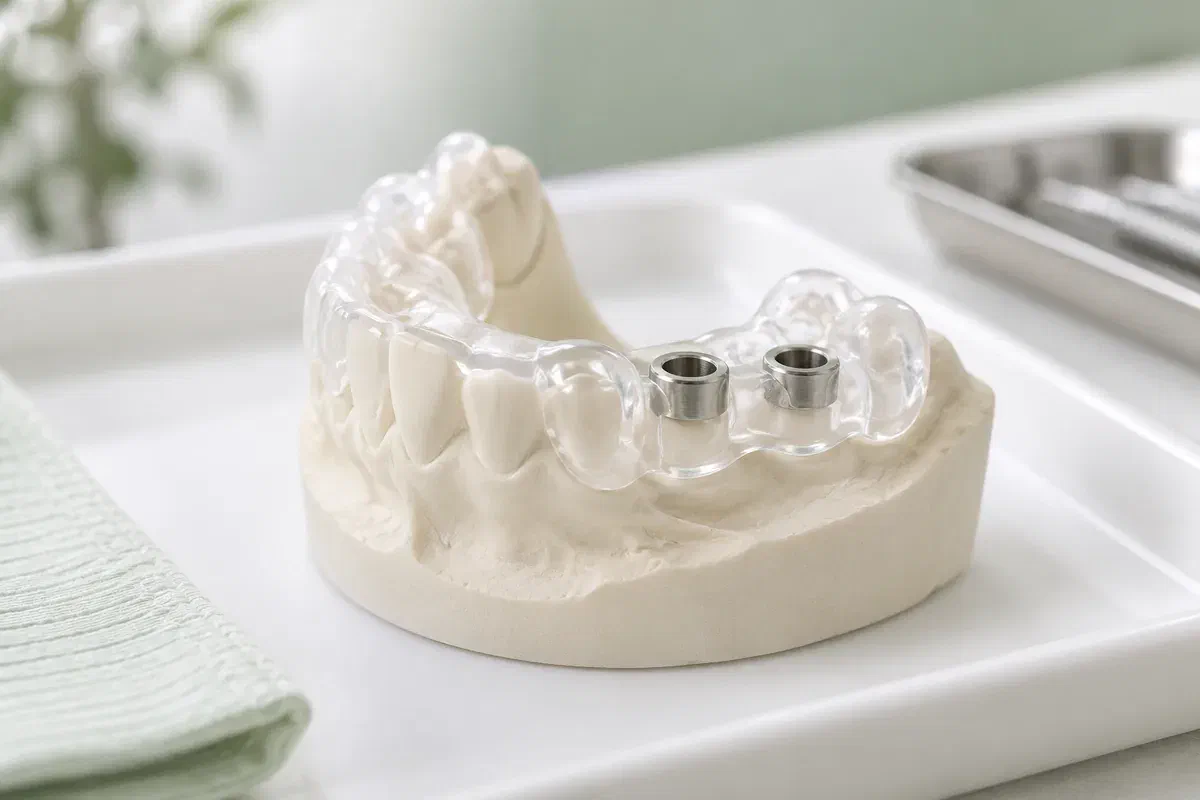
A guide is chosen for a particular plan, not by default. Your dentist should be able to explain the benefit expected and what must be true for the guide to perform as designed.
A back tooth needs to meet its opposing tooth properly and be reachable for cleaning. Ask how the planned position supports that crown, rather than seeing placement as a stand-alone decision.
Imaging and examination show nearby structures and how wide you can open. Guided instruments can need extra space, and a margin for uncertainty is still required.
Some steps may follow the template while others are done another way. A good explanation covers the guide’s limits, cost, and any additional records or visits.
Guided describes the placement method. It does not on its own mean no incision, an immediate tooth, no discomfort, or a faster recovery.
A suitable guide offers a physical link between the planned implant position and the real site. Its value depends on the quality of the imaging and scans, sound design and manufacturing, stable support, and careful use during the procedure.
Judgement stays essential. The final position may vary from the plan, and the surgeon has to respond to what the site shows. Ask why guidance is proposed for your molar and how the plan allows for its limitations.
Patient information: International Team for Implantology — computer-guided implant surgery
Planning software can show the future molar and its implant together. That helps explain how position affects chewing, the bite against the opposite tooth and how easily you can clean.
A guide relies on accurate information about bone and the surfaces it rests on. Ask how imaging and scans are matched and whether changes in your mouth could affect the fit.
If the guide does not seat properly, it should not be assumed usable. Talk through how the surgeon would assess that and what might change in the procedure or timing.
Workflows depend on the plan and guide system. Ask who handles planning, guide production, surgery and the final crown, especially if the care is shared between clinicians.
Your mouth, health history, replacement options and risks are reviewed. Records then show whether an implant is suitable and what the planned molar needs from its support.
Imaging informs where the implant should go and how the guide is shaped. The team considers its support, access at the back of the mouth, nearby anatomy and any need for grafting or referral.
Seating is confirmed clinically before use. If something prevents appropriate use, the surgeon follows an alternative already considered instead of relying on the guide simply because it was made.
How often you are seen, and when the crown is made, depends on your plan. The site is still examined to confirm it has healed and that the implant is stable enough to build on.
Instructions vary with any extraction, grafting or temporary appliance involved. Follow your written guidance rather than assuming a guide alters what recovery requires.
Ask how to clean near the site, which side to chew on and which foods to avoid for now. A comfortable first day does not confirm that healing is complete.
Store your aftercare sheet and contact numbers somewhere handy. Report the symptoms it lists, unexpected movement, or any problem with a temporary so the right clinician can advise.
After the crown is fitted, back-tooth cleaning and professional checks remain essential. Ask which tools reach the surfaces best and what your dentist will look for at each recall.
Back teeth raise their own questions about space, imaging and cleaning. The answers here are general, so check the details against the guide and method proposed for your implant.
We can look at the space where the tooth was, talk through the placement options that may suit it, and explain any extra imaging or specialist input that could help, all at our Bronte Street practice.
If you have previous X-rays or a treatment plan, bring them and tell us which part you want explained.
