The future crown sets the target
An implant that sits slightly off can leave a crown that looks wrong or is hard to clean. Ask how the planned position was chosen to support the visible tooth, its bite and your daily cleaning.


A gap that has been there for years, or an old bridge nearing its end, often leads to an implant conversation. Near Old Milton, learn where a surgical guide fits in: the imaging behind it, how its fit is tested, and why the planned tooth comes first.
After a tooth has been missing for a long time, the bone and gum in that spot can change, and neighbouring teeth may drift. That is one reason careful planning matters before an implant. A surgical guide is a made-to-measure template, built from scans of your mouth, that rests on teeth or tissue and helps steer selected surgical steps toward the planned position.
Think of the guide as a messenger for decisions already made. The shape and position of the new tooth, the amount and quality of bone, the location of nerves or the sinus, the health of the gum, and how easily instruments can reach all have to be worked out first. A guide cannot fix a site that is not suitable, and it does not stand in for the surgeon’s clinical view.
Our Bronte Street practice sits a short way from Milton’s historic downtown, and an implant consultation there is a chance to ask direct questions. Which stages would the guide control? How will its fit be confirmed before use? What happens if it cannot be used as hoped? Clear answers are worth more than a promise that technology takes the guesswork away.
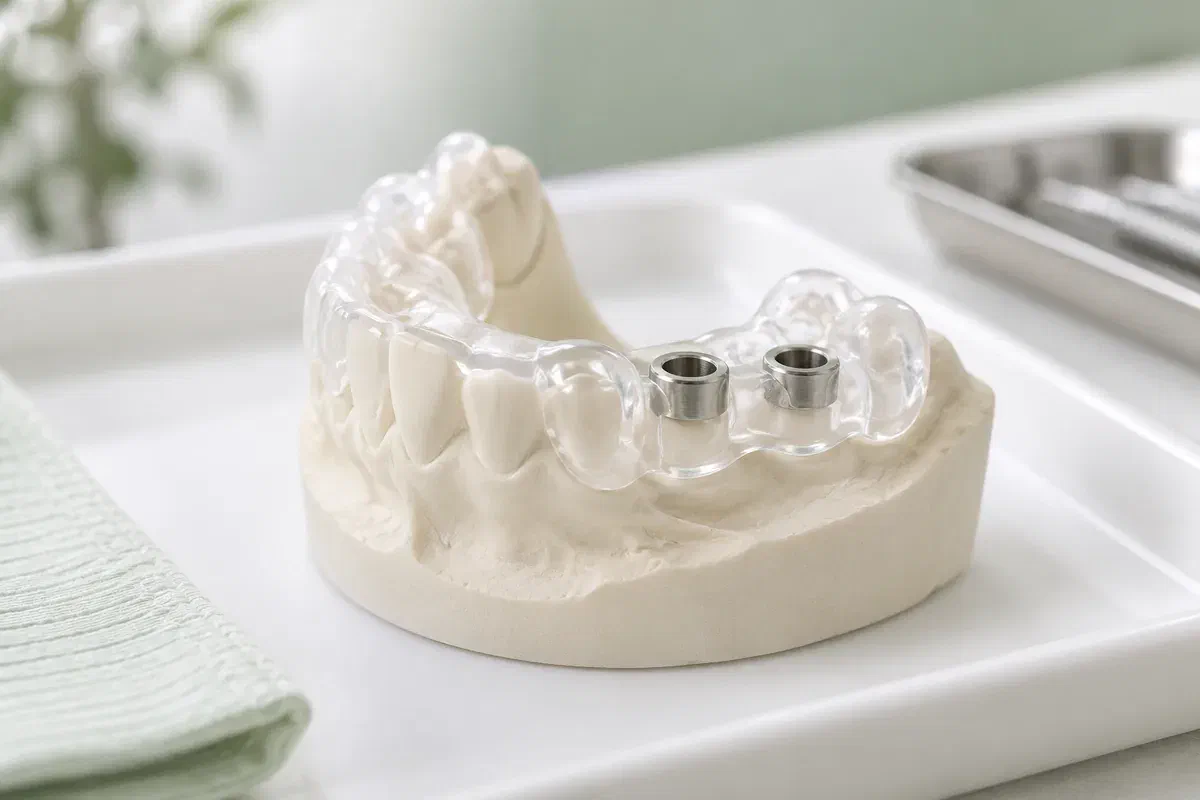
Whether a guide is useful depends on the plan it serves. Your dentist should be able to say what the guide is expected to help with and what has to be in place for it to work properly.
An implant that sits slightly off can leave a crown that looks wrong or is hard to clean. Ask how the planned position was chosen to support the visible tooth, its bite and your daily cleaning.
Long-standing gaps can mean thinner bone or a tighter space. Imaging and examination show what is there, but a guide still needs a safety margin and a check that instruments can work in the space.
Ask exactly which steps the guide will direct and which will be done another way. You should also hear about its limits, its cost, and any extra visits or scans it requires.
Guided simply describes how the implant is positioned. It is not a promise of stitch-free surgery, a same-day tooth, no discomfort, or faster healing.
A well-made guide offers a physical connection between the digital plan and your jaw. That connection is only as strong as the records it was built from, the care in its design and manufacture, how securely it seats, and how it is handled during surgery.
Clinical judgement still leads. The position achieved can vary from the one planned, and the surgeon must be able to adapt when something unexpected turns up. It is reasonable to ask why guidance is recommended for you and how the plan allows for its limits.
Patient information: International Team for Implantology — computer-guided implant surgery
Digital planning lets the team design the visible tooth and the implant under it together. You can then see how the chosen position affects your smile, your bite and how easily you can clean the area.
Imaging of the bone and scans of the teeth and gum have to line up accurately. Ask how they are checked against each other and whether dental changes before surgery could throw off the guide.
A guide that rocks or does not seat should not be trusted just because it was made for you. Ask how the surgeon would decide what to do and whether the procedure or its date might change.
Each guide system and implant plan follows its own path. Ask who is responsible for planning, for producing the guide, for the surgery and for the finished tooth, especially when the work is shared.
The dentist examines your mouth, reviews your health history and compares replacement options and risks. Records then show whether an implant is appropriate and what the planned tooth needs from it.
Imaging and scans determine where the implant should go and how the guide is shaped. The team looks at what the guide will rest on, access, nearby anatomy, and whether grafting or a specialist is needed.
Its seating is checked in your mouth before treatment. If it cannot be used appropriately, the surgeon switches to an alternative that was considered beforehand rather than using it regardless.
Review visits and the timing of your new tooth follow the clinical plan. A guided placement still needs checks on healing, implant support and readiness before the crown is made.
Your aftercare depends on what was done during the visit, including any tooth removal, bone grafting or temporary tooth. Follow the written instructions rather than assuming guided surgery changes them.
Ask how to keep the site clean, which foods and chewing pressure to avoid, and how to manage any temporary appliance. A comfortable first evening does not mean healing is finished.
Keep your instructions and the clinic’s number within reach. Get in touch about symptoms the instructions mention, anything that seems to move, or concerns about a temporary tooth.
Once the final tooth is fitted, brushing, cleaning between teeth and regular professional visits near Old Milton stay important. Ask which areas need extra attention and how the implant and gum will be monitored.
These questions help separate what a planning tool does from what treatment achieves. For your own care, ask about the specific guide and approach proposed.
Arrange an implant consultation at our Bronte Street practice to discuss your gap or failing tooth. We will look at where you are starting from and explain what records or specialist input may be needed.
If you have previous X-rays, scans or a treatment plan, bring them with you and tell us what you would like clarified.
