Smiling without a gap
Ask whether the temporary tooth would be fixed or removable and how each is cared for at home. A removable one needs regular cleaning and may come out at night; a fixed one needs gentle care around it.


Most of implant healing happens at home, not in the chair. For people in Acton, we explain what an immediate approach would leave you looking after day to day: what to eat, how to clean, and when to pick up the phone.
An immediate implant can make the first appointment feel like the finish line. You may walk out with the old tooth gone, an implant in place and perhaps a new-looking tooth on top. What follows is weeks of healing, and much of how it goes depends on the routine you keep in your own kitchen and bathroom.
It helps to know what was actually done. Immediate placement means the implant went in at the extraction visit. Immediate restoration means a tooth was fixed to it soon after. Neither one means the implant is ready to chew. The implant is a support that must fuse with the bone over time, and any provisional on it usually has firm limits.
Living in Acton, a little further from the clinic, a clear home plan matters even more. Before treatment, ask which step will be immediate, what conditions it depends on, what the alternative would be, and which review appointments you will need to keep afterward.
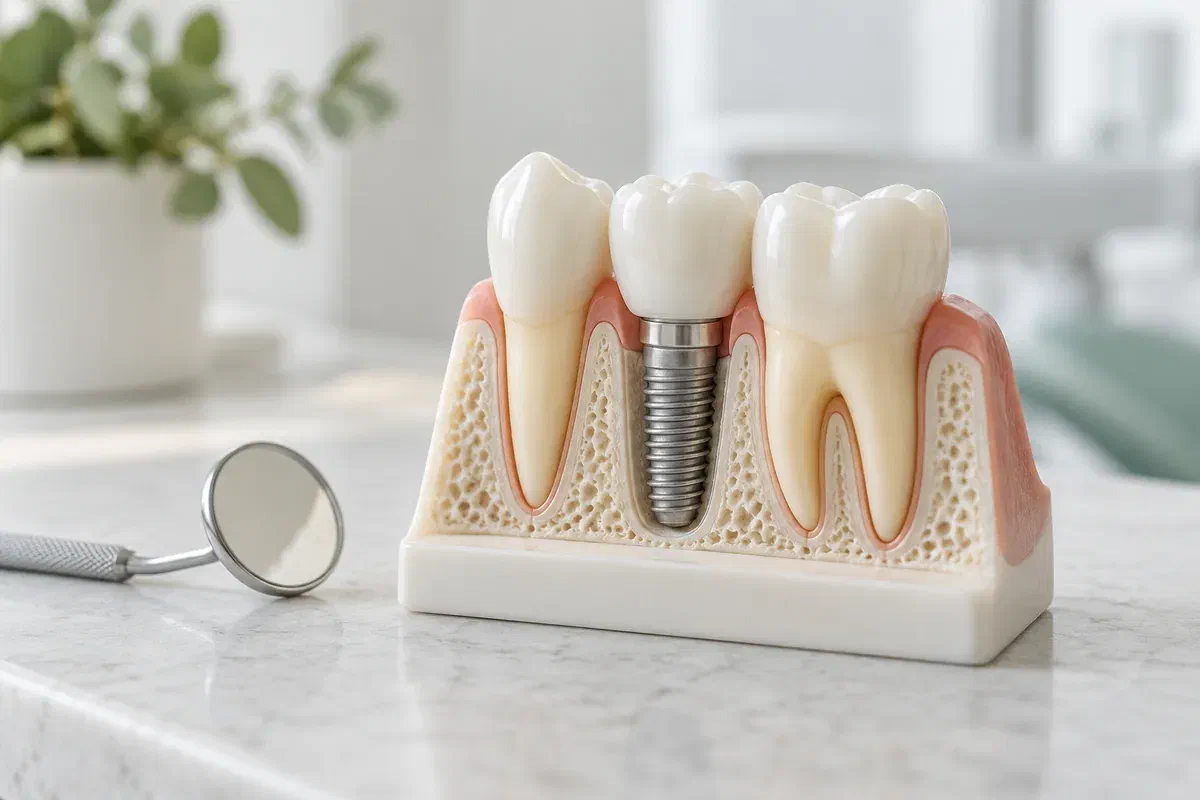
Knowing what you hope to return to shapes the questions worth asking. Tell the clinician whether looks, the number of procedures or comfortable eating matters most, and the home routine can be explained around it.
Ask whether the temporary tooth would be fixed or removable and how each is cared for at home. A removable one needs regular cleaning and may come out at night; a fixed one needs gentle care around it.
Placement at extraction may save one surgical step. Reviews, records, fittings and the final tooth usually remain, along with weeks of careful home care, so ask what the whole sequence involves.
Placement, restoration and loading describe three different moments. Asking for your plan in those terms tells you when the implant goes in, when a tooth goes on and when that tooth may be used.
Nobody should promise you an immediate permanent tooth before examining the site and working out what kind of restoration it can support. Assessment and the conditions found set the pace.
For some well-suited sites, combining stages or fitting an early tooth can be part of careful treatment. Any gain should be explained for your particular mouth, along with what it depends on and what home care and eating limits would follow.
Risks and alternatives come into it too. The stability of the implant, gum and bone health, how the tooth is designed and your medical history all influence what is suitable. Ask what would make a slower approach the safer one and what might prompt a change midway.
Patient information: International Team for Implantology — implant placement and loading protocols
A provisional may make the gap vanish without being able to manage normal biting. Understanding this makes the food rules feel sensible rather than fussy.
Plan meals, work, outings and review visits around the real sequence. Ask which dates are firm and which depend on how healing goes.
If an immediate step turns out not to be suitable, an agreed alternative explains how the gap and the site will be looked after, including any change to your home routine.
A careful assessment sets out the timing, its conditions and what you will be doing between visits. If different clinicians handle surgery and the final tooth, ask how instructions will be shared so you hear one consistent message.
Expect a full look at the area, questions about your medical history and the pills or prescriptions you take, and X-rays or a scan. If the tooth is still present, whether it could reasonably be kept is weighed first.
The plan sets out extraction where relevant, placement, any provisional and the final tooth, with when chewing is allowed and what each step depends on.
Findings during treatment may rule out an immediate step, in which case the agreed alternative is used. Either way, you leave with written guidance for that version of the plan.
Follow-up visits check the site and decide when the next stage can begin. More records, a fitting or a new provisional may still come before treatment is finished.
What you are asked to do depends on the procedure and the kind of tooth placed. Keep the written guidance where you will see it daily, and ask about anything unclear before going back to normal habits.
Choose foods as advised and chew away from the area if told to. Hard, crunchy or sticky foods can stress a new implant, and a fixed provisional is not designed to cope with them.
Ask exactly how to clean near the gum around the implant and how to care for any provisional. Gentler methods are common early on, with your usual routine returning step by step.
Attend follow-up even when nothing hurts. Phone if the tooth moves unexpectedly, discomfort increases or something listed in your instructions happens, so the site can be checked.
These answers focus on what happens between visits. Your written plan should still confirm each proposed stage and the findings each one depends on.
Book a visit at our Bronte Street practice to talk about implant timing, the tooth you would like replaced and the home care each approach involves. We will explain what must be assessed before an immediate or staged plan is recommended.
Bring a list of your medications and any previous proposals or images, and let us know what part of the home routine concerns you most.
