Leaving with teeth
Many same-day plans involve a provisional tooth or bridge. Ask whether it is fixed or removable, what it is designed to do while healing continues, and what you will need to avoid.


Phrases like “teeth in a day” are catchy, but they rarely say which day, which teeth or what comes after. For people from Bolton and across Caledon, we unpack what immediate implant wording usually refers to and what it leaves out.
Many people first meet the idea through a headline or an ad. Same-day implants, teeth in a day, walk out with a smile. Those phrases point to something real, since some steps can happen in a single visit, but they compress a longer story into a few words, and the missing words are usually the important ones.
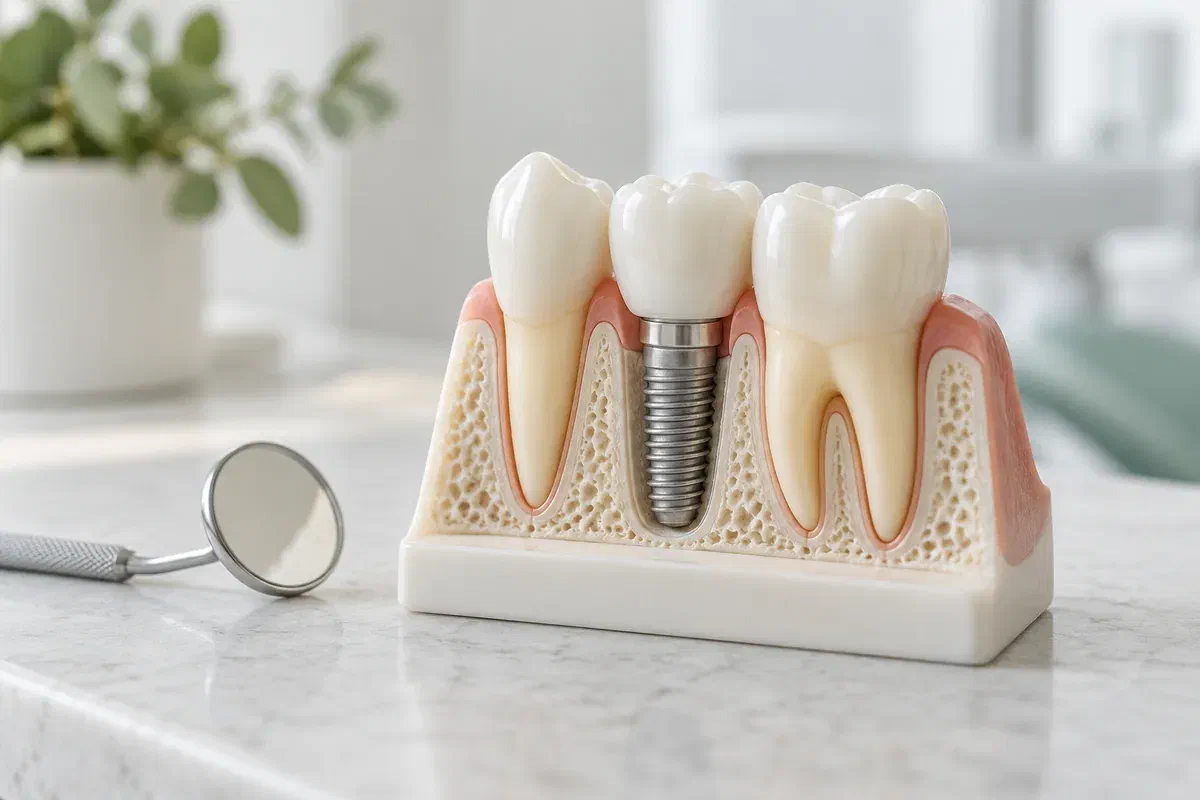
Here is what tends to sit behind them. Immediate placement means the implant is set into the socket during the extraction appointment. Immediate restoration or loading means a tooth, usually a provisional, is attached shortly afterward and may be allowed some limited use. The implant is the support in the bone and still needs months to integrate; the final tooth normally comes later.
Coming from Caledon, with its villages and longer rural drives, it pays to know what a same-day promise really covers before you plan around it. Ask which step is immediate and what has to line up for it to happen. Ask what is done instead if those things do not line up, and how many visits stand between the first day and the finished tooth.
Marketing tends to blend several benefits into one. Separate them: is it the idea of never having a gap, of fewer procedures, or of eating normally soon? Each has a different, more modest, real-world answer.
Many same-day plans involve a provisional tooth or bridge. Ask whether it is fixed or removable, what it is designed to do while healing continues, and what you will need to avoid.
Some stages can be combined, but reviews, records, fittings and a final restoration usually still follow. Ask for the complete list of visits, not just the first.
Translate each offer into placement, restoration and loading, and ask what is and is not included. Plain terms reveal differences that slogans hide.
No one can promise a same-day permanent tooth without first assessing your site and the restoration it would carry. Suitability is a clinical judgement, not a marketing one.
For suitable sites, combining stages or fitting a provisional early can genuinely be part of good treatment. The benefit should be explained for your own mouth, along with what has to be true for it to work and what you would be asked to avoid during healing.
Risks and alternatives should be just as visible as the benefits. Implant stability, gum and bone health, the design of the restoration and your general health all matter. Ask what would make a more gradual approach better for you, and what could cause the plan to change.
Patient information: International Team for Implantology — implant placement and loading protocols
A same-day provisional can look natural while being off limits for normal chewing. Knowing that keeps the slogan from shaping how you treat the new tooth.
Plan work, meals, family events and reviews around the real stages. Ask which dates are fixed and which depend on findings during treatment or healing.
If immediate treatment turns out unsuitable on the day, a pre-agreed alternative explains what happens to the space. That is a firmer basis for consent than a headline.
A genuine assessment explains the timing proposed, the conditions behind it and who will carry out each step. If surgical and restorative care are separate, ask how the two will be kept in sync.
The clinician examines your mouth, reviews your health and takes appropriate images. Any teeth still present are diagnosed, and the possibility of keeping them is considered.
The plan spells out what happens on the first day and what follows: extraction if needed, placement, the provisional and the final restoration, and when chewing is permitted.
Findings during treatment can make an immediate step inappropriate. A responsible team explains the alternative beforehand and reassesses, instead of proceeding to honour an advertised timeline.
Follow-up confirms when the next stage can start. The same-day provisional is often replaced later, after further records and fitting appointments.
Going home with teeth on the first day can make it feel as though the hard part is over. Your aftercare will reflect the procedure and the provisional you received, so keep the written guidance close at hand and ask about anything unclear before you go back to usual routines.
Follow the food and chewing advice. A same-day tooth or bridge may look complete, but it is not intended to take the load that a final restoration will.
Ask how to look after the gum around the implant and the provisional without disturbing healing. Your routine will evolve, so confirm each step as it changes.
Attend follow-up as scheduled. Call about unexpected movement, increasing discomfort or anything your instructions highlight, so the implant can be checked.
These answers help turn marketing language into realistic expectations. Your own plan should name each proposed step and what has to be confirmed first.
Sit down with us on Bronte Street and go through whatever offer or proposal caught your eye. We will look at your own teeth and gums, put the wording into plain stages, and explain what has to be examined before anyone can say whether a same-day start or a staged plan suits you.
Bring any advertisement, quote or proposal you have seen, along with recent images, and tell us which promise you most want to understand.
