No visible gap
The provisional is often designed by the restoring dentist and fitted at surgery. Ask who makes it, whether it will be fixed or removable, and what you must avoid while it is in.


An implant often involves more than one pair of hands: someone to place it, someone to build the tooth. For households in Campbellville, we explain how an immediate plan is shared out, who you will see, and how the visits can be organised.
People are sometimes surprised to learn that the person who places an implant is not always the person who makes the tooth on it. In some plans one dentist does both. In others, surgical and restorative care are split. With an immediate approach, where steps are squeezed closer together, that coordination becomes especially important.
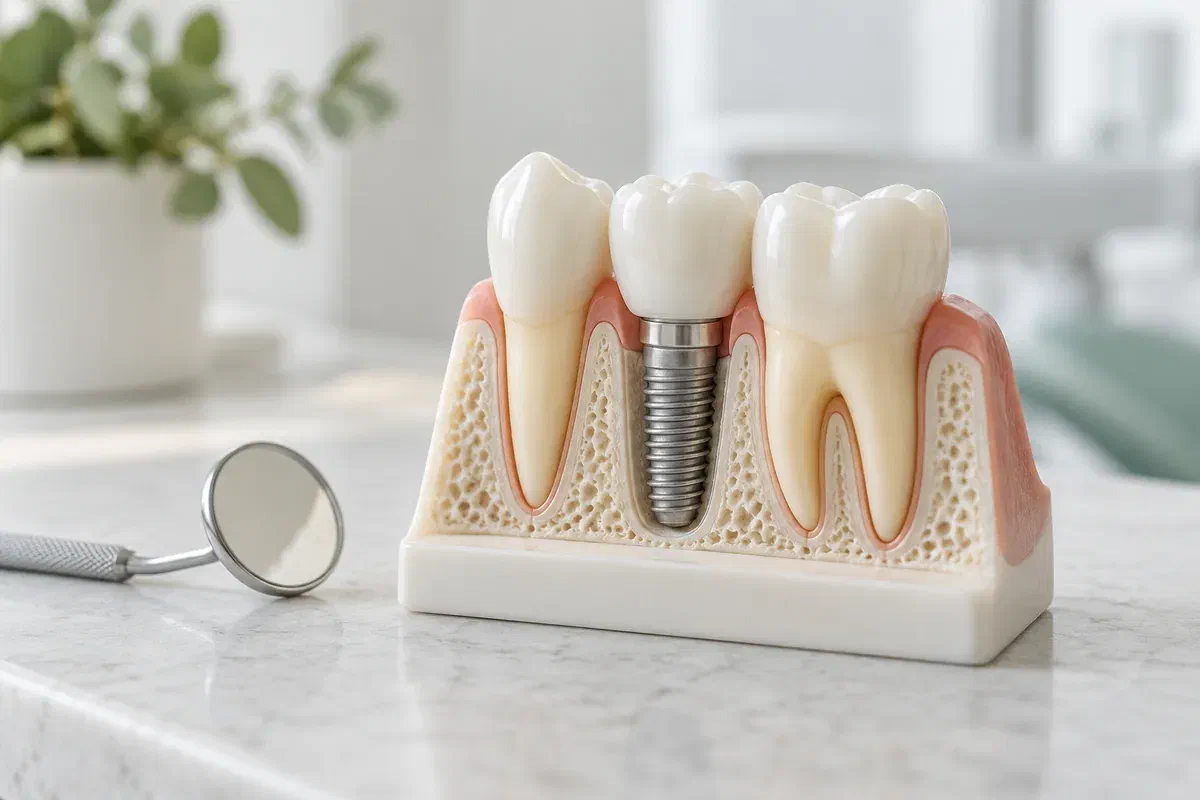
Immediate itself has two common meanings. It can describe placing the implant during the appointment when the tooth is extracted. It can also describe attaching a tooth to the implant shortly afterward. The implant is a support that must bond with bone; the tooth is a restoration fastened to it, and an early one is usually provisional, with rules about chewing.
From Campbellville and the rest of rural Nassagaweya, knowing who is responsible for which step also helps you plan trips. Ask which step will be immediate, who will carry it out, what conditions it needs, what the fallback is, and which later visits are with which clinician.
When more than one clinician is involved, it helps if your main concern is clear to all of them. Is it hiding a gap, cutting down on procedures, or knowing when you can eat on the tooth?
The provisional is often designed by the restoring dentist and fitted at surgery. Ask who makes it, whether it will be fixed or removable, and what you must avoid while it is in.
Combining extraction and placement can trim one surgical visit. Ask which appointments remain with each clinician, including reviews, impressions and the final fitting.
Ask both clinicians to describe the plan using placement, restoration and loading. Hearing the same terms from each person makes it easier to know you are agreeing to one plan.
Timing depends on the findings at assessment. An immediate final tooth should not be promised until the bone, gum and intended restoration have all been carefully reviewed.
Where a site is well suited, merging stages or fitting an early tooth can be part of sensible treatment. The benefit should be explained for you specifically, along with the conditions it relies on and the eating limits that would apply during healing.
Risks and alternatives should be on the table as well. Implant stability, the health of gum and bone, the tooth’s design and your general health all influence the best route. Ask what would favour a slower sequence and who would decide if the plan needed to change.
Patient information: International Team for Implantology — implant placement and loading protocols
An early tooth may hide the gap long before it can chew. When both clinicians explain this the same way, the limits are much easier to follow.
Map work, meals, farm or family commitments and reviews to the actual stages. Ask which appointments can be grouped and which depend on healing.
If an immediate step proves unsuitable, a shared alternative means no one is improvising. You will know how the space will be managed and who you will see next.
A thorough assessment states the proposed timing, the conditions behind it and who is responsible for each step. Ask how records, findings and instructions will pass between clinicians.
Your mouth is examined, your medical history is discussed and images are taken. Where a failing tooth remains, the team first asks why it is failing and whether it could sensibly be saved, before anyone plans to remove it.
The plan names who will extract the tooth if needed, place the implant, make the provisional and complete the final tooth. It should also say when chewing is allowed.
Conditions on the day may make an immediate step unsuitable. The clinician performing surgery should already know the agreed alternative and reassess rather than press on.
Follow-up confirms readiness for later stages. The restoring dentist may replace the provisional after further records and a fitting before treatment is complete.
Your instructions depend on what was done and what tooth was placed. If two clinicians are involved, ask whose number to call with a healing question, and keep the written guidance close by.
Follow the food advice you are given. Avoid testing the new tooth, and remember that a fixed provisional has a narrower role than the final restoration.
Ask how to care for the gum around the implant and any temporary tooth without disturbing healing. The routine changes over time, so confirm when each new step begins.
Attend follow-up even when the area feels settled. Report unexpected movement, increasing discomfort or anything your instructions mention to the right person.
These answers explain how shared implant care tends to work. Your own plan should identify each proposed step, who carries it out and what must be confirmed first.
Meet with us at our Bronte Street practice to discuss implant timing, who would be involved and how the missing tooth could be replaced. We will explain the assessment needed to compare an immediate approach with a staged one.
Bring any earlier proposals, images or referral letters, and tell us which part of the coordination or timing you most want explained.
