A gap would be hard to accept
Ask what temporary tooth would be used under each version of the plan. If a fixed provisional is ruled out, would a removable one be ready, and what would you need to avoid with it?


An immediate implant is a plan with conditions attached, and sometimes the conditions are not met. If you are coming from Georgetown, we talk through what could change on treatment day, what the fallback looks like, and how the tooth still gets replaced.
It is the question people often forget to ask until they are in the chair. An immediate implant plan is built on assumptions about the bone, the gum and how firmly the implant will settle. Some of those can only be confirmed once the old tooth is out, so the outcome on the day is not always the one on paper.
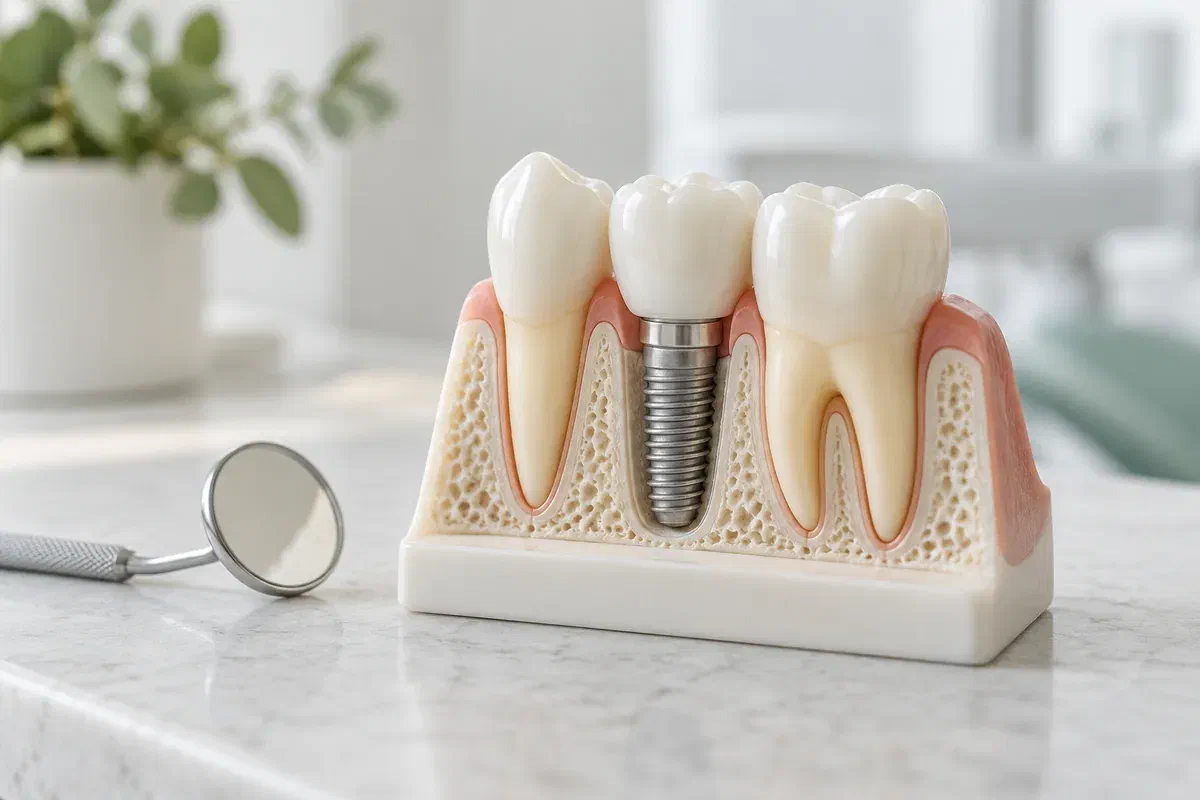
First, the vocabulary. Immediate placement puts the implant into the socket at the extraction visit. Immediate restoration or loading means a tooth is attached soon after the implant goes in, and possibly allowed to take some bite. The implant is the anchor in the jaw; the tooth is a separate restoration. Any of these steps can be delayed if the conditions call for it.
Knowing the backup in advance makes that far less stressful. From Georgetown or elsewhere in Halton Hills, ask your clinician which step is planned as immediate, what must be true for it to go ahead, exactly what would happen instead, and what the following visits look like in both versions.
If the plan has to change, it helps to know what you care about most. Is it avoiding a visible space, keeping procedures to a minimum, or having a reliable date when you can chew again?
Ask what temporary tooth would be used under each version of the plan. If a fixed provisional is ruled out, would a removable one be ready, and what would you need to avoid with it?
If immediate placement does not go ahead, a second surgical step may be needed later. Ask how likely that is in your situation and how it changes the overall number of visits.
Ask for both versions written in terms of placement, restoration and loading. Seeing the main plan and the fallback side by side makes the decision much clearer.
Clinical conditions decide what is possible on the day. No plan should promise an immediate final tooth before the site and restoration have been properly evaluated.
When conditions are right, combining stages or fitting a suitable early tooth can be part of thoughtful care. The possible benefit should be described for your particular site, with the requirements it rests on and the limits you would follow during healing.
The alternative deserves the same attention. Implant stability, the state of the gum and bone, how the tooth is designed and your general health may all point toward a more gradual approach. Ask what findings would lead to the backup and what that would mean for your timeline.
Patient information: International Team for Implantology — implant placement and loading protocols
Whichever version proceeds, an early tooth may cover the gap without being ready to chew. Keeping that in mind makes the restrictions easier to understand.
Plan time off, meals and review visits so they still work if the schedule shifts. Ask which dates are fixed and which depend on what is found.
Agreeing to a plan and its alternative means you know the real range of outcomes. That is a stronger basis for consent than a plan that assumes everything will be ideal.
Assessment should set out the proposed timing, its conditions and the alternative. If more than one clinician is involved, ask who makes the call on the day and how the decision is shared with the person restoring the tooth.
The clinician examines your mouth, discusses your health and medications, and takes suitable images. If the tooth is still present, its diagnosis and prospects are considered before removal is planned.
Each stage is listed, from extraction where relevant to placement, provisional and final tooth. The alternative is written down too, with the findings that would trigger it.
If the socket or stability is not suitable, the team switches to the agreed alternative. Proceeding just to keep the timetable is not in your interest, and a good plan does not require it.
Follow-up visits confirm readiness for each later stage. Whether the immediate step went ahead or not, more records, a fitting or a replacement provisional usually come before completion.
A change of plan on the day can mean aftercare that differs from what you expected. Read the written guidance you are given, and ask about anything unclear before you go back to your usual activities.
Food and biting limits depend on whether an implant, a provisional or neither was placed. Do not test a new tooth, and do not assume a fixed temporary can do the work of a final one.
Ask how to care for the treated area and any temporary tooth. Your routine may change as healing continues, so confirm when each new step should begin.
Attend follow-up even if the area feels fine. Call about unexpected movement, discomfort that is getting worse, or anything your instructions mention.
These answers explain how flexible implant timing works in practice. Your own plan should say which steps are proposed, what must be confirmed and what happens if it is not.
Arrange a consultation with our team on Bronte Street to talk about the tooth in question, how a replacement could be timed and what the backup would be. We will explain the assessment needed before recommending an immediate or staged approach.
Bring any proposal or images you already have, and tell us what you would prefer if the immediate step turns out not to be possible.
