Keeping the gap hidden
Ask whether a fixed provisional on the implant or a removable plate or flipper is being suggested. Each looks and feels different, and each comes with its own limits on biting and cleaning.


Between the extraction and the final tooth, something has to fill the space, or not. For people across Halton Hills, we explain the fixed and removable stand-ins an immediate plan might use, and the rules that come with each.
Ask most people what they want to know about immediate implants and the answer is some version of this: what will I have in my mouth while it heals? It is a good place to begin, because the temporary tooth is where the word immediate causes the most misunderstanding.
Immediate placement means the implant is put in at the same visit the tooth is extracted. Immediate restoration means a tooth is attached to the implant shortly after it is placed. Neither automatically means the tooth can chew. The implant is the support in the bone, it needs time to become secure, and the provisional on top is built mainly to hold the space and the shape of the gum.
From Georgetown, Acton, Glen Williams or the smaller hamlets of Halton Hills, it is worth asking early which kind of provisional would suit you. Find out which step is immediate, what conditions it depends on, what happens if those conditions are not met, and which visits lead to the final tooth.
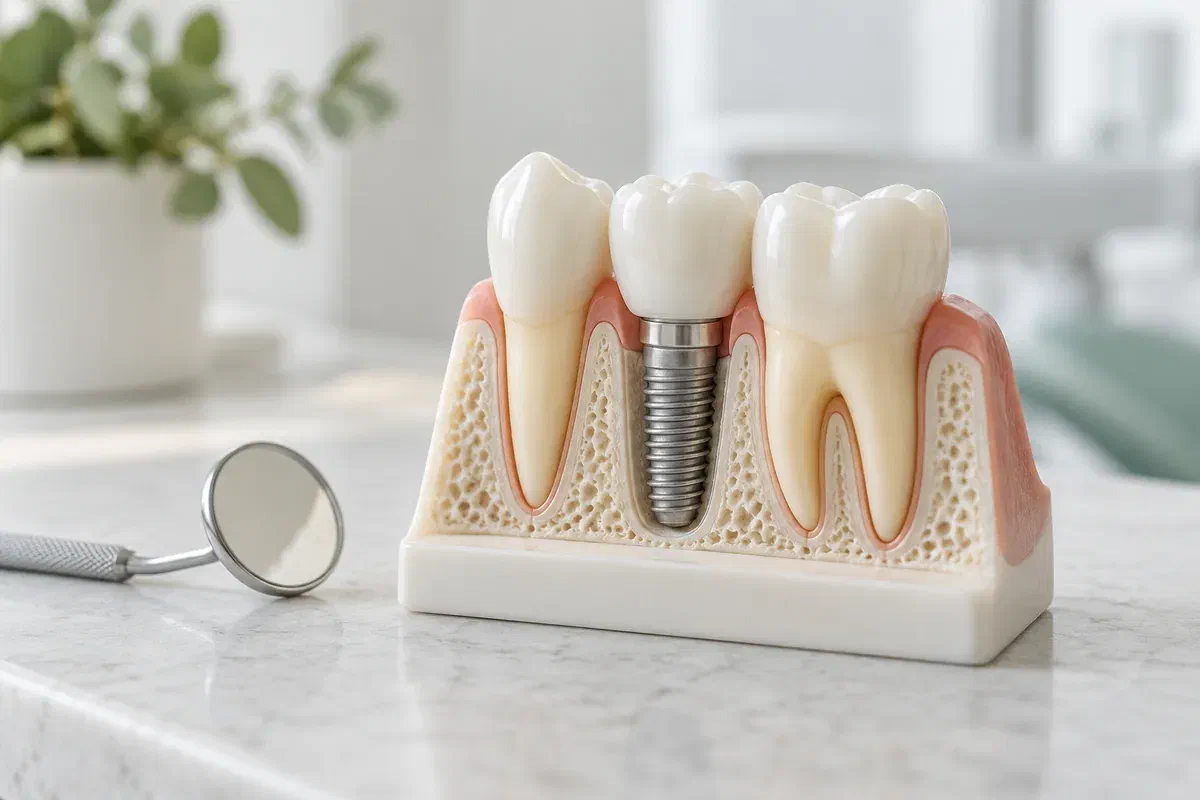
Different hopes lead to different temporary arrangements. Let the clinician know whether looks, fewer surgical steps or eating comfortably is your first concern, and the options can be explained around it.
Ask whether a fixed provisional on the implant or a removable plate or flipper is being suggested. Each looks and feels different, and each comes with its own limits on biting and cleaning.
Placing the implant at extraction can save one surgical step. You will still have healing reviews, impressions or scans, fittings and a final restoration, so ask which appointments genuinely disappear.
If you have been told the implant is immediate, ask whether that covers placement, the tooth, or chewing. Those three terms often get blurred, and separating them avoids disappointment later.
A same-day final tooth should not be promised before the site and the intended restoration have been looked at carefully. The kind of provisional possible depends on findings at assessment.
For some sites, joining stages or fitting a suitable provisional early may form part of a careful plan. Whether it helps in your case depends on the site itself, and the explanation should include what conditions are needed and what the temporary tooth will not be able to do.
Risk and alternatives belong alongside the benefits. How firmly the implant is held at placement, the condition of the gum and bone, the restoration design and your health history all affect what is sensible. Ask what would favour waiting and what might prompt a change in the plan.
Patient information: International Team for Implantology — implant placement and loading protocols
A provisional can make the smile look complete long before it can be used like a real tooth. Remembering that makes the eating and cleaning rules easier to keep.
Think about meals, work, travel and review visits against the actual stages. Some dates are fixed, while others depend on findings during treatment and the pace of healing.
If a fixed provisional proves unsuitable on the day, a removable option or a different sequence may be used. Knowing this in advance means you are consenting to the real range of outcomes.
Your assessment should cover the proposed timing, the conditions it relies on and the temporary arrangement. Where separate clinicians place the implant and make the tooth, ask how the provisional will be coordinated between them.
The clinician checks your mouth, reviews your health and medications, and takes appropriate images. If the tooth is still there, its diagnosis and the realistic chance of keeping it are considered first.
Extraction where needed, implant placement, the type of provisional and the final tooth are each set out. You should know when biting is allowed and what findings each step needs.
If conditions are not right for an immediate step or a fixed provisional, the agreed alternative is used. The team reassesses rather than proceeding simply because it was scheduled.
Follow-up visits show when the final tooth can be made. Most provisionals are later replaced after more records and a fitting, so the temporary is never the end of treatment.
Instructions depend on what was done and the type of temporary tooth. Keep them somewhere easy to find, and ask about anything unclear before you return to regular routines.
Follow the advice on food and chewing. A removable provisional should not press on the healing site, and a fixed one should not be used to bite into firm foods.
Ask how to clean a removable stand-in and how to keep the gum around the implant clean without disturbing it. The routine often changes as healing progresses.
Come to follow-up visits even when all feels well. Call if the provisional loosens, rubs or cracks, if discomfort grows, or if anything in your instructions applies.
The temporary tooth raises more day-to-day questions than any other part of an immediate plan. Here are some of the common ones, though your written plan remains the place to confirm each stage and what it hinges on.
Book time with us at our Bronte Street practice to talk about the tooth you are losing and what would cover the space while an implant heals. We will explain the assessment needed before recommending an immediate or staged plan.
If you already wear a partial denture or flipper, bring it along, together with any earlier proposals or images.
