Never being without a visible tooth
Look at what each proposal offers for the meantime. Is the temporary tooth fixed or removable, what is it expected to do, and what eating or cleaning limits come with it?


Holding two implant quotes that both say immediate but read differently? If you are coming from Oakville for a second look, we help you line the plans up stage by stage and see what each one actually commits to.
Often the answer is that each one uses immediate to mean something else. One proposal may place the implant at the extraction visit and leave the area to heal. Another may attach a tooth soon after placement. A third may do both. Each is a legitimate idea in the right situation, yet they are not interchangeable.
Comparing them starts with separating the parts. The implant is a support anchored in the jaw, and the tooth is a restoration connected to it later or sooner. Getting the support in, letting it integrate, and allowing it to carry chewing are three distinct events. Any temporary tooth involved usually has stricter limits than the final crown.
When people from Oakville bring a proposal to us, we go through it in that order. Which step is immediate? What must be confirmed for it to proceed? What is the plan if it cannot? And how many visits are still ahead once the first appointment is done? Laid out like that, the plan that sounded faster is sometimes simply the one that described fewer of its steps.
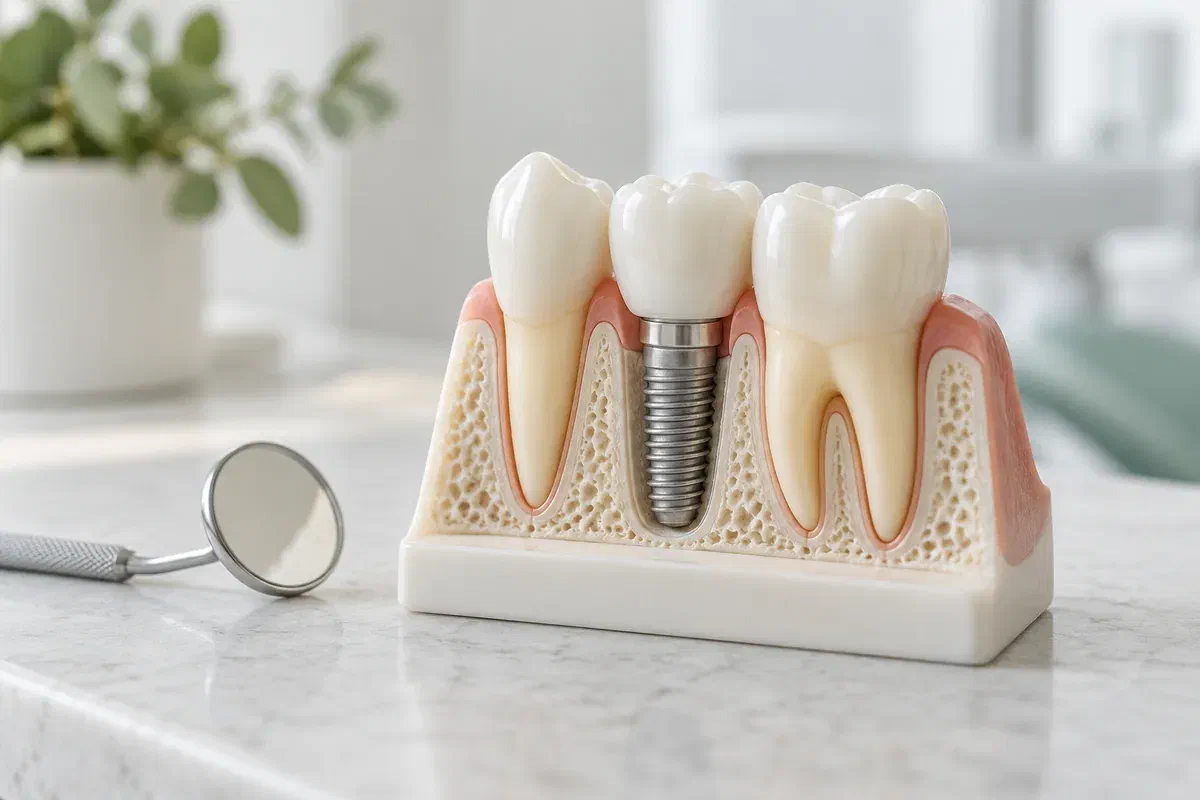
Proposals tend to emphasise different benefits. Decide whether your priority is never showing a gap, reducing the number of procedures, or knowing when you can eat normally, and judge each plan against that.
Look at what each proposal offers for the meantime. Is the temporary tooth fixed or removable, what is it expected to do, and what eating or cleaning limits come with it?
Check which stages one plan merges and the other keeps apart. A compressed start can still leave healing reviews, impressions, fittings and a final restoration on the schedule.
Rewrite each proposal in terms of placement, restoration and loading. Once both are expressed in the same three words, the real differences usually become obvious.
A proposal should not guarantee an immediate permanent tooth before the site and the planned restoration have been examined. What is possible depends on assessment and conditions found.
For carefully selected sites, merging stages or providing an early tooth can be reasonable. The benefit should be described for your specific situation, together with the conditions it needs and the restrictions you would accept while healing takes place.
Every proposal should also address risks and alternatives. Primary stability of the implant, gum and bone conditions, restoration design and general health shape what makes sense. Ask what would justify a slower approach and what might lead the clinician to change course.
Patient information: International Team for Implantology — implant placement and loading protocols
An early tooth may hide a space without being able to handle ordinary chewing. Seeing that clearly makes the limits easier to respect and stops appearance from standing in for readiness.
Compare time away from work, meals, travel and reviews for each sequence. Note which dates are estimates and which depend on findings in treatment or during later healing.
A strong proposal explains what happens to the space and site if an immediate step is unsuitable. That gives you a sounder basis for consent than one that only describes the ideal day.
A thorough assessment names the proposed timing and the conditions attached. If one clinician places the implant and another restores it, ask who is responsible for each part and how they will communicate.
We examine the area, discuss your health and medications, and take appropriate records. If the tooth is still there, we consider its diagnosis and whether keeping it is realistic before planning removal.
Extraction if needed, implant placement, any provisional and the final restoration are each listed. You should know when biting is permitted and which findings must support each step.
Conditions found during treatment may make an immediate step unwise. The alternative is explained beforehand, and the plan is reassessed rather than pushed ahead to keep a date.
Reviews confirm when later stages can begin. Even with an early tooth, further records, fitting appointments or replacement of the provisional are commonly needed to finish.
What you are asked to do depends on the procedure and type of restoration. Keep your written instructions nearby, and ask for anything unclear to be explained before you go back to regular routines.
Follow the diet advice exactly. Avoid checking whether the tooth can bite normally, and keep in mind that a fixed provisional is not carrying the role of the final tooth.
Early on, brushing and rinsing near the implant are usually modified so the gum is left undisturbed. Ask what to use around a provisional tooth or removable piece, expect the routine to change over the weeks, and confirm when each new method can begin.
Attend every review even if you feel fine. Call about unexpected movement, worsening discomfort or anything your instructions highlight, so the implant and its tooth can be looked at.
These answers help translate proposal language into practical expectations. Your own plan should identify each proposed step and what needs to be confirmed before it goes ahead.
Bring your paperwork to our Bronte Street practice and we will go through the implant timing and tooth replacement it proposes. We will listen to what matters most to you and explain the assessment needed to compare immediate and staged options.
Bring any proposals, X-rays or scans you have, and let us know whether the schedule, a visible gap or the temporary tooth is the main thing on your mind.
