Filling the space quickly
The provisional tooth deserves its own questions. Would it be fixed in place or taken out at night? What is it for while the implant heals, and what will you need to avoid with it?


An old bridge is failing, or a tooth went missing years ago, and now someone mentions immediate implants. For Old Milton households, we explain what that timing can and cannot mean for your mouth, and what healing still needs.
Plenty of people in Milton’s historic downtown have lived with a space, a partial denture or an ageing bridge for a long time. When implants come up, the word immediate often follows, and it is easy to assume it means one quick appointment. In practice it describes timing, and the timing being described can vary.
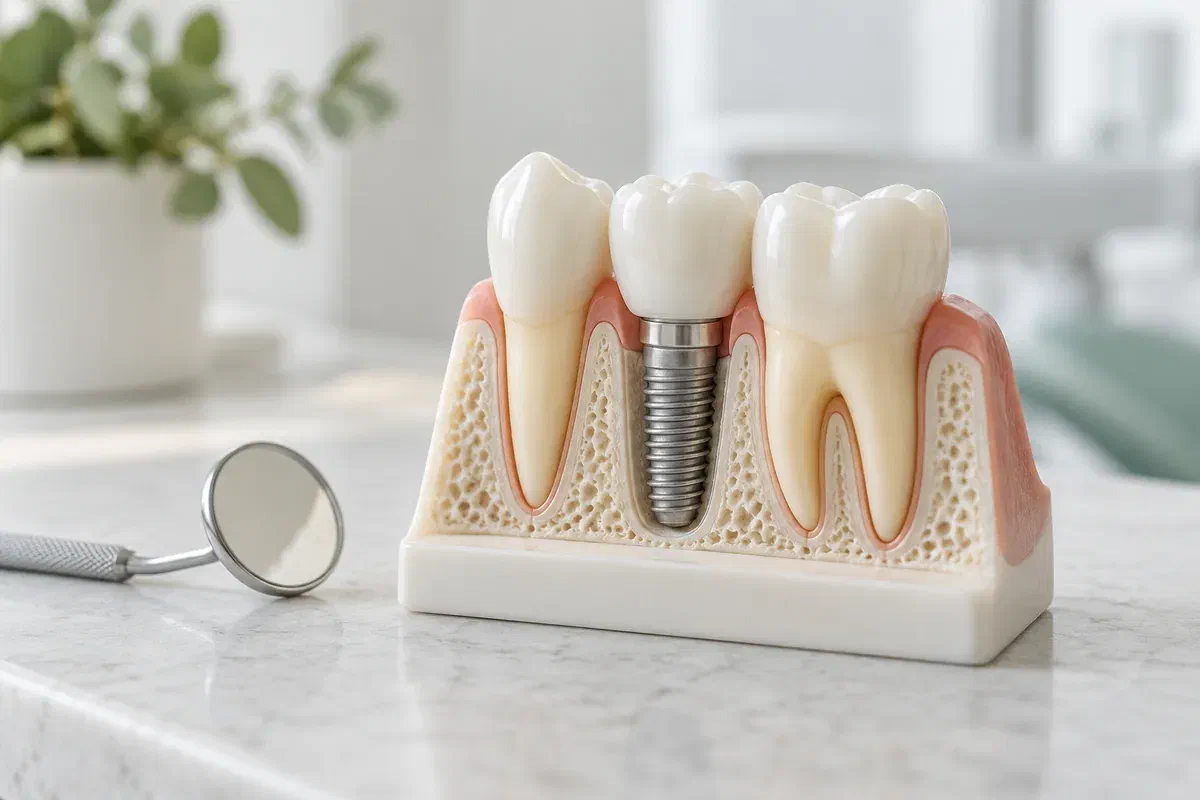
Strictly speaking, immediate placement means putting the implant in at the same visit a tooth is removed. A space that healed years ago is a different situation. What may still be discussed there is connecting a tooth to the implant early, sometimes called immediate restoration or loading. The implant is the support in the bone; the tooth on top is a separate restoration with its own schedule.
Our Bronte Street practice is close to the Old Milton streets many of our long-time patients call home, and we take time to put each stage in plain order. Ask what is being called immediate in your case, what conditions it rests on, and which appointments remain once that step is behind you.
Being clear about your main goal steers the conversation. Some people mainly want the space filled, some want fewer procedures, and others want a realistic date for eating normally again.
The provisional tooth deserves its own questions. Would it be fixed in place or taken out at night? What is it for while the implant heals, and what will you need to avoid with it?
Combining some steps can shorten the beginning of treatment. Healing checks, later records, fittings and the final restoration usually still lie ahead, so ask what genuinely drops out of the schedule.
Placement is when the implant goes in, restoration is when a tooth is attached, and loading is when that tooth is allowed to bite. Using those three words keeps two proposals honest and comparable.
No final tooth should be promised on an immediate basis until the site and the planned restoration have been carefully assessed. Clinical conditions decide what is possible.
In the right circumstances, joining certain stages or fitting an appropriate early tooth can be part of sound planning. Whether it helps you depends on your own site, and the explanation should include the conditions involved and the limits you would live with during healing.
Alternatives and risks are part of the same picture. How stable the implant is at placement, the health of the gum and bone, the design of the tooth and your medical history all play a role. Ask what would make a slower approach wiser, and what could cause the plan to be revised.
Patient information: International Team for Implantology — implant placement and loading protocols
An early tooth can close a visible space while still being unable to take full chewing. Understanding this makes the rules easier to follow and keeps you from judging progress by the mirror.
Consider meals, family commitments, time off and review appointments against the real sequence. Find out which dates are firm and which depend on how treatment and healing unfold.
Should an immediate step prove unsuitable, a pre-agreed alternative explains how the space and implant site will be looked after. That makes consent more meaningful than a plan that assumes everything will go perfectly.
Assessment should spell out both the proposed timing and the conditions that go with it. Where more than one clinician is involved, ask how surgical and restorative care will be coordinated.
The clinician examines your mouth, reviews medications and health conditions, and gathers suitable records. If an old bridge or failing tooth is involved, whether anything can be kept is weighed before removal is planned.
List each stage that applies, from any extraction to implant placement, a provisional tooth and the final restoration. Confirm when you may chew on the area and which findings each step depends on.
Findings during treatment can make an immediate step less suitable. The team should have explained the alternative beforehand and be ready to reassess, rather than holding to a timetable for its own sake.
Follow-up appointments show when the next stage can begin. An early tooth may still need to be replaced, and further records or fittings are often needed before the work is considered finished.
Instructions depend on what was done and what kind of tooth you received. Keep the written notes somewhere easy to find, and ask about anything confusing before resuming your normal activities.
Follow the food guidance closely. Resist the urge to see whether the new tooth can manage ordinary bites, and remember that a fixed provisional is not doing the work of the final tooth.
Ask how to care for the treated area and any temporary appliance without disturbing it. Your routine will likely change as healing moves along, so check when each new step should start.
Come in for follow-up even if the area feels settled. Call about unexpected looseness, symptoms that worsen, or anything your instructions mention, so the implant and tooth can be examined.
These answers put timing terms into everyday language. Your own plan should state which stages are proposed and what needs confirming before each one.
Book a consultation at our Bronte Street practice to look at your space, any older work and how a replacement might be timed. We will explain what assessment is needed to weigh immediate and staged approaches.
Bring your current partial denture or any previous treatment proposal, and tell us whether timing, appearance or the temporary tooth is your biggest concern.
