Keeping a tooth in view
Ask what provisional would be used and whether health factors affect that choice. A removable option may be preferred if a fixed one would place too much demand on a healing site.


Your medical history can shape implant timing as much as the tooth itself. From Puslinch, you can talk with us about how health conditions, medications and habits are weighed when an immediate approach is considered, and when a slower one is safer.
Conversations about implant timing usually focus on the mouth: the socket, the bone, the gum. Your general health belongs in that conversation too. Healing is what turns an implant from a screw in the jaw into a dependable support, and anything that affects healing can influence whether an immediate step is wise.
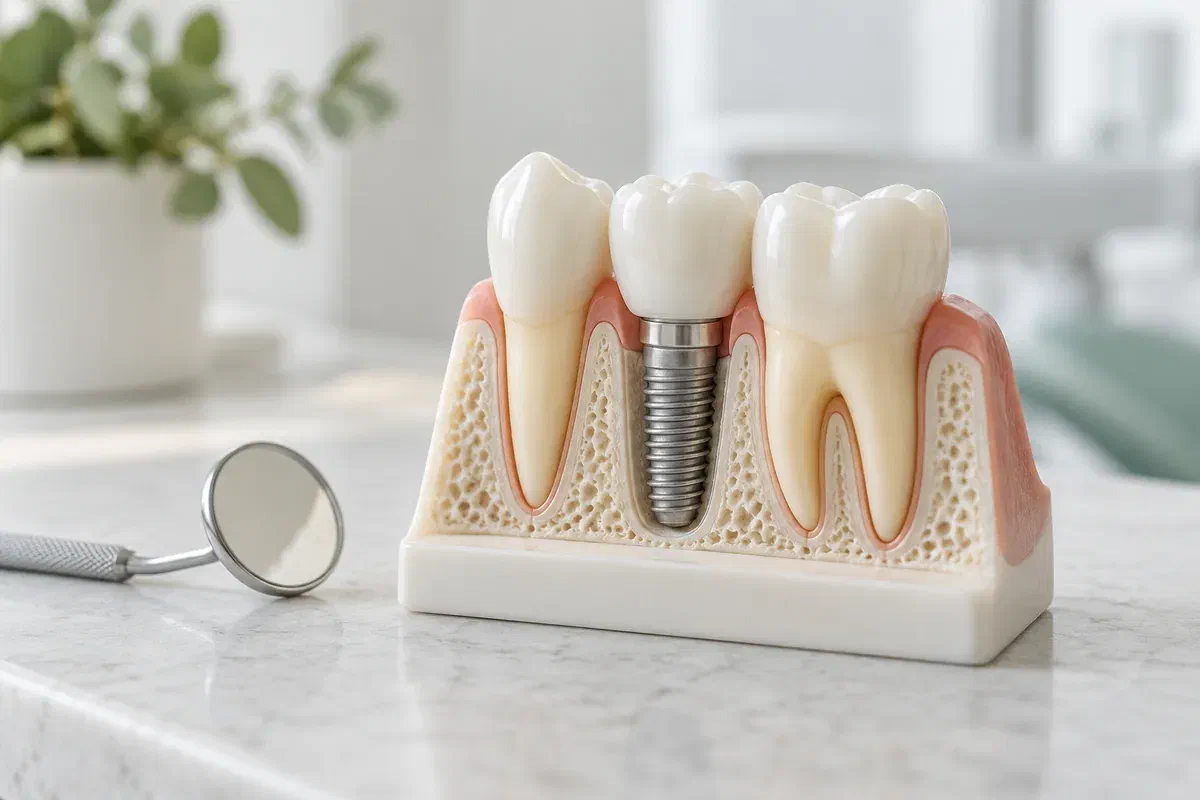
There are two ideas packed into the term. Immediate placement sets the implant into the socket at the visit when the tooth is extracted. Immediate restoration or loading attaches a tooth soon after placement, sometimes allowing it to take a little bite. The visible tooth is separate from the implant underneath, and an early one is normally provisional, with clear limits.
For people in Puslinch managing a health condition or regular medications, the useful questions are practical ones. Which step is being called immediate? What health and site conditions does it need? What would the slower alternative be? And does your physician need to be involved before anything is scheduled?
Your goals still matter. Let the clinician know whether a visible gap, the number of procedures or a date for eating normally is your main concern, so it can be weighed alongside your health.
Ask what provisional would be used and whether health factors affect that choice. A removable option may be preferred if a fixed one would place too much demand on a healing site.
Combining extraction and placement can avoid one procedure, which some people with health concerns prefer. Ask whether it suits you and what reviews and fittings still follow.
Your dentist, a specialist and your family doctor may each have a view. Ask that every option be explained as placement, restoration and loading, and how your health was considered in each, so different recommendations can be weighed fairly.
An immediate final tooth should never be promised before the site, the planned restoration and relevant health factors have been assessed. Timing depends on all three.
For some people, doing two stages in one sitting, or connecting an early tooth, may be part of a well-judged plan. The possible benefit should be explained for your own site and health, including what conditions are required and what you would avoid while healing.
Risks and alternatives carry particular weight when health is a factor. Conditions that affect healing, certain medications, smoking and how firmly the implant is held at placement may all point toward a more gradual approach. Ask what would favour staging and when your physician should be consulted.
Patient information: International Team for Implantology — implant placement and loading protocols
An early tooth may restore appearance without being ready for chewing. Respecting that limit is even more important when healing may be slower.
Fit surgery, reviews and recovery around other health appointments, medication schedules and daily commitments. Ask which dates are firm and which depend on healing.
If health or site findings make an immediate step unsuitable, an agreed alternative avoids last-minute decisions. You know how the space will be handled and what comes next.
Assessment should set out the proposed timing and every condition behind it, including medical ones. Ask whether your physician or pharmacist needs to be consulted and how that will be arranged.
Expect questions about conditions, medications, allergies and habits, along with an examination and images. If the tooth is still present, the clinician considers whether it might reasonably be saved.
The plan sets out extraction where needed, placement, any provisional and the final tooth. It also notes any medical steps, such as checking with your doctor about medications, and when chewing is allowed.
Health or site findings may make an immediate step unsuitable on the day. The agreed alternative should be ready, and the team should reassess rather than proceed for the sake of the schedule.
Reviews confirm healing before later stages. Even with an early tooth, more records, a fitting or a replacement provisional usually follow before treatment is complete.
Your dental instructions depend on the procedure and tooth placed, and your medical advice still applies. Keep them together, and ask about anything that seems to conflict before you resume your usual routine.
Stick to the food and chewing advice, even on days when the area feels comfortable. Do not test the tooth; a provisional fixed early is there to hold the space, and full biting force is reserved for later.
Ask how to clean around the implant and any provisional without disturbing healing. Good hygiene matters even more if your health affects healing.
Attend every review. Call about unexpected movement, worsening pain, swelling, fever or anything your instructions mention, and let your physician know if advised.
These answers explain how medical factors are considered in implant planning. Your own plan should state which steps are proposed and what health and site conditions apply.
Book an assessment with us at our Bronte Street practice to talk about implant timing, your medical history and how the tooth could be replaced. We will explain what needs to be reviewed before an immediate or staged plan can be recommended.
Bring your medication list, physician details and any earlier dental proposals or images, so the first visit can cover as much as possible.
