Not wanting to show a space
Should removal be necessary, ask what temporary tooth would cover the gap. Fixed and removable provisionals look and behave differently, and both come with limits during healing.


Before an implant goes in the same day, someone has to be sure the tooth really needs to come out. For people from Rockwood with a cracked or failing tooth, we start with that diagnosis, then explain how an immediate implant would be timed.
A tooth that has cracked below the gum, or one with a large failing filling, can lead quickly to talk of extraction and an immediate implant. It is worth slowing down at that point. An implant is a good replacement, but keeping a healthy natural tooth, where it is realistic, is generally the first thing to consider.
Once removal is genuinely the right choice, timing comes next. Immediate placement means the implant goes into the socket in the same appointment as the extraction. Immediate restoration means a tooth is connected to the implant soon after. Those are separate decisions. The implant is the anchor that needs to heal into bone; the tooth on top is a restoration with its own stages.
From Rockwood and the surrounding Guelph/Eramosa countryside, a clear sequence makes each trip worthwhile. Ask why the tooth cannot be kept. Then ask which step is planned as immediate and what has to be confirmed before it can go ahead, what would be done instead if it cannot, and how many appointments are likely afterward.
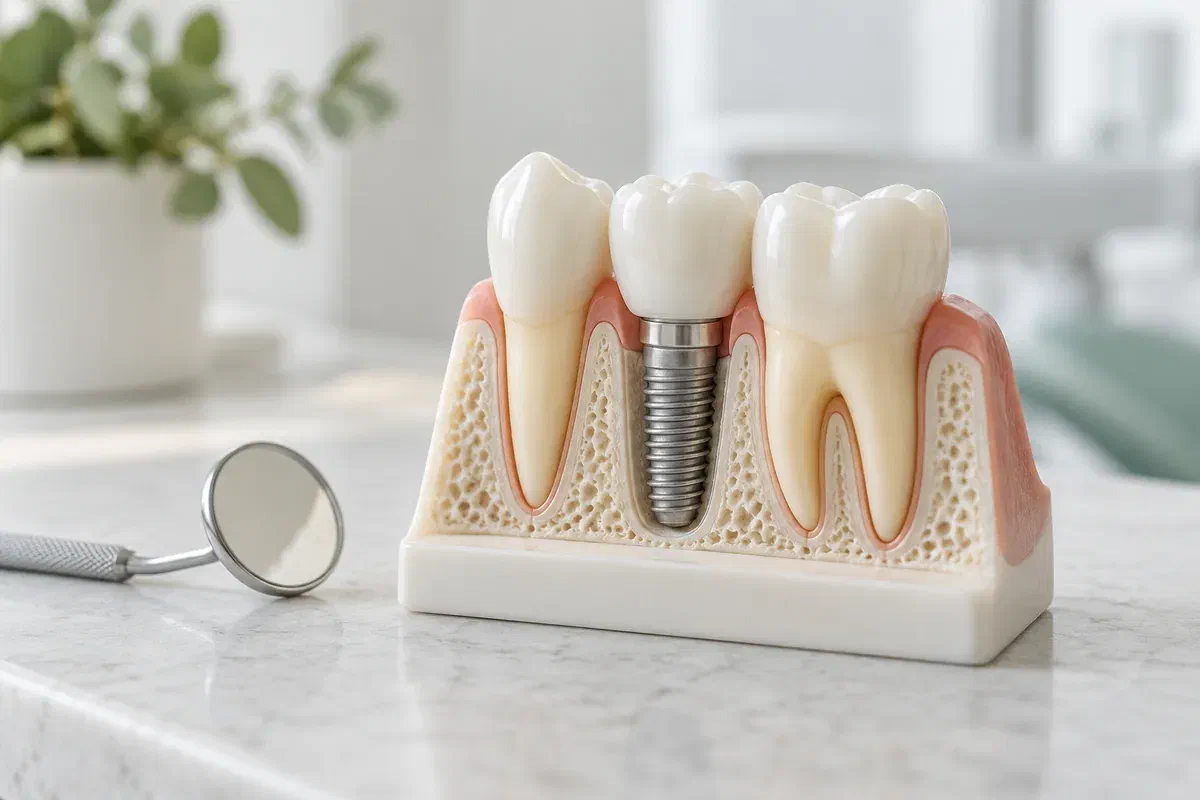
A failing tooth brings several worries at once. Let the clinician know whether keeping the tooth, avoiding a gap, needing fewer procedures or getting back to chewing is your priority.
Should removal be necessary, ask what temporary tooth would cover the gap. Fixed and removable provisionals look and behave differently, and both come with limits during healing.
Extraction and placement together can save one surgical visit. Reviews, records, fittings and a final tooth usually follow, so ask what the whole schedule involves.
Ask for the choices to be set out clearly: repairing the tooth, if possible, and replacing it with an implant placed now or later. Plain terms make the comparison fair.
No one should promise a permanent tooth on the day of extraction before examining the failing tooth, the bone around it and the kind of restoration that would follow. Diagnosis and clinical conditions come first.
In suitable cases, placing the implant when the tooth is removed, or fitting an early tooth, can be part of careful treatment. The benefit should be explained for your situation, along with what it requires and the limits you would follow while healing.
Risks and alternatives deserve the same attention, including the option of keeping the tooth. Infection, bone and gum condition, implant stability, the planned restoration and your health all play a part. Ask what would favour saving the tooth, and what would favour a staged implant.
Patient information: International Team for Implantology — implant placement and loading protocols
A provisional may close the gap without being ready to chew. Knowing this helps you follow the healing rules without second-guessing.
Think about work, meals and review visits against the actual stages. Ask which dates are fixed and which depend on what is found.
If the socket turns out unsuitable for immediate placement, an agreed alternative explains how the area will be managed. That supports better-informed consent.
An assessment should explain why the tooth is failing, what timing is proposed and what conditions apply. If a specialist is involved for root canal treatment or surgery, ask how their findings feed into the plan.
The clinician examines the tooth and surrounding gum, takes images and discusses your health. The aim is to understand whether the tooth could reasonably be kept before planning removal.
The written plan covers removing the tooth, setting the implant, the temporary arrangement and the permanent crown. Each stage comes with the conditions it needs, and the plan should say when you may begin chewing on that side again.
Infection, bone loss or low stability can make immediate placement unsuitable. The agreed alternative is then used, and the plan is reassessed.
Follow-up visits confirm readiness for later stages. Further records, a fitting or replacement of the provisional often come before treatment is complete.
After an extraction with an implant, both the socket and the implant need time. Your instructions depend on what was done, so keep them handy and ask about anything unclear.
Follow the food advice closely and avoid chewing on the site unless told otherwise. An early provisional is there mainly to fill the space, so resist the temptation to see how it copes with a firm bite, even once the tenderness fades.
Ask how to brush and rinse near the treated area and any temporary tooth. A freshly emptied socket is delicate in the first days, so gentle care matters. Expect your routine to change as healing progresses.
Come to every follow-up, even if things feel settled. Call about unexpected movement, pain or swelling that is getting worse rather than better, a bad taste, or anything else your instructions mention.
These answers focus on the decisions that come before and around an immediate implant. Your own plan should set out each step and what needs confirming.
Book an appointment at our Bronte Street practice to have a cracked or failing tooth examined and to discuss the options. If replacement is needed, we will explain how an immediate or staged implant would be timed.
Bring any recent images, earlier treatment notes or proposals, and tell us whether keeping the tooth, avoiding a gap or the timeline matters most.
