Waking up without front teeth
If a period without visible teeth would be difficult, mention it before extraction is booked. Lab work needs lead time, and we can tell you whether an immediate appliance is suitable and what can be judged beforehand.


Can I sleep in it? When does it come out? The first day and night raise the most questions with an immediate denture. From Acton, plan those early hours in advance, along with the fitting and the healing checks that come after.
By evening on extraction day, most people have the same handful of questions: should the denture stay in, can it be rinsed, what can I eat? Those answers depend on your procedure, and they are easiest to absorb before the day rather than while numb. The appliance itself is made in advance and fitted at the extraction appointment when suitable, for a few teeth or a full arch.
Early instructions are only the opening chapter. In the weeks that follow, the tissues under the denture heal and shrink, so the fit changes. Most plans include reviews, adjustments and possibly relining or a newer appliance later, and the wearing routine itself usually changes as recovery moves on.
If you are coming from Acton, a first visit at our Bronte Street practice is a good time to walk through that first day and night in detail. Tell us whether you have worn a partial before, who will be home with you, and anything about sleep or medication that could affect the plan.
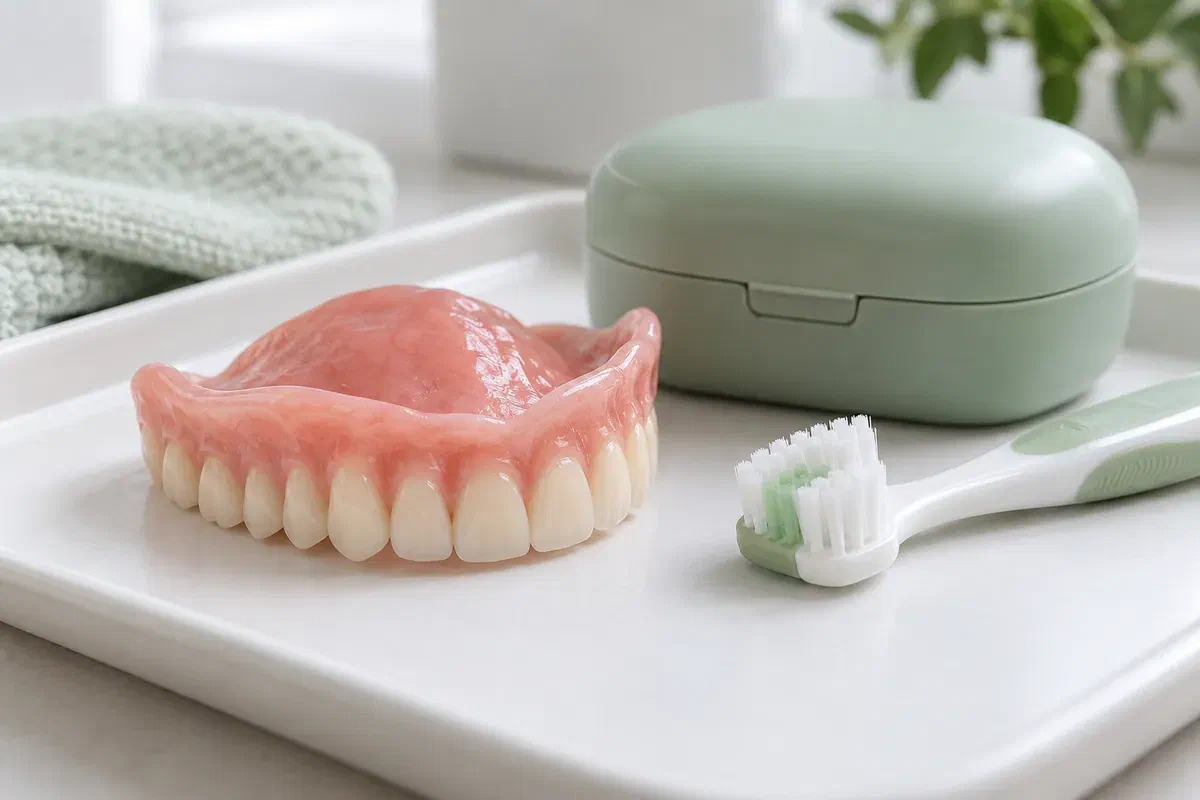
Beyond the first evening, the decision depends on oral health, how the appliance is designed and the help you can count on while you get used to it.
If a period without visible teeth would be difficult, mention it before extraction is booked. Lab work needs lead time, and we can tell you whether an immediate appliance is suitable and what can be judged beforehand.
You can ask why each tooth is recommended for removal and whether keeping some is realistic. A denture should follow a diagnosis that has been explained in plain terms.
Raise any difficulty with grip, gagging or cleaning, and whether someone can help. The routine should be workable for you in the first days, when the gums are tender too.
Advance preparation is unavoidable. Call us before any extraction that another office has already scheduled, so timing and responsibilities can be talked through.
For a suitable patient, the main benefit is simple: replacement teeth are already in place when the natural ones are removed. There is no wait through healing before a denture is begun, which many people find reassuring for appearance and daily routine.
It is not without limits. While your own teeth are present, some details of fit and position cannot be assessed fully, and the support will change as you heal. Ask how those uncertainties will be managed and what later work to expect.
Patient information: Royal Devon University Healthcare — immediate denture information
Know who made the appliance, who fitted it and whom to call with questions. That matters more if the extractions and the denture are handled by separate offices.
Go over what to eat, how to talk, when to wear the denture and what help you need at home. Settling this ahead of time takes pressure off the first evening.
Checks after fitting are expected as the mouth changes. Ask how many reviews are anticipated and whether a reline or replacement appliance is part of the proposed cost.
The sequence depends on which teeth are involved and the appliance planned. Seeing the preparation, the extraction visit, the first check and later reassessment together makes the early days easier to plan.
The dentist assesses your mouth, explains why extractions are advised and goes over alternatives with your priorities in mind. Health history and medications are reviewed, with further assessment if needed.
Impressions or other records let the lab make the denture before removal. You talk about appearance, what cannot be tried in beforehand and how any other clinician is involved.
On the day, the team confirms whether the appliance can be fitted as planned. You go home with written guidance on wearing it overnight, cleaning, the sockets and whom to contact.
An early check and later visits assess comfort, healing and support. The dentist explains whether adjusting, relining or eventually replacing the denture is appropriate.
What you do right after extraction may differ from a long-term denture routine. Keep the instruction sheet by the bed and ask about removal, rinsing, pain relief, food and review timing.
Some clinicians want the denture left in at first and others give different advice. Do whatever your treating team specified, and ask when the usual practice of removing it at night should begin.
Ask how to care for the appliance, remaining teeth and extraction sites each day. Start with the soft foods suggested and do not treat the new teeth as ready for anything.
Report sore spots, trouble putting the denture back in or increasing looseness. Do not file it, force it into place or line it with products not approved for healing tissue.
These answers cover the early days, sleep and the changing fit during recovery. Your own instructions should come from the clinicians who carry out the extraction and make the appliance.
Book a consultation with us on Bronte Street to discuss an immediate denture alongside planned extractions. We will explain preparation, the fitting, the first night and the reviews that follow.
Bring a list of your medications, and tell us about any extraction already scheduled with another office.
