

Illustrative patient and dentist planning dentures before tooth removal
Restorative Dentistry

Immediate Dentures in Georgetown

Talking clearly and eating comfortably take practice with a new denture, especially while extraction sites heal. From Georgetown, plan an immediate denture with realistic expectations for speech, meals and the fit reviews ahead.

Speech, meals and a new appliance

Words first, then food

Ask someone who has worn an immediate denture what surprised them, and many will mention the first conversations: certain sounds feel odd, and the tongue keeps exploring the new shape. The appliance itself is made before your teeth come out and inserted at the extraction visit when that is suitable, replacing part or all of an arch.

Eating and speaking improve with practice, but the mouth beneath is changing at the same time. Healing sockets and shrinking ridges alter the fit, so the denture may need adjusting, relining or eventually replacing. Expecting those steps makes the learning period feel less discouraging.

From Georgetown, the first consultation at our Bronte Street practice is the place to talk about how you use your mouth every day. Do you speak a lot for work, eat out often, or play a wind instrument? Have you worn a partial? Tell us who can help at home too, so the plan reflects your real routine.

Prepare for speaking and eating
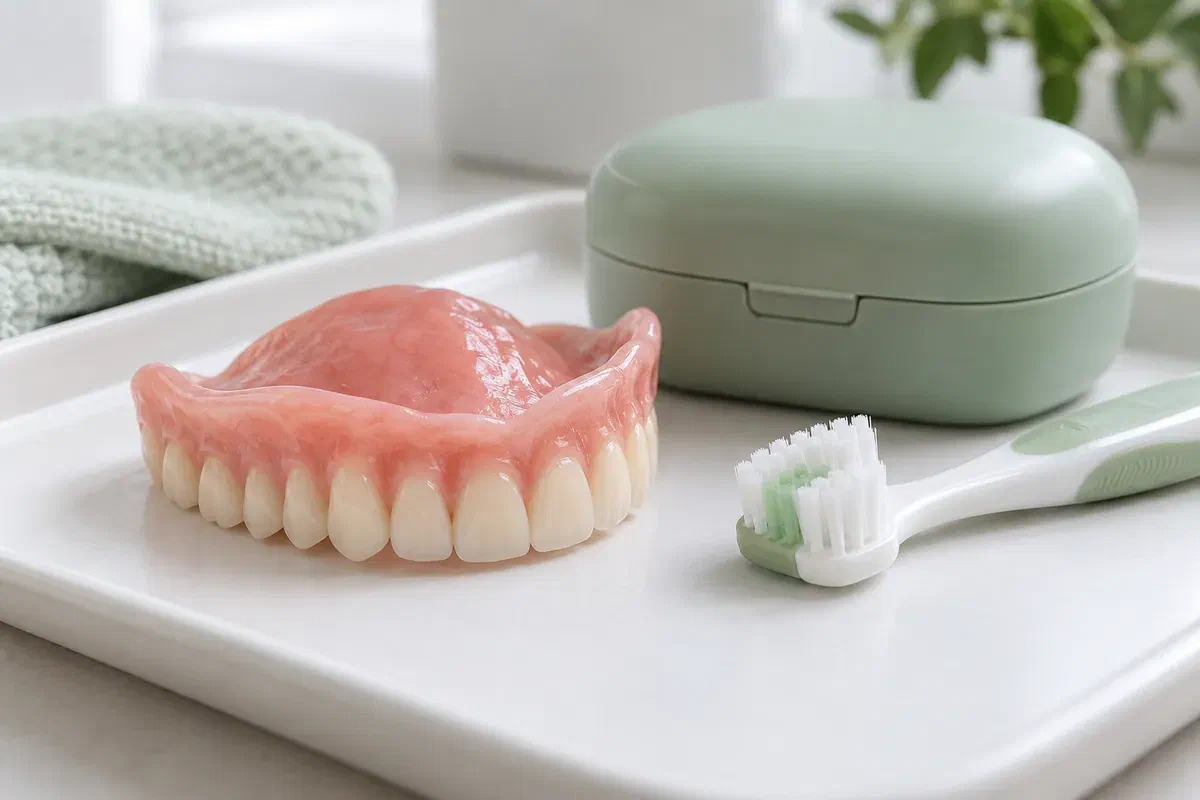
Complete removable denture beside a protective case and denture brush
Worth raising early

Three concerns that shape the plan

Getting used to an immediate denture depends on more than the fitting day. Your gum health, the denture’s design and the help you have while adapting all play a part.

Avoiding visible gaps in conversation

If missing teeth would be hard to manage socially or at work, say so before an extraction is set. Preparation takes time, and we can explain whether you are suited to an immediate appliance and what can be previewed.

Questions about which teeth must go

Ask for the reason each extraction is recommended and whether any could be kept with treatment. Those teeth may also matter for speech and chewing, so a clear diagnosis comes first.

Gagging, grip or cleaning worries

Tell us if you have a strong gag reflex, limited dexterity or need help at home. Your instructions should be manageable while you are also healing and learning to talk with the denture.

The appliance has to be prepared ahead. Please contact us before any extraction already booked with another office, so the timing and who does what can be agreed.

What day-one teeth can mean

Practise with your new teeth from the start.

For suitable patients, an immediate denture means you can begin adapting to speech and eating with replacement teeth straight away, rather than waiting until healing is complete. Many find that helps with confidence and with keeping daily life moving.

Some trade-offs come with it. Fit and tooth arrangement cannot be fully assessed while your natural teeth remain, and the support will change as you heal. Ask how those limits affect speech and comfort, and what follow-up work is likely.

Patient information: Royal Devon University Healthcare — immediate denture information

Clarity on who does what

Confirm who makes the denture, who places it and where adjustments happen. This matters most when the extractions and the denture are handled by different clinicians.

Tips before the first meal

Discuss soft foods, cutting food small, reading aloud to practise speech and when to wear the appliance. Hearing this in advance makes the first week less stressful.

Reviews built into the plan

Adjustments are expected as the mouth changes. Your estimate should spell out the follow-up appointments and say whether a reline or a second denture is likely to be recommended.

How treatment progresses

Four appointments that build toward comfort

Your sequence depends on the teeth involved and the appliance. Seeing preparation, extraction, early review and later reassessment together helps you plan practice time and support.

  1. Understand the diagnosis and choices

    The dentist examines your mouth, explains why removal is suggested and reviews alternatives in light of your priorities, including speech and diet. Health history may call for further assessment.

  2. Records and tooth selection

    Impressions or similar records allow the denture to be made in advance. You discuss tooth shape and position, what cannot be tried first, and coordination with any other clinician.

  3. Insertion at the extraction visit

    The team confirms at the appointment whether the appliance can go in as planned. You leave with instructions for healing sites, wearing and cleaning, plus details of whom to call.

  4. Adjust as you heal and adapt

    Reviews check comfort, speech, chewing and how the gums are recovering. The dentist explains whether adjustment, relining or a later denture is appropriate as support changes.

Learning the new routine

Go slowly with food and give speech time.

Early instructions after extraction can differ from how a settled denture is worn. Hold on to your printed sheet, and check anything unclear about removal, cleaning, medication, eating and follow-up.

Wear it the way you were told

Your clinician may set specific instructions for the first days. Follow those rather than switching to an overnight routine you have heard about from long-term denture wearers.

Start with soft, small bites

Ask how to clean the appliance, remaining teeth and healing sites as recovery continues. Follow the food advice given; teeth in place do not mean you can chew everything right away.

Report soreness or slipping when talking

Sore spots, trouble seating the denture or movement during speech should be checked. Do not file it, force it in or use unapproved liners against healing gums.

Looking at alternatives

Is immediate placement the right order for you?

Some mouths suit a denture on extraction day and others do better with a different order. A thorough assessment sets the sequences side by side and links any short-term appliance to later care.

If the denture can be made beforehand

Teeth placed at extraction

Built ahead of removal and inserted that day when suitable. Ask what it should achieve during healing and which refits or later steps are likely.

If a later fitting is better for you

Teeth placed after healing

A delayed denture is designed once the gums have had longer to heal. Ask how you would manage speech and eating in the meantime, and what favours this route.

If your remaining support allows

A different restorative route

Depending on your teeth, gums and goals, another approach may be worth weighing. Choosing an immediate denture today leaves later decisions open until the alternatives have been discussed.

Georgetown questions

Speaking, chewing and settling in

These answers cover adapting to the appliance and the changing fit while you heal. Follow the specific instructions of the clinicians handling your extraction and denture.

(905) 876-4488
Why do some words sound different with a new denture?
The tongue and lips need time to adjust to the shape of the appliance, so sounds like s and th can change at first. Reading aloud at home often helps, and persistent difficulty is worth raising at review.
How long does it take to eat normally with an immediate denture?
It varies with healing and how quickly you adapt. Follow the food guidance you are given, move gradually to firmer foods, and ask at review when it is reasonable to progress.
Should I chew on both sides with my denture?
Your dentist may suggest spreading food across both sides to help keep the denture stable. Ask for chewing tips suited to your appliance and stage of healing.
Can I play a wind instrument with an immediate denture?
Mention this during planning. The dentist can discuss how the appliance and healing may affect playing, and when it may be sensible to resume.
Will the denture always feel this big in my mouth?
Many people notice the bulk less as they adapt, but ongoing discomfort, gagging or rubbing should be checked. The fit and edges may need adjustment as the tissues change.
Is it worth booking my review on the same day as other errands from Georgetown?
Many people do combine trips. Allow some extra time in case the dentist makes an adjustment, and ask what to bring, such as your written instructions and any questions you have noted.
Planning from Georgetown

Start the conversation before the extraction.

Arrange an appointment at our Bronte Street office to discuss an immediate denture alongside planned tooth removal. We will explain preparation, fitting day, adapting to speech and eating, and the reviews that follow.

Tell us how you use your voice and mouth day to day, and mention any extraction already scheduled elsewhere.

Visit Milton Dental Clinic
Unit 1, 342 Bronte St. S, Milton, ON L9T 5B7
Get directions Clinic hours
Monday–Thursday
11am–7pm
Friday–Sunday
By appointment only

Areas we serve

  • Milton
  • Oakville
  • Mississauga
  • Georgetown
  • Halton Hills
  • Acton
  • Campbellville
  • Brampton
  • Burlington
  • Puslinch
  • Rockwood
  • Erin
  • Caledon
  • Etobicoke
  • Old Milton
  • Bronte Meadows
  • Timberlea
  • Dorset Park
  • Dempsey
  • Clarke
  • Beaty
  • Coates
  • Harrison
  • Scott
  • Willmott
  • Ford
  • Bowes
  • Cobden
  • Walker
  • Mountain View
  • Milton Heights
  • Hawthorne Village
  • Valley View
  • Fallingbrook
  • Nassagaweya
  • Trafalgar
  • Esquesing
  • Nelson
  • Brookville
  • Moffat
  • Glen Williams
  • Norval
  • Limehouse
  • Stewarttown
  • Ashgrove
  • Hornby
  • Silver Creek
  • Speyside
  • Scotch Block
  • North Oakville
  • River Oaks
  • Glen Abbey
  • West Oak Trails
  • Palermo
  • Bronte Creek
  • College Park
  • Joshua Creek
  • Uptown Core
  • Preserve
  • Iroquois Ridge
  • Lisgar
  • Meadowvale
  • Meadowvale Village
  • Churchill Meadows
  • Erin Mills
  • Central Erin Mills
  • Streetsville
  • East Credit
  • Creditview
  • Heartland
  • Sheridan
  • Mount Pleasant
  • Credit Valley
  • Huttonville
  • Churchville
  • Springbrook
  • Northwest Brampton
  • Bram West
  • Fletcher's Meadow
  • Fletcher's Creek South
  • Alton Village
  • Orchard
  • Millcroft
  • Headon Forest
  • Tansley
  • Brant Hills
  • Tyandaga
  • Kilbride
  • Lowville
  • Aberfoyle
  • Morriston
  • Arkell
  • Hillsburgh
  • Freelton
  • Carlisle
  • Waterdown
  • Flamborough
  • Mountsberg

How can we help?

Milton Dental Clinic

Have a question about your smile? Choose the option that works best for you.

For urgent dental concerns, please call.
Messages are reviewed during clinic hours.