Teeth or framework are damaged
Look at the bridge once it is out. Chips, cracks or wear are worth describing, along with any earlier breakage. Damage throughout the bridge makes refitting less likely to be suitable.


An implant bridge that has come off completely, or keeps threatening to, raises an urgent question about what happens next. From Acton, you can have the bridge, its fastenings, the implants and your cleaning access checked before deciding whether to refit, repair or replace it.
Few dental moments feel as alarming as an implant bridge lifting off while you eat. Put it somewhere clean and dry, and call. The good news is that a detached bridge does not, on its own, tell us the implants have failed. The bridge, the parts that fasten it and the implants in the bone are separate, and any of them could be involved.
Sometimes cement has given way or a retaining screw has loosened or broken. Other times the bridge has a cracked frame, worn teeth or a shape that has made cleaning difficult for years. These lead to different answers, from refitting the existing bridge to designing a new one, and it is too early to know which before an exam.
Coming from Acton, phone before you set out so we can tell you what to bring and how to protect the area. At the visit, we will check the bridge and the implants, explain what can be reused, whether a specialist should be involved and how the space will be covered if new work is needed.
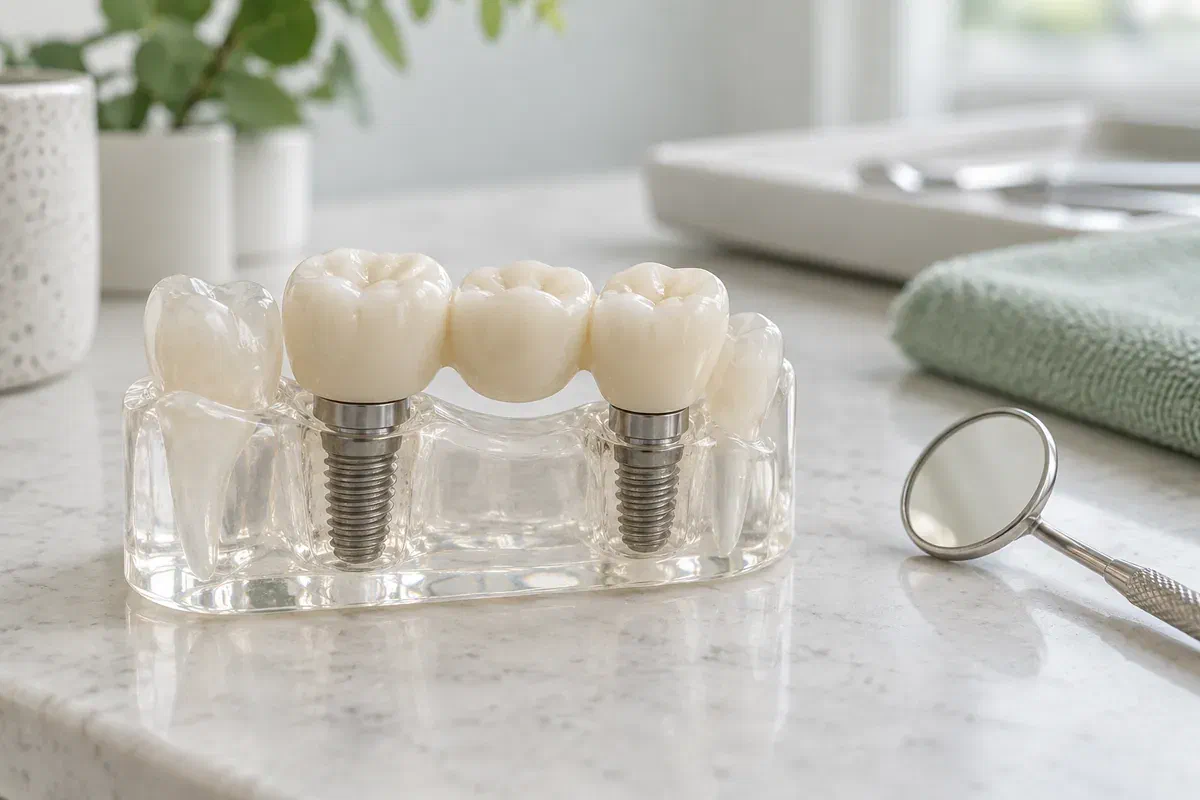
A detached or loosening bridge is the event you notice. Behind it sit questions about the implants, your bite, the condition of the restoration and how easily it could be cleaned.
Look at the bridge once it is out. Chips, cracks or wear are worth describing, along with any earlier breakage. Damage throughout the bridge makes refitting less likely to be suitable.
Tell us if it rocked or clicked for a while beforehand. That history helps pinpoint a connection or cement problem. Until you are seen, avoid chewing on the exposed area and do not try to press the bridge back.
With the bridge out, you may see inflamed tissue or trapped debris. Rinse gently and mention it. A new design may help access, but the gums need their own assessment and care.
If there is bleeding that will not stop, swelling or severe pain, seek prompt care. Please do not glue, cement or screw an implant bridge back yourself.
If the bridge proves unsuitable after examination, a replacement can address those findings. It also lets you rethink the arrangement of teeth, materials, how they meet and how much room there is for cleaning, all within what the implants that remain will allow.
Expect plain talk about limits. Refitting or remaking a bridge does not settle every implant or gum issue, and the implants you keep shape what is possible. Ask which concerns the plan is meant to solve and which ones need separate attention or ongoing checks.
Patient information: Cambridge University Hospitals — implant restorations and long-term care
Cement, screws, abutments, the bridge itself or the implants may be involved. Pinning down which explains whether we suggest a refit, a repair, connection work, a remake or something else.
Tell us what you were eating, whether it had felt loose and how cleaning had been going. Your account guides the plan, even though some preferred changes may not be clinically possible.
Ask how a new or refitted bridge would be secured, cleaned and repaired if needed. How it is held in place affects maintenance, and both belong in the decision.
Steps vary with the implant system, how the bridge was attached and its condition. We will let you know whether further records, lab work or referral are likely before a refit or replacement.
Keep the bridge and any screws in a clean, closed container. Bring implant cards or treatment notes if you have them, and tell us how long it had felt loose.
Dr. Anjum looks at the exposed implants, the gums, the bridge and your bite, and X-rays may be advised. This tells us whether the bridge can go back or something else needs attention.
We go through which parts can be reused, what would change and how you will manage meanwhile, along with materials, fees, likely visits and any temporary teeth needed.
Whatever is placed is checked for seat, contacts, chewing comfort and cleaning access. You receive instructions and a review plan that follows the implants and gums too.
A refitted bridge and a brand-new one each need their own care instructions. Ask for steps that suit what was done, and report anything that feels different in the first weeks of use.
Ask us to show which tools reach beneath the bridge. If an area is awkward or food starts to lodge, tell us so we can review technique or design.
A click, a rocking feeling or a bite that changes is a reason to phone. Early attention may prevent the bridge from coming off again, so avoid heavy chewing on that side.
The visible bridge and the tissues around the implants both need ongoing review. Attend recommended visits and ask who leads maintenance if the original work was done elsewhere.
These answers can help you know what to do and what to ask. Specifics depend on how your bridge was made and held in place.
Arrange a visit at our Bronte Street clinic for an implant bridge that has come off, keeps loosening or has broken. We will look at the bridge and the implants, then tell you whether it can go back, needs repair or should be replaced.
Please carry the bridge and any parts in a closed container, plus implant records if you have them.
