Chips, cracks or rough patches
Tell us if the damage is new or has returned after earlier repairs. Its extent and the state of the rest of the bridge help us weigh a local fix against a fresh restoration.


When an implant bridge traps food, frustrates your floss or leaves the gums sore, its design may be part of the problem. If you are coming from Burlington, we assess the bridge, its fittings, the implants and your daily cleaning before planning any change.
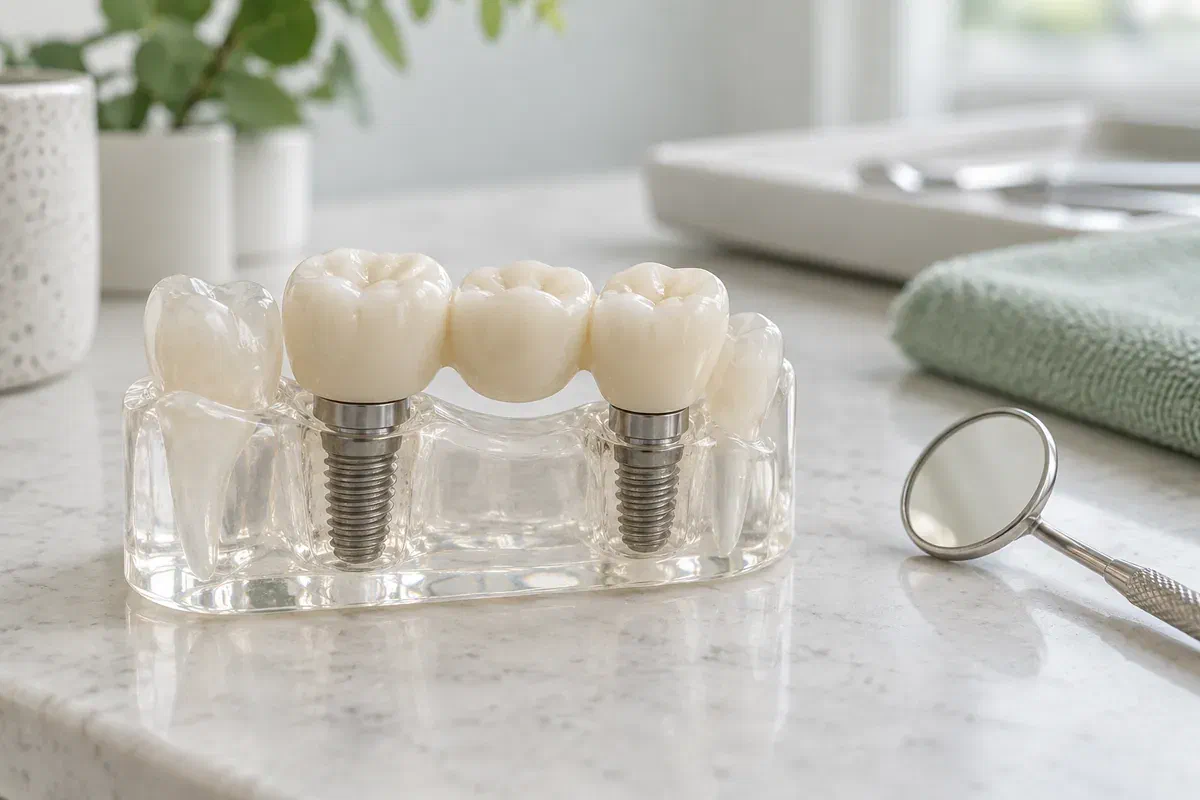
Some implant bridges look fine yet fight you every evening at the sink. Food wedges under the span, a floss threader catches, or one gum spot never quite settles. A bridge sits on implants through connecting parts, and replacing it can change how it meets the gums without necessarily touching the implants themselves.
Cleaning trouble is only one reason people consider a new bridge. Worn or chipped surfaces, a cracked frame or a connection that loosens again and again each lead to different advice. When a bridge moves, there is more than one possible cause, and starting over completely is not a given.
Bring a description of your routine to the first visit: which tools you use, where they get stuck and what the gums do. We will review the bridge and the tissues around it, then explain which parts are still serving you, whether a specialist is needed and how the area will be covered while new work is underway.
The visible issue is only part of the picture. The implants, the bite and your ability to reach every surface all influence whether a new bridge would truly help.
Tell us if the damage is new or has returned after earlier repairs. Its extent and the state of the rest of the bridge help us weigh a local fix against a fresh restoration.
Movement calls for a check of the bridge, the connectors and the implants together. Do not keep testing it with your tongue or bite, and call for advice on eating until your appointment.
If cleaning has become a daily struggle or the gums bleed or ache, mention it. A redesign can sometimes improve access, but the gum condition needs its own diagnosis and care.
Mention sudden movement, pain or a piece that has come loose when you book. Do not try to tighten, glue or lift off an implant bridge yourself.
When the exam shows a bridge is no longer working for you, a replacement can address those findings directly. It is also a chance to rethink the underside contour, the spaces left for brushes, the material and how the teeth meet, all within what your existing implants make possible.
Be clear about what design can and cannot do. Better cleaning access does not on its own treat inflamed gums or an implant concern, and where the implants sit can limit the shape. Ask which problems a new bridge should ease and which need other treatment or ongoing monitoring.
Patient information: Cambridge University Hospitals — implant restorations and long-term care
The bridge, its retaining components and the implants are connected but separate. Pinpointing which one is involved explains why we suggest repair, connection work, a remake or something different.
You know where the brush slips and where food hides. That knowledge, along with how meals, speech and appearance have felt, shapes the plan, though not every request will be clinically possible.
Before anything is made, ask exactly how you will clean, how often it will be reviewed and how repairs would be handled. Upkeep should guide the design, especially after a hard-to-clean bridge.
Implant systems and attachment methods vary, so steps may differ. We will let you know if removal, extra records, lab work or a referral will be needed before replacement.
Bring implant information, past treatment notes and any loose part you were able to keep. Describe when the trouble started and what has already been tried.
Dr. Anjum checks the restoration, its connections, the gums and how your teeth meet. X-rays may be recommended to see whether the concern lies in the bridge or its support.
We discuss what can stay, what should change and how you will manage meanwhile, including materials, cleaning access, fees, expected visits, temporary teeth and any uncertainty in removing the current bridge.
The replacement is checked for seat, contacts, comfort and access for your tools. You receive a home-care routine and a review schedule covering the implants and gums too.
A replacement can change the spaces you clean even if it fills the same gap. Ask for steps that suit the new design and tell us early if anything feels wrong.
Ask the team to guide you through threaders, interdental brushes or a water flosser as appropriate. If something will not reach, or food gathers somewhere new, say so.
A high spot, a click or a sense of movement deserves a call. These are not expected just because the bridge is new, and an area that feels unstable should be spared heavy chewing.
Gum health around each implant is checked at recall alongside the bridge itself. Attend recommended visits and ask who leads maintenance if other offices were involved.
Short answers to the cleaning questions people raise most. Your own situation depends on the shape of the bridge, how it is fastened and the state of your gums.
Book a visit at our Bronte Street practice about an implant bridge that is worn, damaged or hard to clean. We will check its condition and explain whether repair, replacement or further investigation is sensible.
If available, bring implant records, past repair notes and the cleaning tools you use now.
