Avoiding foods or chewing on one side
This can point to a chip, crack or worn surface. Let us know how long it has been happening. The extent of damage and the condition of the rest of the bridge guide whether repair or replacement is discussed.

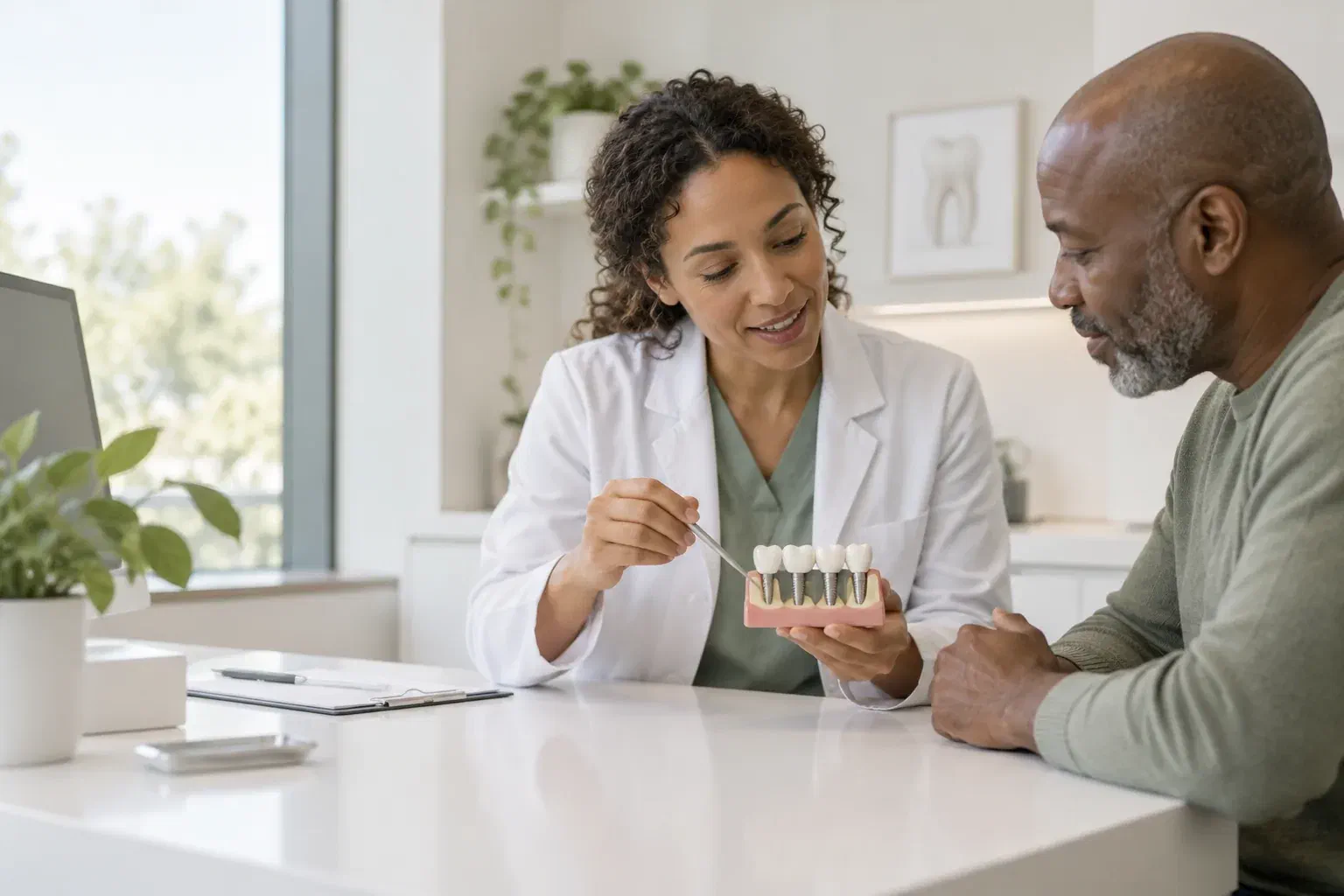
Sometimes the person arranging implant bridge care is a son, daughter or partner helping someone they love. For households in Caledon, we review the bridge, its connections, the implants and how cleaning is managed, with time for everyone’s questions.
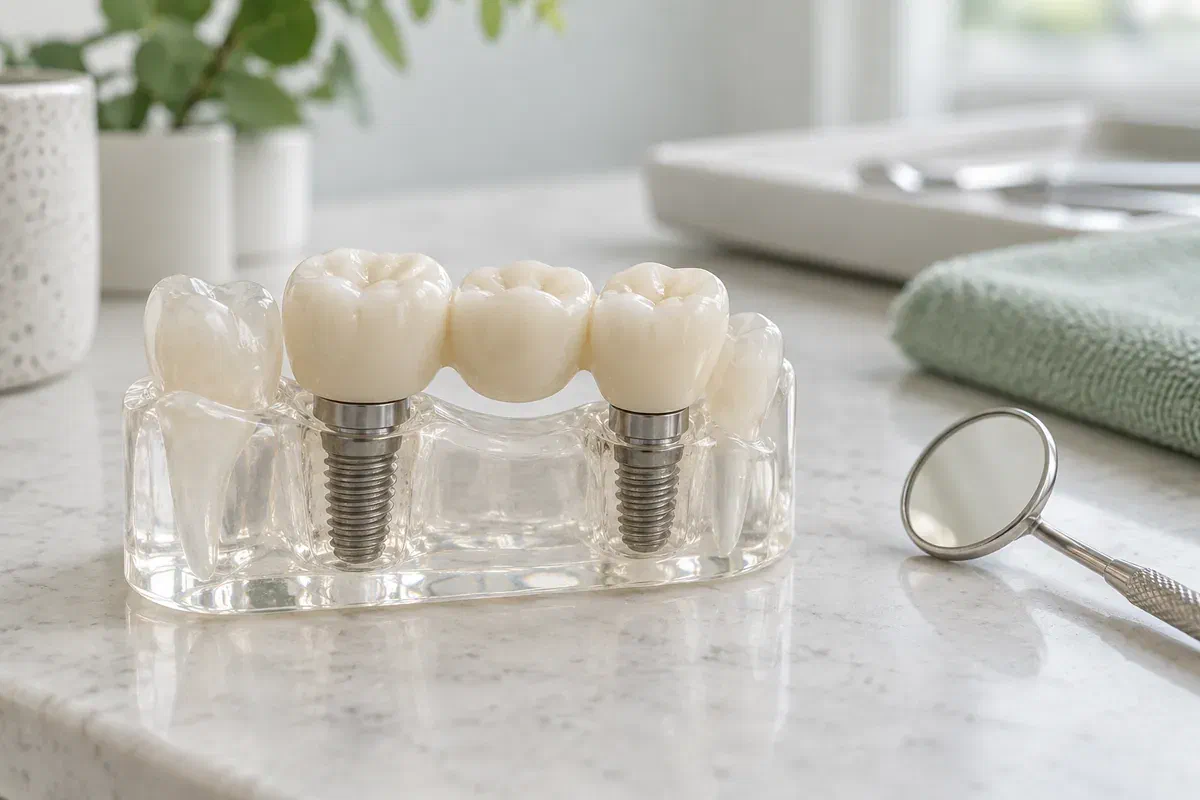
You may have noticed it before they mentioned it: a parent leaving food on one side of the plate, or a partner wincing at certain meals. An implant bridge is a row of teeth anchored to implants by connecting parts. When it wears or loosens, a new bridge can often be made for the existing implants, though that depends on what an exam finds.
Several problems can lie behind the change. Chipped or worn teeth, a damaged frame, fastenings that keep loosening, or a bridge that has become hard to clean, perhaps as dexterity changes, each call for different care. Movement in particular has more than one possible source, so a full remake should not be assumed.
Come together if you can, and bring medication lists, implant records and any notes on past repairs. After examining the restoration and the gums beneath it, we will go through what is worth keeping, whether a specialist or the family doctor ought to be involved and how the space would be managed during treatment.
What you observe is valuable. We combine it with what the exam shows about the implants, the bite and how well the bridge is being cleaned before suggesting anything.
This can point to a chip, crack or worn surface. Let us know how long it has been happening. The extent of damage and the condition of the rest of the bridge guide whether repair or replacement is discussed.
Movement needs the bridge, its connectors and the implants checked together. Encourage gentle chewing, avoid testing it and call us for advice on eating until the visit.
Arthritis, tremor or reduced eyesight can make cleaning under a bridge difficult. Sore gums or trapped food should be mentioned. A design change may help, but the gums need their own assessment.
If the bridge moves suddenly, causes pain or a piece comes off, please say so when booking. Do not attempt to tighten, glue or remove an implant bridge at home.
If the exam confirms the bridge is no longer suitable, a replacement can respond to those findings. It also lets us think again about the layout of the teeth, the material, the bite and whether the underside can be reached easily, by the patient or with help, within what the current implants allow.
It is important to discuss limits openly. A new bridge does not settle every implant or gum issue, and the implants that stay can constrain the design. Ask which concerns the replacement is meant to address and which will need separate care or ongoing monitoring.
Patient information: Cambridge University Hospitals — implant restorations and long-term care
Visible teeth, small fastening components and implants are related but separate. We explain which one is involved, so everyone in the room understands why repair, connection work, a remake or other care is suggested.
Those who help with meals or cleaning see things the patient may not. Their observations, together with the patient’s own experience, shape the plan within what is clinically possible.
Ask how the new bridge would be cleaned, by whom, how often it needs review and how repairs would work. Ease of care is central when abilities may change over time.
The sequence depends on the implant system, how the bridge is fixed and its condition. We will explain early if removal, extra records, lab work, a specialist referral or medical coordination is likely.
Bring a current medication list, implant information and any treatment notes. Describe when the problem began and any repairs tried. A loose part, kept safely, is helpful too.
Dr. Anjum looks closely at the bridge, how it connects, the surrounding gums and how the teeth come together, and X-rays may be advised. That tells us whether the trouble is in the bridge or the implants.
We set out what can be kept and what would change, then talk about how the gap would be covered, which material suits, the fees, how many trips to expect and whether the old bridge is likely to come off cleanly.
Once placed, the new bridge is tested for seating, the bite, comfort and reach for cleaning tools. We show the patient, and the caregiver if helpful, how to clean it, then plan follow-up for the implants and gums.
A replacement may need a slightly different routine. Ask for instructions suited to its design and to the person’s abilities, and tell us about any difficulty.
Larger-handled brushes, threaders or a water flosser may help. Ask us to demonstrate, and let us know if a spot remains hard to reach so we can review technique or design.
A new reluctance to chew, a click or a complaint about the bite should be reported. These are not normal for a new bridge, and an unstable area should be spared heavy chewing.
Implant checkups matter as much as the bridge itself. Putting the next date on a shared calendar makes it easier to keep, and ask who will lead maintenance if other offices have been involved.
Use these to get ready for the visit together. The details will depend on how the bridge was built and on the person’s oral and general health.
Arrange time with us on Bronte Street about a worn, damaged or troublesome implant bridge. We will examine it, listen to everyone involved and explain whether a repair, a new bridge or further investigation is the most suitable choice.
Please bring a medication list, implant records and notes on any earlier repairs.
